

Building Effective Carrier Relationships in 2026

Share on Facebook
Share on X
Share on LinkedIn

In the complex landscape of modern business operations, few partnerships are as critical as those maintained with carriers. Whether managing healthcare claims, coordinating logistics, or optimizing service delivery, carrier relationships form the backbone of operational efficiency and cost management. These strategic partnerships extend beyond simple vendor arrangements, requiring careful cultivation, continuous monitoring, and ongoing optimization to deliver measurable business value. For consultancies and organizations focused on performance-based results, understanding how to build and maintain these relationships can mean the difference between operational excellence and costly inefficiencies.

Understanding the Foundation of Strong Carrier Relationships

Carrier relationships represent the formal and informal connections between businesses and the service providers that transport goods, process claims, or deliver critical services. These partnerships require strategic alignment, clear communication channels, and mutual accountability to function effectively.

The foundation begins with selecting the right carriers based on comprehensive criteria that extend beyond cost considerations. Organizations must evaluate reliability metrics, service quality indicators, technological capabilities, and cultural alignment. A carrier that offers the lowest rates but consistently fails to meet delivery commitments or service level agreements ultimately costs more through operational disruptions, customer dissatisfaction, and emergency interventions.

Key Components of Effective Partnerships

Building sustainable carrier relationships requires attention to several critical components:

  • Transparent communication protocols that establish clear expectations and reporting requirements
  • Performance metrics aligned with business objectives and operational needs
  • Contract structures that incentivize quality while protecting against service failures
  • Technology integration enabling real-time tracking, reporting, and data exchange
  • Escalation procedures for addressing issues before they impact business outcomes

Organizations should document these components in formal agreements while maintaining flexibility to adapt as business needs evolve. The most successful partnerships recognize that carrier relationships are dynamic, requiring periodic review and adjustment to maintain optimal performance.
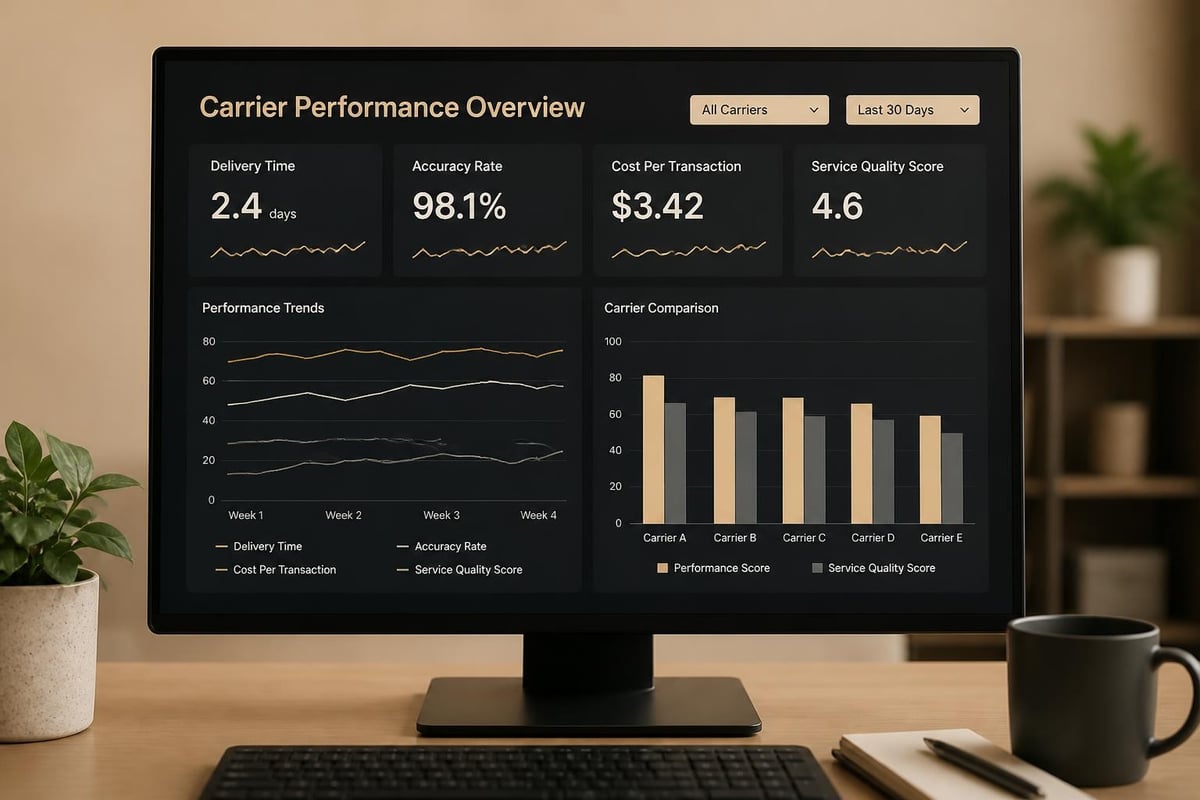
Carrier relationship performance metrics

Strategic Selection and Onboarding Processes

The carrier selection process sets the trajectory for long-term relationship success. Organizations must approach this decision with the same rigor applied to other strategic partnerships, conducting thorough due diligence and evaluation.

Request for Proposal (RFP) processes should capture quantitative and qualitative requirements, allowing for comprehensive comparison across candidates. Beyond standard pricing information, organizations should request:

  1. Detailed service level commitments with penalty clauses
  2. Technology platform capabilities and integration options
  3. References from similar organizations or industries
  4. Financial stability documentation and insurance coverage
  5. Disaster recovery and business continuity plans
  6. Compliance certifications relevant to your industry

The evaluation matrix should weight these factors according to organizational priorities. For healthcare organizations focused on revenue cycle management, carrier reliability in claims processing may outweigh marginal cost differences. Manufacturing firms might prioritize carriers with advanced tracking capabilities and flexible routing options.

Onboarding as Relationship Building

Effective onboarding transforms carrier relationships from transactional to collaborative. This critical phase establishes operational rhythms, communication patterns, and performance expectations that will define the partnership.

Onboarding Phase Key Activities Timeline
Technical Integration System connections, data mapping, testing 2-4 weeks
Process Alignment Workflow documentation, exception handling 1-2 weeks
Training & Education Staff preparation, contact establishment 1 week
Pilot Operations Limited volume testing, issue identification 2-4 weeks
Full Deployment Scaled operations, monitoring activation Ongoing

The onboarding period also provides an opportunity to establish relationship norms. Regular touchpoints, escalation hierarchies, and feedback mechanisms introduced during onboarding create habits that persist throughout the partnership lifecycle.

Performance Management and Continuous Improvement

Managing carrier relationships requires ongoing attention to performance metrics and proactive problem-solving. Organizations cannot simply "set and forget" these partnerships, expecting consistent results without active management.

Establish a cadence of formal reviews that examine both quantitative metrics and qualitative relationship factors. Monthly operational reviews should focus on immediate performance data, while quarterly business reviews can address strategic alignment, emerging challenges, and improvement opportunities.

Critical Metrics to Monitor

Different industries and operational contexts require customized metric frameworks, but several universal indicators apply across carrier relationships:

  • On-time performance rates measuring delivery or service completion against commitments
  • Accuracy metrics tracking error rates, claim rejections, or quality issues
  • Cost per transaction capturing total relationship costs beyond base rates
  • Response times for customer inquiries, issue resolution, or escalations
  • Capacity utilization ensuring carrier resources align with business volumes

Organizations serving healthcare clients must also track compliance metrics, particularly around HIPAA requirements and patient data security. Similarly, companies in regulated industries should monitor carrier adherence to industry-specific standards.

The data collected through these metrics provides the foundation for continuous improvement initiatives. Share performance data with carriers regularly, celebrating successes and addressing challenges collaboratively. The best carrier relationships treat underperformance as shared problems requiring joint solutions rather than opportunities for blame assignment.

Carrier relationship improvement cycle

Technology Integration and Digital Transformation

Modern carrier relationships increasingly depend on technology platforms that enable seamless data exchange, real-time visibility, and automated workflows. Organizations embracing artificial intelligence and automation gain significant competitive advantages through enhanced carrier integration.

Application Programming Interfaces (APIs) have become the standard for carrier connectivity, replacing manual data entry and file transfers with real-time information exchange. These integrations reduce errors, accelerate processing times, and provide visibility that enables proactive issue management.

When evaluating carriers, prioritize those offering:

  • Modern API capabilities with comprehensive documentation
  • Real-time tracking and status updates
  • Electronic data interchange (EDI) for standardized communications
  • Mobile applications for field personnel or delivery confirmation
  • Analytics platforms providing actionable insights

Automation Opportunities

Technology integration creates opportunities to automate routine carrier management tasks, freeing personnel to focus on strategic relationship development and exception handling. Automation can streamline:

  1. Rate shopping and carrier selection based on shipment characteristics
  2. Label generation and shipping documentation eliminating manual entry
  3. Status notifications alerting stakeholders to delays or issues
  4. Invoice reconciliation matching charges against contracted rates
  5. Performance reporting aggregating data across multiple carriers

Organizations implementing these automations report significant time savings while improving accuracy and consistency. One mid-market manufacturer eliminated 40 hours of weekly manual processing by automating carrier selection and label generation, redirecting that capacity toward supplier relationship management and customer service improvements.

Relationship Challenges and Conflict Resolution

Even well-managed carrier relationships encounter challenges requiring thoughtful resolution. Market disruptions, capacity constraints, service failures, and miscommunications test partnership resilience and problem-solving capabilities.

Establish clear escalation protocols before issues arise, documenting the steps both parties will take to address problems at increasing severity levels. Frontline operational teams should have authority to resolve routine issues, while account managers handle recurring problems or service level breaches, and executives engage only for strategic concerns or contract disputes.

Common Challenge Categories

Challenge Type Typical Causes Resolution Approaches
Service Failures Capacity issues, operational errors, technology problems Root cause analysis, corrective action plans, temporary alternatives
Cost Disputes Rate interpretation, accessorial charges, contract ambiguity Documentation review, contract clarification, negotiated settlements
Communication Breakdowns Personnel changes, unclear expectations, process gaps Relationship mapping, communication protocol updates, training
Capacity Constraints Volume surges, market conditions, carrier limitations Demand forecasting, multi-carrier strategies, flexible scheduling

The most successful organizations approach carrier relationship challenges as opportunities to strengthen partnerships through collaborative problem-solving. When service failures occur, focus conversations on understanding root causes and implementing preventive measures rather than assigning blame.

Document all issues and resolutions in a shared database accessible to both parties. This repository becomes a valuable resource for identifying patterns, measuring improvement effectiveness, and onboarding new team members who need to understand relationship history.

Contract Negotiation and Value Optimization

Carrier relationships require periodic contract renegotiation to ensure continued alignment with business needs and market conditions. Organizations should approach these negotiations strategically, leveraging performance data, market intelligence, and relationship capital.

Preparation begins months before contract expiration, gathering comprehensive data on actual versus contracted performance, volume trends, and competitive alternatives. Armed with objective performance data, organizations negotiate from a position of strength, demonstrating value received or highlighting gaps requiring rate adjustments or service improvements.

Negotiation Leverage Points

Beyond base rates, consider these elements when optimizing carrier contracts:

  • Service level agreements with meaningful performance guarantees
  • Volume commitments in exchange for preferential pricing
  • Technology access and integration support at reduced or no cost
  • Dedicated account management resources
  • Flexible capacity during peak seasons or unexpected surges
  • Joint business planning and continuous improvement initiatives

Organizations managing enterprise-scale operations can leverage their volume for significant concessions, while smaller businesses might emphasize relationship stability and growth potential. The key is understanding what matters most to both parties and structuring agreements that create mutual value.
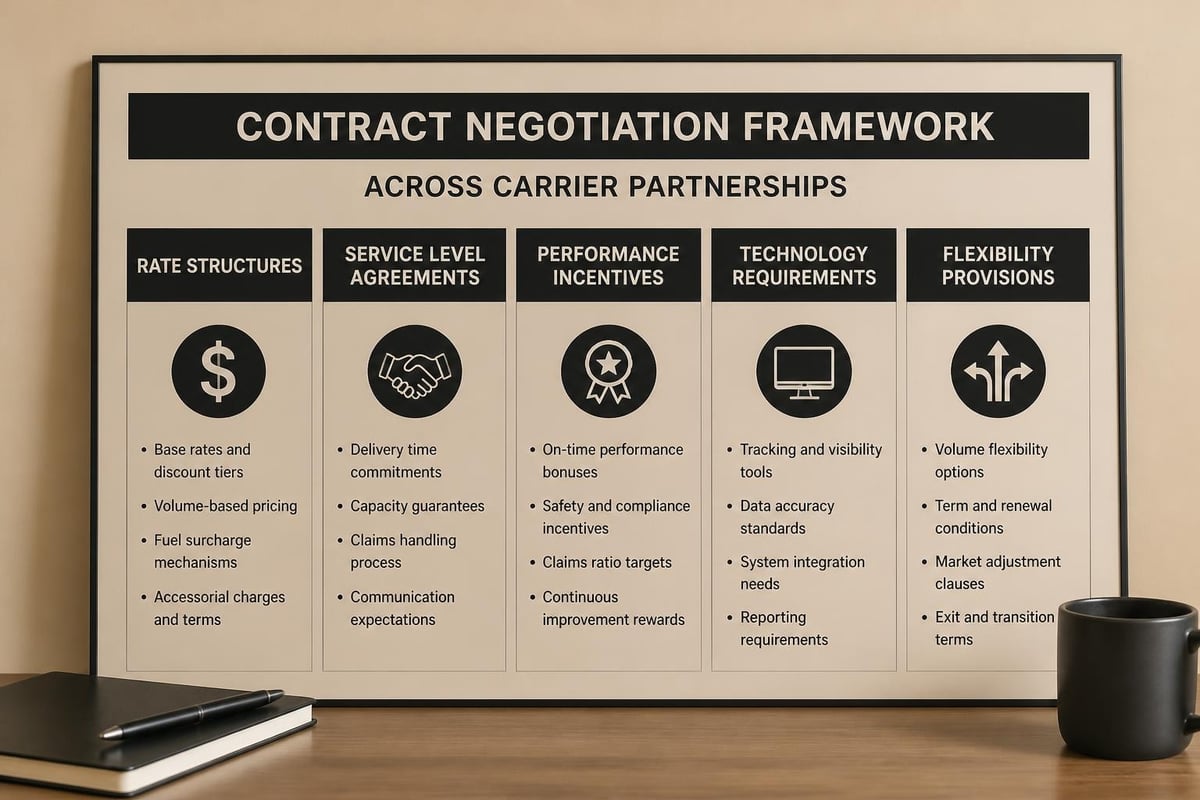
Carrier contract optimization elements

Building Multi-Carrier Strategies

Relying exclusively on single carriers creates vulnerability to service disruptions, capacity constraints, and negotiating leverage imbalances. Sophisticated organizations develop multi-carrier strategies that balance efficiency with resilience.

Diversification across multiple carriers provides several strategic advantages:

  • Continuity protection when primary carriers experience disruptions
  • Competitive pressure maintaining service quality and pricing discipline
  • Specialized capabilities leveraging carrier strengths for specific needs
  • Capacity flexibility during peak demand periods
  • Geographic optimization matching carriers to regional strengths

The challenge lies in managing complexity without sacrificing efficiency. Organizations must establish clear rules governing carrier selection, maintain relationships across multiple providers, and aggregate performance data across a diverse carrier portfolio.

Segmentation Approaches

Effective multi-carrier strategies often segment shipments or services based on characteristics that align with carrier strengths:

  1. Geographic segmentation assigning carriers based on destination regions
  2. Service level segmentation matching urgency requirements to carrier capabilities
  3. Value segmentation using premium carriers for high-value transactions
  4. Volume segmentation directing high-volume lanes to specialized carriers
  5. Specialty segmentation leveraging carriers for unique handling requirements

Transportation management systems and other technology platforms can automate carrier selection based on these segmentation rules, ensuring consistent application while capturing data for ongoing optimization.

Relationship Governance and Stakeholder Alignment

Effective carrier relationships require organizational alignment beyond procurement or logistics teams. Multiple stakeholders interact with carriers, each bringing different perspectives and requirements that must be coordinated.

Establish governance structures that bring together representatives from operations, finance, customer service, and business leadership. These forums should meet regularly to review carrier performance, address systemic issues, and align relationship management with strategic business objectives.

Finance teams focus on cost control and invoice accuracy, operations emphasizes service reliability and capacity, while customer service prioritizes communication and problem resolution. Without governance mechanisms to integrate these perspectives, carrier relationships become fragmented, with different departments working at cross-purposes or sending conflicting messages.

Internal Communication Protocols

Organizations should document and communicate:

  • Who has authority to make carrier selection decisions
  • How exceptions to standard carrier assignments are handled
  • What information must be shared across teams
  • How customer complaints involving carriers are escalated
  • When and how carrier relationship issues reach executive attention

This internal clarity prevents confusion, ensures consistent external messaging, and empowers appropriate stakeholders to manage carrier relationships effectively within their domains.

For businesses working with professional services consultancies, governance structures should also incorporate consultant perspectives, ensuring that optimization recommendations align with operational realities and relationship dynamics.

Future-Proofing Carrier Partnerships

The carrier landscape continues evolving rapidly, driven by technological innovation, market consolidation, sustainability pressures, and changing customer expectations. Organizations must approach carrier relationships with an eye toward future requirements, not just current needs.

Evaluate carrier investment in innovation, examining their commitment to technology advancement, process improvement, and capability development. Carriers that view their services as commodities rather than strategic differentiators rarely invest in the innovations that will define competitive advantage in coming years.

Sustainability has emerged as a critical consideration for carrier relationships in 2026. Organizations face increasing pressure from customers, investors, and regulators to reduce environmental impact. Carriers offering carbon-neutral shipping options, electric vehicle fleets, or route optimization algorithms that minimize emissions provide value beyond traditional service metrics.

Emerging Considerations

Forward-thinking organizations incorporate these emerging factors into carrier relationship management:

  • Artificial intelligence capabilities for predictive analytics and route optimization
  • Blockchain integration enabling transparent, tamper-proof transaction records
  • Autonomous vehicle strategies preparing for driverless delivery technologies
  • Last-mile innovations addressing the fastest-growing cost component in logistics
  • Circular economy participation supporting reverse logistics and returns management

Carrier relationships built on these forward-looking foundations position organizations to adapt as markets, technologies, and customer expectations continue evolving. The partnerships formed today should remain relevant and valuable five or ten years into the future, not just through current contract terms.

Industry-Specific Relationship Considerations

While universal principles apply across carrier relationships, different industries face unique challenges requiring tailored approaches. Healthcare organizations managing revenue cycle operations must prioritize carriers with deep understanding of medical billing complexities, claims processing workflows, and regulatory requirements.

Manufacturing and distribution businesses focus on carriers offering flexible capacity, multi-modal capabilities, and sophisticated tracking that enables just-in-time inventory strategies. Service organizations might emphasize carriers with strong customer service capabilities, flexible scheduling, and professional personnel who represent the brand positively.

Hospitality sector organizations require carriers that understand time-sensitive delivery requirements, handle high-value or fragile items appropriately, and maintain service levels during seasonal demand fluctuations. The carrier relationships supporting a resort operation differ fundamentally from those serving a manufacturing facility, even when using the same underlying logistics providers.

Organizations should seek carriers with demonstrated experience in their specific industry, evaluating not just general capabilities but relevant expertise, specialized services, and understanding of industry-specific challenges. This specialization often justifies premium pricing through reduced errors, faster issue resolution, and proactive problem prevention.


Strong carrier relationships deliver measurable business value through reduced costs, improved service quality, and operational resilience that supports growth and competitive advantage. By approaching these partnerships strategically, leveraging technology for integration and automation, and maintaining continuous performance focus, organizations transform carrier relationships from necessary expenses into strategic assets. Nero and Associates, Inc. helps organizations optimize carrier relationships and operational processes, delivering performance-based solutions that increase efficiency, reduce costs, and support sustainable growth. Contact us to discover how strategic carrier relationship management can transform your business operations.

Building Effective Carrier Relationships in 2026

In the complex landscape of modern business operations, few partnerships are as critical as those maintained with carriers. Whether managing healthcare claims, coordinating logistics, or optimizing service delivery, carrier relationships form the backbone of operational efficiency and cost management. These strategic partnerships extend beyond simple vendor arrangements, requiring careful cultivation, continuous monitoring, and ongoing optimization to deliver measurable business value. For consultancies and organizations focused on performance-based results, understanding how to build and maintain these relationships can mean the difference between operational excellence and costly inefficiencies.

Understanding the Foundation of Strong Carrier Relationships

Carrier relationships represent the formal and informal connections between businesses and the service providers that transport goods, process claims, or deliver critical services. These partnerships require strategic alignment, clear communication channels, and mutual accountability to function effectively.

The foundation begins with selecting the right carriers based on comprehensive criteria that extend beyond cost considerations. Organizations must evaluate reliability metrics, service quality indicators, technological capabilities, and cultural alignment. A carrier that offers the lowest rates but consistently fails to meet delivery commitments or service level agreements ultimately costs more through operational disruptions, customer dissatisfaction, and emergency interventions.

Key Components of Effective Partnerships

Building sustainable carrier relationships requires attention to several critical components:

  • Transparent communication protocols that establish clear expectations and reporting requirements
  • Performance metrics aligned with business objectives and operational needs
  • Contract structures that incentivize quality while protecting against service failures
  • Technology integration enabling real-time tracking, reporting, and data exchange
  • Escalation procedures for addressing issues before they impact business outcomes

Organizations should document these components in formal agreements while maintaining flexibility to adapt as business needs evolve. The most successful partnerships recognize that carrier relationships are dynamic, requiring periodic review and adjustment to maintain optimal performance.

Carrier relationship performance metrics

Strategic Selection and Onboarding Processes

The carrier selection process sets the trajectory for long-term relationship success. Organizations must approach this decision with the same rigor applied to other strategic partnerships, conducting thorough due diligence and evaluation.

Request for Proposal (RFP) processes should capture quantitative and qualitative requirements, allowing for comprehensive comparison across candidates. Beyond standard pricing information, organizations should request:

  1. Detailed service level commitments with penalty clauses
  2. Technology platform capabilities and integration options
  3. References from similar organizations or industries
  4. Financial stability documentation and insurance coverage
  5. Disaster recovery and business continuity plans
  6. Compliance certifications relevant to your industry

The evaluation matrix should weight these factors according to organizational priorities. For healthcare organizations focused on revenue cycle management, carrier reliability in claims processing may outweigh marginal cost differences. Manufacturing firms might prioritize carriers with advanced tracking capabilities and flexible routing options.

Onboarding as Relationship Building

Effective onboarding transforms carrier relationships from transactional to collaborative. This critical phase establishes operational rhythms, communication patterns, and performance expectations that will define the partnership.

Onboarding Phase Key Activities Timeline
Technical Integration System connections, data mapping, testing 2-4 weeks
Process Alignment Workflow documentation, exception handling 1-2 weeks
Training & Education Staff preparation, contact establishment 1 week
Pilot Operations Limited volume testing, issue identification 2-4 weeks
Full Deployment Scaled operations, monitoring activation Ongoing

The onboarding period also provides an opportunity to establish relationship norms. Regular touchpoints, escalation hierarchies, and feedback mechanisms introduced during onboarding create habits that persist throughout the partnership lifecycle.

Performance Management and Continuous Improvement

Managing carrier relationships requires ongoing attention to performance metrics and proactive problem-solving. Organizations cannot simply "set and forget" these partnerships, expecting consistent results without active management.

Establish a cadence of formal reviews that examine both quantitative metrics and qualitative relationship factors. Monthly operational reviews should focus on immediate performance data, while quarterly business reviews can address strategic alignment, emerging challenges, and improvement opportunities.

Critical Metrics to Monitor

Different industries and operational contexts require customized metric frameworks, but several universal indicators apply across carrier relationships:

  • On-time performance rates measuring delivery or service completion against commitments
  • Accuracy metrics tracking error rates, claim rejections, or quality issues
  • Cost per transaction capturing total relationship costs beyond base rates
  • Response times for customer inquiries, issue resolution, or escalations
  • Capacity utilization ensuring carrier resources align with business volumes

Organizations serving healthcare clients must also track compliance metrics, particularly around HIPAA requirements and patient data security. Similarly, companies in regulated industries should monitor carrier adherence to industry-specific standards.

The data collected through these metrics provides the foundation for continuous improvement initiatives. Share performance data with carriers regularly, celebrating successes and addressing challenges collaboratively. The best carrier relationships treat underperformance as shared problems requiring joint solutions rather than opportunities for blame assignment.

Carrier relationship improvement cycle

Technology Integration and Digital Transformation

Modern carrier relationships increasingly depend on technology platforms that enable seamless data exchange, real-time visibility, and automated workflows. Organizations embracing artificial intelligence and automation gain significant competitive advantages through enhanced carrier integration.

Application Programming Interfaces (APIs) have become the standard for carrier connectivity, replacing manual data entry and file transfers with real-time information exchange. These integrations reduce errors, accelerate processing times, and provide visibility that enables proactive issue management.

When evaluating carriers, prioritize those offering:

  • Modern API capabilities with comprehensive documentation
  • Real-time tracking and status updates
  • Electronic data interchange (EDI) for standardized communications
  • Mobile applications for field personnel or delivery confirmation
  • Analytics platforms providing actionable insights

Automation Opportunities

Technology integration creates opportunities to automate routine carrier management tasks, freeing personnel to focus on strategic relationship development and exception handling. Automation can streamline:

  1. Rate shopping and carrier selection based on shipment characteristics
  2. Label generation and shipping documentation eliminating manual entry
  3. Status notifications alerting stakeholders to delays or issues
  4. Invoice reconciliation matching charges against contracted rates
  5. Performance reporting aggregating data across multiple carriers

Organizations implementing these automations report significant time savings while improving accuracy and consistency. One mid-market manufacturer eliminated 40 hours of weekly manual processing by automating carrier selection and label generation, redirecting that capacity toward supplier relationship management and customer service improvements.

Relationship Challenges and Conflict Resolution

Even well-managed carrier relationships encounter challenges requiring thoughtful resolution. Market disruptions, capacity constraints, service failures, and miscommunications test partnership resilience and problem-solving capabilities.

Establish clear escalation protocols before issues arise, documenting the steps both parties will take to address problems at increasing severity levels. Frontline operational teams should have authority to resolve routine issues, while account managers handle recurring problems or service level breaches, and executives engage only for strategic concerns or contract disputes.

Common Challenge Categories

Challenge Type Typical Causes Resolution Approaches
Service Failures Capacity issues, operational errors, technology problems Root cause analysis, corrective action plans, temporary alternatives
Cost Disputes Rate interpretation, accessorial charges, contract ambiguity Documentation review, contract clarification, negotiated settlements
Communication Breakdowns Personnel changes, unclear expectations, process gaps Relationship mapping, communication protocol updates, training
Capacity Constraints Volume surges, market conditions, carrier limitations Demand forecasting, multi-carrier strategies, flexible scheduling

The most successful organizations approach carrier relationship challenges as opportunities to strengthen partnerships through collaborative problem-solving. When service failures occur, focus conversations on understanding root causes and implementing preventive measures rather than assigning blame.

Document all issues and resolutions in a shared database accessible to both parties. This repository becomes a valuable resource for identifying patterns, measuring improvement effectiveness, and onboarding new team members who need to understand relationship history.

Contract Negotiation and Value Optimization

Carrier relationships require periodic contract renegotiation to ensure continued alignment with business needs and market conditions. Organizations should approach these negotiations strategically, leveraging performance data, market intelligence, and relationship capital.

Preparation begins months before contract expiration, gathering comprehensive data on actual versus contracted performance, volume trends, and competitive alternatives. Armed with objective performance data, organizations negotiate from a position of strength, demonstrating value received or highlighting gaps requiring rate adjustments or service improvements.

Negotiation Leverage Points

Beyond base rates, consider these elements when optimizing carrier contracts:

  • Service level agreements with meaningful performance guarantees
  • Volume commitments in exchange for preferential pricing
  • Technology access and integration support at reduced or no cost
  • Dedicated account management resources
  • Flexible capacity during peak seasons or unexpected surges
  • Joint business planning and continuous improvement initiatives

Organizations managing enterprise-scale operations can leverage their volume for significant concessions, while smaller businesses might emphasize relationship stability and growth potential. The key is understanding what matters most to both parties and structuring agreements that create mutual value.

Carrier contract optimization elements

Building Multi-Carrier Strategies

Relying exclusively on single carriers creates vulnerability to service disruptions, capacity constraints, and negotiating leverage imbalances. Sophisticated organizations develop multi-carrier strategies that balance efficiency with resilience.

Diversification across multiple carriers provides several strategic advantages:

  • Continuity protection when primary carriers experience disruptions
  • Competitive pressure maintaining service quality and pricing discipline
  • Specialized capabilities leveraging carrier strengths for specific needs
  • Capacity flexibility during peak demand periods
  • Geographic optimization matching carriers to regional strengths

The challenge lies in managing complexity without sacrificing efficiency. Organizations must establish clear rules governing carrier selection, maintain relationships across multiple providers, and aggregate performance data across a diverse carrier portfolio.

Segmentation Approaches

Effective multi-carrier strategies often segment shipments or services based on characteristics that align with carrier strengths:

  1. Geographic segmentation assigning carriers based on destination regions
  2. Service level segmentation matching urgency requirements to carrier capabilities
  3. Value segmentation using premium carriers for high-value transactions
  4. Volume segmentation directing high-volume lanes to specialized carriers
  5. Specialty segmentation leveraging carriers for unique handling requirements

Transportation management systems and other technology platforms can automate carrier selection based on these segmentation rules, ensuring consistent application while capturing data for ongoing optimization.

Relationship Governance and Stakeholder Alignment

Effective carrier relationships require organizational alignment beyond procurement or logistics teams. Multiple stakeholders interact with carriers, each bringing different perspectives and requirements that must be coordinated.

Establish governance structures that bring together representatives from operations, finance, customer service, and business leadership. These forums should meet regularly to review carrier performance, address systemic issues, and align relationship management with strategic business objectives.

Finance teams focus on cost control and invoice accuracy, operations emphasizes service reliability and capacity, while customer service prioritizes communication and problem resolution. Without governance mechanisms to integrate these perspectives, carrier relationships become fragmented, with different departments working at cross-purposes or sending conflicting messages.

Internal Communication Protocols

Organizations should document and communicate:

  • Who has authority to make carrier selection decisions
  • How exceptions to standard carrier assignments are handled
  • What information must be shared across teams
  • How customer complaints involving carriers are escalated
  • When and how carrier relationship issues reach executive attention

This internal clarity prevents confusion, ensures consistent external messaging, and empowers appropriate stakeholders to manage carrier relationships effectively within their domains.

For businesses working with professional services consultancies, governance structures should also incorporate consultant perspectives, ensuring that optimization recommendations align with operational realities and relationship dynamics.

Future-Proofing Carrier Partnerships

The carrier landscape continues evolving rapidly, driven by technological innovation, market consolidation, sustainability pressures, and changing customer expectations. Organizations must approach carrier relationships with an eye toward future requirements, not just current needs.

Evaluate carrier investment in innovation, examining their commitment to technology advancement, process improvement, and capability development. Carriers that view their services as commodities rather than strategic differentiators rarely invest in the innovations that will define competitive advantage in coming years.

Sustainability has emerged as a critical consideration for carrier relationships in 2026. Organizations face increasing pressure from customers, investors, and regulators to reduce environmental impact. Carriers offering carbon-neutral shipping options, electric vehicle fleets, or route optimization algorithms that minimize emissions provide value beyond traditional service metrics.

Emerging Considerations

Forward-thinking organizations incorporate these emerging factors into carrier relationship management:

  • Artificial intelligence capabilities for predictive analytics and route optimization
  • Blockchain integration enabling transparent, tamper-proof transaction records
  • Autonomous vehicle strategies preparing for driverless delivery technologies
  • Last-mile innovations addressing the fastest-growing cost component in logistics
  • Circular economy participation supporting reverse logistics and returns management

Carrier relationships built on these forward-looking foundations position organizations to adapt as markets, technologies, and customer expectations continue evolving. The partnerships formed today should remain relevant and valuable five or ten years into the future, not just through current contract terms.

Industry-Specific Relationship Considerations

While universal principles apply across carrier relationships, different industries face unique challenges requiring tailored approaches. Healthcare organizations managing revenue cycle operations must prioritize carriers with deep understanding of medical billing complexities, claims processing workflows, and regulatory requirements.

Manufacturing and distribution businesses focus on carriers offering flexible capacity, multi-modal capabilities, and sophisticated tracking that enables just-in-time inventory strategies. Service organizations might emphasize carriers with strong customer service capabilities, flexible scheduling, and professional personnel who represent the brand positively.

Hospitality sector organizations require carriers that understand time-sensitive delivery requirements, handle high-value or fragile items appropriately, and maintain service levels during seasonal demand fluctuations. The carrier relationships supporting a resort operation differ fundamentally from those serving a manufacturing facility, even when using the same underlying logistics providers.

Organizations should seek carriers with demonstrated experience in their specific industry, evaluating not just general capabilities but relevant expertise, specialized services, and understanding of industry-specific challenges. This specialization often justifies premium pricing through reduced errors, faster issue resolution, and proactive problem prevention.


Strong carrier relationships deliver measurable business value through reduced costs, improved service quality, and operational resilience that supports growth and competitive advantage. By approaching these partnerships strategically, leveraging technology for integration and automation, and maintaining continuous performance focus, organizations transform carrier relationships from necessary expenses into strategic assets. Nero and Associates, Inc. helps organizations optimize carrier relationships and operational processes, delivering performance-based solutions that increase efficiency, reduce costs, and support sustainable growth. Contact us to discover how strategic carrier relationship management can transform your business operations.

Website developed in accordance with Web Content Accessibility Guidelines 2.2.
If you encounter any issues while using this site, please contact us: 215.526.5126