

Organizations today face mounting pressure to support their workforce beyond traditional compensation. Employee wellness has evolved from a peripheral benefit into a strategic imperative that directly impacts profitability, retention, and operational efficiency. Research demonstrates that comprehensive wellness initiatives reduce absenteeism by up to 25%, decrease healthcare costs by 20-30%, and significantly improve employee engagement. For professional services firms and consultancies, where human capital represents the primary asset, investing in employee well-being translates directly to competitive advantage and sustainable growth.
The Business Case for Comprehensive Employee Wellness
Modern employee wellness extends far beyond gym memberships and annual health screenings. According to the World Health Organization’s workplace mental health guidance, mental health conditions alone cost the global economy approximately $1 trillion annually in lost productivity. Organizations that address wellness holistically see measurable returns across multiple dimensions of business performance.
Key performance indicators affected by wellness programs include:
- Employee turnover rates and replacement costs
- Healthcare claim expenses and insurance premiums
- Productivity metrics and billable hours
- Absenteeism and presenteeism rates
- Talent acquisition competitiveness
The financial argument for employee wellness becomes compelling when examining total cost of ownership. A systematic review published in The Lancet found that workplace wellness programs targeting diet, weight, and cardiometabolic health generated significant health improvements, with downstream cost reductions in chronic disease management.
Moving Beyond Surface-Level Initiatives
Many organizations fall into the trap of "carewashing," implementing superficial wellness programs that check boxes without addressing systemic issues. Harvard Business Review research on carewashing reveals that employees can distinguish between authentic organizational commitment and performative gestures. When leadership promotes wellness while maintaining cultures of overwork and burnout, employee trust erodes rapidly.
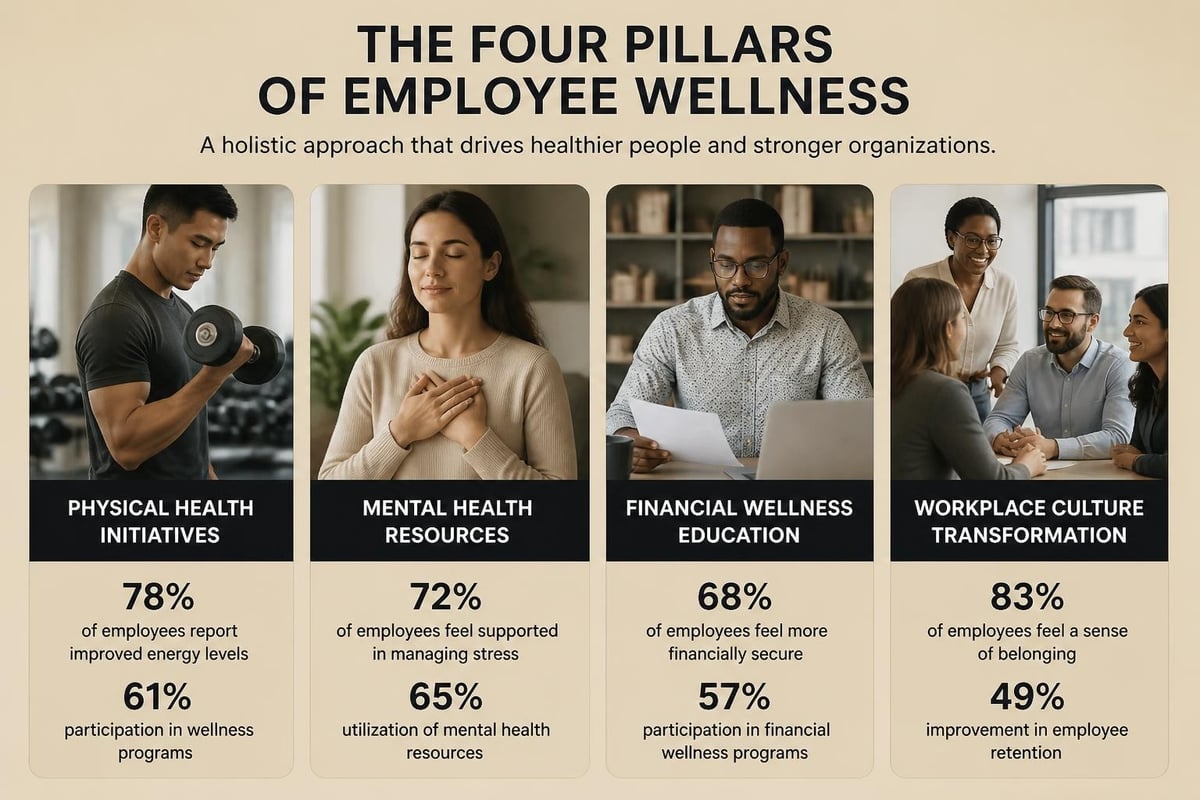
Effective employee wellness requires integration into organizational DNA rather than treatment as an isolated HR initiative. Professional services consultancies must align wellness investments with operational excellence goals, recognizing that healthy, engaged employees deliver superior client outcomes and drive revenue growth.
Designing Evidence-Based Wellness Programs
The SHRM toolkit on designing effective wellness programs provides a framework for developing initiatives that comply with legal requirements while maximizing employee participation and impact. Implementation success depends on thorough needs assessment, stakeholder engagement, and continuous measurement.
Assessment and Planning Phase
Begin by collecting baseline data on current employee health status, engagement levels, and existing benefit utilization. Anonymous surveys, health risk assessments, and claims data analysis reveal priority areas requiring intervention.
| Assessment Component | Data Sources | Key Metrics |
|---|---|---|
| Physical Health | Biometric screenings, claims data | BMI, blood pressure, chronic conditions |
| Mental Health | Engagement surveys, EAP utilization | Stress levels, work-life balance scores |
| Financial Wellness | Retirement participation, benefit surveys | Savings rates, financial stress indicators |
| Workplace Culture | Exit interviews, manager feedback | Turnover rates, satisfaction scores |
Organizations should segment populations to tailor interventions appropriately. Remote workers require different support structures than office-based teams. Similarly, different age cohorts face distinct wellness challenges that programs must address.
Physical Health and Activity Programs
Research from a 2023 systematic review on worksite wellness programs demonstrates that physical activity interventions improve both employee health outcomes and workplace productivity. Successful programs combine infrastructure support, educational resources, and positive incentives.
Effective physical wellness components include:
- On-site or subsidized fitness facilities with flexible access hours
- Activity challenges and team competitions that build social connection
- Ergonomic workspace assessments preventing musculoskeletal issues
- Preventive care incentives encouraging regular screenings
- Nutrition education and healthy food options in workplace settings
The key differentiator between effective and ineffective physical wellness programs lies in accessibility and cultural integration. When leadership models healthy behaviors and organizational policies support wellness participation, adoption rates increase dramatically.

Mental Health as a Core Wellness Component
Mental health represents perhaps the most critical and historically neglected dimension of employee wellness. The WHO estimates that depression and anxiety disorders cost the global economy $1 trillion in lost productivity annually, yet many organizations still treat mental health as secondary to physical wellness initiatives.
Creating Psychologically Safe Workplaces
Employee wellness programs cannot compensate for toxic workplace cultures. Before implementing mental health benefits, organizations must examine and address systemic sources of workplace stress, including unrealistic deadlines, unclear expectations, insufficient resources, and ineffective communication patterns.
Professional services firms face particular challenges given the project-based nature of work and client service pressures. Deloitte’s workplace well-being research identifies that employees increasingly prioritize mental health support when evaluating employers, with 80% of surveyed professionals considering well-being programs essential when choosing where to work.
Mental health program essentials:
- Confidential employee assistance programs (EAPs) with adequate session allowances
- Manager training on recognizing mental health concerns and having supportive conversations
- Flexible work arrangements that accommodate mental health needs
- Regular mental health education reducing stigma
- Access to therapy and counseling both in-person and via telehealth
Organizations should measure mental health program effectiveness through engagement surveys, utilization rates, and correlations with performance metrics rather than relying solely on participation numbers.
Financial Wellness Integration
Financial stress significantly impacts employee wellness, with 60% of American workers reporting that financial concerns affect their work performance. Comprehensive employee wellness strategies must address the financial dimension alongside physical and mental health.
Building Financial Resilience
Financial wellness programs should provide education, tools, and benefits that help employees across the full spectrum of financial capability. Entry-level employees need fundamentally different support than senior staff approaching retirement.
| Career Stage | Primary Financial Concerns | Appropriate Wellness Interventions |
|---|---|---|
| Early Career | Student loans, budgeting basics | Debt management resources, financial literacy training |
| Mid-Career | Home ownership, family planning | Retirement planning, investment education |
| Late Career | Retirement readiness, estate planning | Retirement transition counseling, healthcare planning |
Solutions like earned wage access demonstrate how innovative benefits can reduce financial stress while requiring minimal employer cost. By allowing employees to access earned wages before traditional pay cycles, organizations help workers avoid predatory lending while improving financial stability.
Additionally, ancillary benefits such as critical illness insurance, accident coverage, and hospital indemnity plans provide financial protection that reduces employee anxiety about unexpected expenses. These programs complement traditional health insurance while addressing gaps that create financial vulnerability.
Implementation Strategies and Technology Integration
Successful employee wellness implementation requires more than good intentions and a budget allocation. Organizations must leverage technology, communication strategies, and change management principles to drive adoption and sustain engagement over time.
Technology-Enabled Wellness Platforms
Modern wellness programs utilize integrated platforms that provide personalized recommendations, track progress, and deliver educational content across multiple wellness dimensions. Automation and integration capabilities allow HR teams to manage complex programs efficiently while providing employees seamless access to resources.
Platform capabilities should include:
- Single sign-on access integrating with existing HRIS systems
- Mobile applications enabling participation from any location
- Personalized health assessments and action plans
- Incentive tracking and reward management
- Analytics dashboards measuring program ROI
Data privacy and security represent critical considerations when implementing wellness technology. Organizations must ensure HIPAA compliance, obtain proper consent, and maintain strict separation between health information and employment decisions.

Communication and Change Management
Even well-designed employee wellness programs fail without effective communication strategies. Employees need to understand what's available, how to participate, and why engaging benefits them personally.
Effective communication approaches include:
- Leadership messaging demonstrating organizational commitment from the top
- Peer ambassadors sharing personal wellness success stories
- Manager enablement equipping supervisors to encourage team participation
- Multi-channel outreach using email, intranet, meetings, and physical materials
- Regular reminders maintaining awareness beyond initial launch
Organizations should segment communications based on employee preferences and access to technology. Remote workers require different communication strategies than office-based staff, while diverse workforces may need multilingual materials and culturally appropriate messaging.
Measuring Return on Investment
Demonstrating employee wellness ROI requires establishing clear metrics before program launch and tracking outcomes consistently over time. While some benefits manifest immediately, comprehensive wellness initiatives typically require 18-24 months to generate measurable financial returns.
Key Performance Indicators
Organizations should track both leading indicators (participation rates, engagement scores) and lagging indicators (healthcare costs, productivity metrics) to build a complete picture of program effectiveness.
Primary ROI metrics include:
- Healthcare cost trends compared to industry benchmarks
- Absenteeism rates and short-term disability claims
- Employee retention and turnover costs
- Productivity measures and performance ratings
- Employee engagement and satisfaction scores
A balanced scorecard approach prevents over-emphasis on any single metric while capturing the multi-dimensional impact of wellness investments. For professional services consultancies, billable utilization rates and client satisfaction scores provide additional lenses for evaluating how employee wellness translates to business performance.
Continuous Improvement Cycles
Employee wellness programs require ongoing refinement based on participation data, employee feedback, and outcome measurement. Annual program reviews should assess what's working, identify gaps, and adjust offerings to reflect changing workforce needs.
Human capital management expertise enables organizations to integrate wellness initiatives with broader talent management strategies, ensuring that well-being support aligns with recruitment, development, and retention objectives. This integrated approach maximizes both employee and organizational outcomes.
Industry-Specific Wellness Considerations
Professional services organizations face unique employee wellness challenges stemming from client service demands, project-based work structures, and the knowledge-intensive nature of deliverables. Generic wellness programs often fail to address these industry-specific stressors.
Professional Services Wellness Priorities
Consultants, accountants, lawyers, and other professional services employees report higher-than-average stress levels due to billable hour pressures, travel demands, and client emergency response requirements. Effective employee wellness programs in this sector must acknowledge these realities while providing meaningful support.
Professional services wellness strategies should address:
- Sustainable utilization targets preventing burnout
- Travel wellness resources for frequent business travelers
- Flexible time off policies accommodating project cycles
- Professional development reducing skill-based anxiety
- Community building countering isolation in remote or client-site work
Organizations must balance client commitments with employee well-being, recognizing that burned-out professionals deliver suboptimal client outcomes. Setting realistic expectations and providing adequate staffing represents a wellness intervention as important as any formal program.
Legal Compliance and Privacy Protection
Employee wellness programs must navigate complex legal requirements related to health information privacy, anti-discrimination laws, and benefits regulations. Non-compliance exposes organizations to significant legal and financial risk while undermining employee trust.
Regulatory Frameworks
The Americans with Disabilities Act (ADA), Health Insurance Portability and Accountability Act (HIPAA), and Genetic Information Nondiscrimination Act (GINA) all impose requirements on workplace wellness programs. Organizations must ensure that participation remains voluntary, incentives stay within allowable limits, and health information receives appropriate protection.
Compliance essentials include:
- Voluntary participation without coercion
- Reasonable alternative standards for those unable to meet health targets
- Proper consent and disclosure procedures
- Secure data storage separated from personnel files
- Third-party administration for health-related components
Working with experienced benefits consultants helps organizations design compliant programs that maximize employee value while minimizing legal exposure. Regular compliance audits should verify ongoing adherence to evolving regulations.
Emerging Trends Shaping Employee Wellness
The employee wellness landscape continues to evolve rapidly, driven by technological innovation, changing workforce expectations, and emerging research on effective interventions. Organizations must stay current with trends to remain competitive in talent markets.
Personalization and Individual Choice
One-size-fits-all wellness programs increasingly give way to personalized approaches that allow employees to select benefits matching their unique needs and preferences. Point-based systems, flexible benefit dollars, and modular program designs enable customization while maintaining cost predictability.
Emerging wellness trends include:
- Mental health parity with physical health resources
- Financial wellness education and emergency savings programs
- Social connection initiatives combating isolation
- Purpose and meaning programs aligning work with values
- Environmental wellness addressing workspace and community factors
The most innovative organizations view employee wellness as an integrated system supporting whole-person health rather than a collection of disconnected benefits. This systems thinking approach generates synergies across wellness dimensions, amplifying overall impact.
Employee wellness represents a strategic investment that delivers measurable returns through reduced costs, improved productivity, and enhanced talent retention. Organizations that commit to comprehensive, authentic wellness programs position themselves for sustainable competitive advantage in increasingly talent-constrained markets. Nero and Associates, Inc. partners with professional services organizations to design and implement performance-based wellness solutions that reduce costs, save time, and empower employees across mental, physical, and financial health dimensions. Contact our team to discover how integrated human capital management and benefits optimization can transform your organizational performance while supporting employee well-being.