

Organizations today face unprecedented challenges in managing vast amounts of data across multiple systems and platforms. Whether dealing with customer information, clinical trial data, or operational datasets, the need for structured, compliant, and accessible data management has never been more critical. CDM management represents a strategic approach to collecting, organizing, validating, and maintaining data throughout its lifecycle, ensuring accuracy, security, and regulatory compliance while driving business value.
Understanding the Fundamentals of CDM Management
CDM management encompasses multiple domains depending on the organizational context. In healthcare and pharmaceutical industries, clinical data management focuses on patient information, trial protocols, and regulatory submissions. For commercial enterprises, customer data management involves aggregating customer interactions, preferences, and behaviors to create unified profiles that drive personalized experiences.
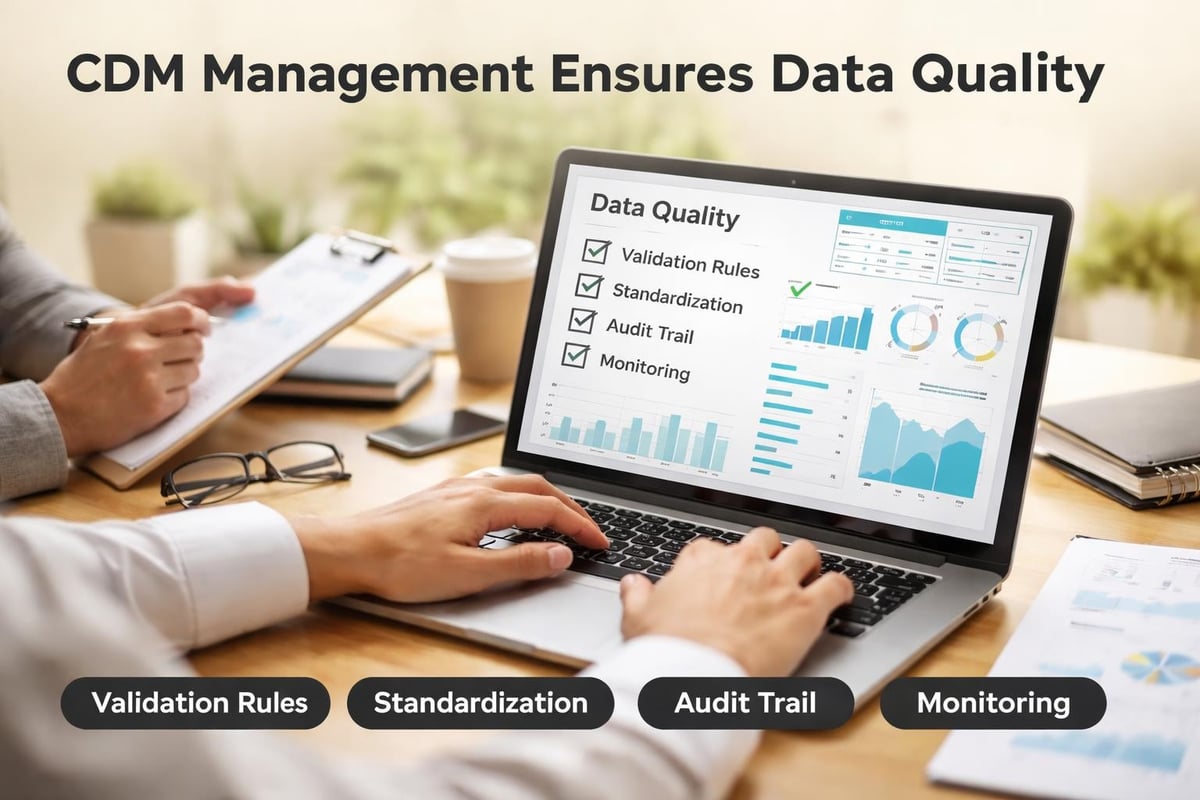
The core principle remains consistent across applications: establishing standardized processes that ensure data integrity from collection through archival. This involves creating comprehensive data governance frameworks, implementing validation rules, and maintaining audit trails that demonstrate compliance with regulatory requirements.
Key Components of Effective Data Management Systems
Modern cdm management systems incorporate several essential elements that work together to maintain data quality and accessibility:
- Data collection protocols that standardize information capture across all touchpoints
- Validation mechanisms that verify accuracy and completeness in real-time
- Security frameworks protecting sensitive information from unauthorized access
- Integration capabilities connecting disparate systems into cohesive ecosystems
- Compliance monitoring ensuring adherence to industry regulations and standards
Organizations implementing these components systematically reduce errors, accelerate decision-making processes, and improve operational efficiency. The investment in robust CDM management infrastructure pays dividends through reduced rework, faster insights, and enhanced regulatory confidence.
Best Practices for Clinical Data Management
Healthcare organizations face unique challenges in cdm management, particularly regarding patient privacy, regulatory compliance, and data accuracy. The Good Clinical Data Management Practice (GCDMP) provides comprehensive guidelines that serve as the industry standard for clinical trials and research studies.
Implementing these practices requires careful attention to study design, data collection instruments, and quality control procedures. Organizations must establish clear roles and responsibilities, document all processes thoroughly, and maintain complete audit trails that withstand regulatory scrutiny.
Leveraging Technology for Enhanced Clinical Workflows
Modern clinical data management practices increasingly incorporate artificial intelligence and cloud computing to improve efficiency and accuracy. These technologies enable real-time data validation, automated quality checks, and predictive analytics that identify potential issues before they escalate.
| Technology Component | Primary Function | Business Impact |
|---|---|---|
| AI-Powered Validation | Automated error detection | 70% reduction in data queries |
| Cloud Infrastructure | Scalable data storage | 50% lower infrastructure costs |
| Machine Learning | Pattern recognition | 85% faster safety signal detection |
| Electronic Data Capture | Direct data entry | 60% time savings |
Organizations that embrace these technologies position themselves to conduct more efficient studies, reduce timelines, and improve data quality. The integration of automation into cdm management workflows eliminates thousands of manual hours while reducing human error.
Customer Data Management Strategies
Commercial enterprises require sophisticated approaches to managing customer information across marketing, sales, service, and support functions. Effective customer data management begins with ethical collection practices and extends through secure storage, thoughtful analysis, and responsible usage.
The first step involves creating a standard definition of "customer" that applies consistently across all systems and departments. This seemingly simple task often reveals significant discrepancies in how different teams classify and track customer relationships. Establishing this common language enables accurate reporting and prevents duplicate records that undermine data quality.
Breaking Down Data Silos
Many organizations struggle with fragmented data ecosystems where customer information resides in isolated systems that don't communicate effectively. This siloed approach creates incomplete customer views and missed opportunities for personalization and engagement.
Successful cdm management requires cross-departmental collaboration and technical integration that unifies data from all customer touchpoints. Marketing automation platforms, CRM systems, support ticketing tools, and e-commerce platforms must connect through APIs and data synchronization processes that maintain consistency.
Organizations implementing unified customer data platforms report significant improvements in campaign effectiveness, customer satisfaction, and revenue growth. The investment in breaking down silos enables personalized experiences that drive loyalty and lifetime value.
Regulatory Compliance and Data Governance
Compliance requirements continue to expand across industries, with regulations like GDPR, HIPAA, and industry-specific standards demanding rigorous data management practices. CDM management systems must incorporate privacy by design, ensuring that data protection measures are built into processes from the outset rather than bolted on afterward.
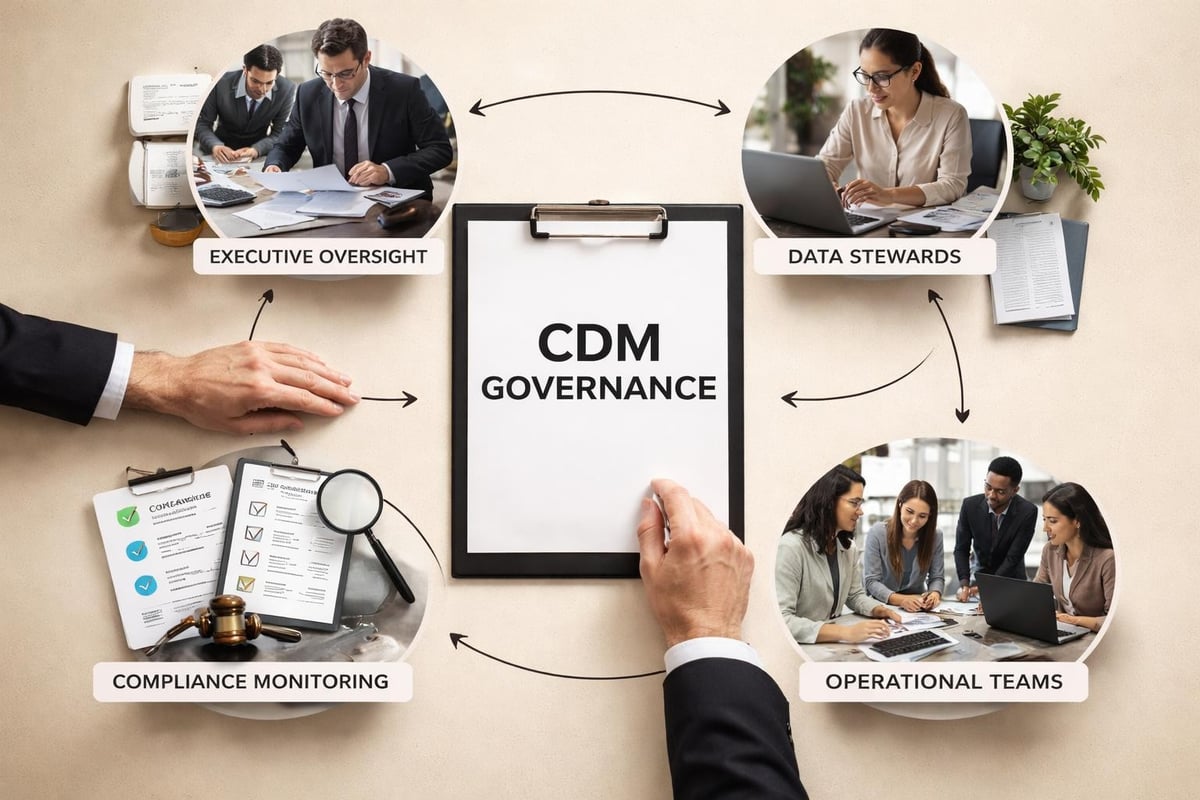
Data governance frameworks establish policies, procedures, and controls that guide how organizations collect, store, use, and dispose of data. These frameworks assign clear accountability for data quality and compliance, defining roles such as data owners, data stewards, and data custodians who maintain oversight throughout the data lifecycle.
Implementing Effective Governance Structures
- Establish a data governance council with executive sponsorship and cross-functional representation
- Document data policies covering classification, retention, access, and disposal
- Create data quality metrics that measure accuracy, completeness, and timeliness
- Implement access controls based on role-based permissions and least privilege principles
- Conduct regular audits to verify compliance and identify improvement opportunities
- Provide ongoing training ensuring all staff understand their responsibilities
Organizations with mature governance programs demonstrate better compliance outcomes, reduced risk exposure, and improved operational efficiency. The structured approach to cdm management enables faster response to regulatory inquiries and greater confidence in data-driven decisions.
Integration and Automation Strategies
Modern businesses operate complex technology ecosystems with dozens or hundreds of applications serving different functions. Effective cdm management requires sophisticated integration strategies that connect these systems while maintaining data quality and consistency.
Application programming interfaces (APIs) enable real-time data exchange between systems, ensuring that updates in one platform automatically propagate to others. This synchronization eliminates manual data entry, reduces errors, and provides stakeholders with current information regardless of which system they access.
Automation Opportunities in Data Management
Automation represents a transformative opportunity for organizations seeking to improve cdm management efficiency. Robotic process automation (RPA) can handle repetitive tasks such as data extraction, validation, and migration, freeing human resources for higher-value activities.
Common automation applications include:
- Scheduled data quality checks that flag anomalies for human review
- Automated report generation delivering insights to stakeholders on predefined schedules
- Alert systems notifying relevant personnel when data exceeds acceptable thresholds
- Workflow automation routing data through approval processes based on business rules
- Batch processing for large-scale data transformations and migrations
Organizations leveraging automation in their cdm management practices report eliminating thousands of hours of manual work annually. This efficiency gain enables teams to focus on strategic initiatives rather than routine maintenance tasks.
Data Quality Management Frameworks
Data quality directly impacts business outcomes, influencing everything from operational decisions to customer experiences. Biotechnology organizations particularly understand this reality, as poor data quality in clinical trials can delay regulatory approvals and jeopardize patient safety.
Comprehensive quality management frameworks address multiple dimensions of data quality:
| Quality Dimension | Definition | Measurement Approach |
|---|---|---|
| Accuracy | Data correctly represents reality | Error rate calculations |
| Completeness | All required fields contain values | Null field percentage |
| Consistency | Data matches across systems | Cross-system comparison |
| Timeliness | Information reflects current state | Age of data analysis |
| Validity | Data conforms to defined formats | Format compliance rate |
| Uniqueness | No duplicate records exist | Duplicate detection scans |
Organizations implementing these frameworks establish baseline measurements, set improvement targets, and monitor progress through dashboards that provide real-time visibility into data quality status. This proactive approach to cdm management prevents quality issues from undermining business initiatives.
Building a Quality-First Culture
Technology alone cannot ensure data quality. Organizations must cultivate cultures where employees understand their role in maintaining data integrity and feel empowered to flag quality concerns. This cultural transformation requires executive commitment, clear communication, and accountability mechanisms that reinforce quality expectations.
Training programs should educate staff on data standards, validation procedures, and the business impact of quality issues. Regular communication about quality metrics keeps data top-of-mind and celebrates improvements, reinforcing desired behaviors across the organization.

Customizing Data Models for Business Needs
While standardized data models provide excellent starting points, most organizations require customization to address unique business requirements. Best practices for data model customization emphasize careful planning to ensure extensions don't compromise system performance or future upgrade paths.
Organizations should begin by thoroughly understanding their current data landscape, documenting all data sources, formats, and relationships. This discovery phase reveals gaps between existing capabilities and business requirements, informing customization priorities.
Strategic Approaches to Model Extension
When extending data models for cdm management purposes, organizations should:
- Preserve core model structures to maintain compatibility with standard features
- Document all customizations comprehensively to support future maintenance
- Test extensions thoroughly before deploying to production environments
- Consider scalability implications as data volumes grow over time
- Plan migration strategies for moving customizations during system upgrades
The balance between standardization and customization represents a key strategic decision. Excessive customization creates technical debt and upgrade complexity, while insufficient customization leaves business needs unmet. Successful organizations find the optimal middle ground through careful analysis and phased implementation.
Security and Privacy Considerations
Data breaches and privacy violations carry severe consequences, including regulatory fines, reputational damage, and customer trust erosion. CDM management must incorporate robust security measures that protect sensitive information throughout its lifecycle.
Encryption protects data both at rest and in transit, ensuring that unauthorized parties cannot access information even if they gain physical access to storage media or intercept network communications. Strong authentication mechanisms verify user identities before granting access, while authorization controls limit what authenticated users can view or modify based on their roles.
Privacy-Preserving Data Practices
Privacy regulations require organizations to implement specific protections for personally identifiable information (PII) and protected health information (PHI). These requirements include:
- Data minimization principles collecting only necessary information
- Purpose limitation using data solely for disclosed purposes
- Consent management tracking and honoring individual preferences
- Right to access enabling individuals to view their stored data
- Right to deletion removing data upon request when legally permissible
- Breach notification alerting affected parties within required timeframes
Organizations implementing privacy-by-design principles embed these protections into cdm management processes from the outset. This proactive approach proves more effective and cost-efficient than attempting to retrofit privacy protections into existing systems.
Performance Optimization and Scalability
As data volumes grow exponentially, cdm management systems must scale efficiently to maintain acceptable performance. Organizations should monitor system metrics regularly, identifying bottlenecks before they impact user experience or business operations.
Database optimization techniques such as indexing, partitioning, and query optimization improve response times for common operations. Caching frequently accessed data reduces database load and accelerates application performance. Load balancing distributes processing across multiple servers, preventing individual systems from becoming overwhelmed.
Planning for Future Growth
Scalability planning requires understanding growth trajectories and architecting systems that accommodate expansion without requiring complete redesigns. Cloud-based infrastructure offers elastic scalability, allowing organizations to add capacity dynamically as needs increase.
Performance benchmarking establishes baseline measurements and identifies acceptable thresholds for key metrics. Regular testing under simulated load conditions reveals how systems perform under stress, enabling proactive capacity planning rather than reactive crisis management.
Organizations that prioritize performance in their cdm management strategies deliver better user experiences, support faster business processes, and avoid costly emergency upgrades when systems reach capacity limits.
Training and Change Management
Technology implementations fail when organizations neglect the human element. Successful cdm management requires comprehensive training programs that build user competency and confidence with new systems and processes.
Training should address multiple learning styles through varied formats including instructor-led sessions, self-paced online modules, quick reference guides, and hands-on practice environments. Role-specific training ensures users learn features relevant to their responsibilities rather than generic overviews that don't address their specific needs.
Change management strategies help organizations navigate the disruption that accompanies cdm management initiatives. Communication plans keep stakeholders informed about project progress, upcoming changes, and expected impacts. Leadership support signals organizational commitment and encourages adoption throughout the workforce.
Organizations investing in training and change management achieve faster user adoption, reduced support costs, and greater return on their technology investments. These "soft" elements often determine whether implementations succeed or struggle despite technically sound solutions.
Measuring ROI and Business Value
Executives increasingly demand measurable returns on technology investments. CDM management initiatives should establish clear success metrics aligned with business objectives, demonstrating value through quantifiable improvements.
Common ROI metrics include:
| Metric Category | Example Measurements | Business Impact |
|---|---|---|
| Efficiency Gains | Hours saved through automation | Reduced operational costs |
| Quality Improvements | Error rate reduction percentage | Fewer rework costs |
| Compliance Outcomes | Audit findings decreased | Lower regulatory risk |
| Revenue Impact | Conversion rate improvements | Increased sales revenue |
| Customer Satisfaction | NPS score increases | Higher retention rates |
Baseline measurements established before implementation enable accurate before-and-after comparisons. Regular reporting keeps stakeholders informed about value realization and identifies areas requiring additional attention or investment.
Organizations demonstrating strong ROI from initial cdm management projects build credibility for future data initiatives. This positive track record facilitates budget approvals and executive support for expanding data capabilities across the enterprise.
Effective CDM management transforms how organizations collect, maintain, and leverage data across clinical, customer, and operational domains. By implementing best practices in governance, quality management, integration, and security, businesses position themselves for sustainable competitive advantage in increasingly data-driven markets.
Organizations seeking to optimize their data management capabilities benefit from partnering with experienced consultants who understand both technical requirements and business objectives. Nero and Associates, Inc. helps companies eliminate manual processes, improve operational efficiency, and empower employees through strategic automation, integration, and human capital management solutions. Contact us to discover how performance-based consulting can transform your data management approach and drive measurable business results.