

A dependent care FSA represents one of the most underutilized yet powerful employee benefits available today. This pre-tax savings account allows employees to set aside money for qualifying dependent care expenses while simultaneously reducing their taxable income. For businesses seeking to enhance their benefits package without significant cost increases, understanding how these accounts work can transform employee satisfaction and retention while demonstrating genuine commitment to workforce financial wellness.
Understanding Dependent Care FSA Fundamentals
A dependent care flexible spending account enables employees to pay for care expenses related to children under age 13 or adult dependents who cannot care for themselves. The account functions by allowing employees to contribute pre-tax dollars from their paychecks, which are then used to reimburse qualified dependent care costs throughout the year.
The mechanics are straightforward:
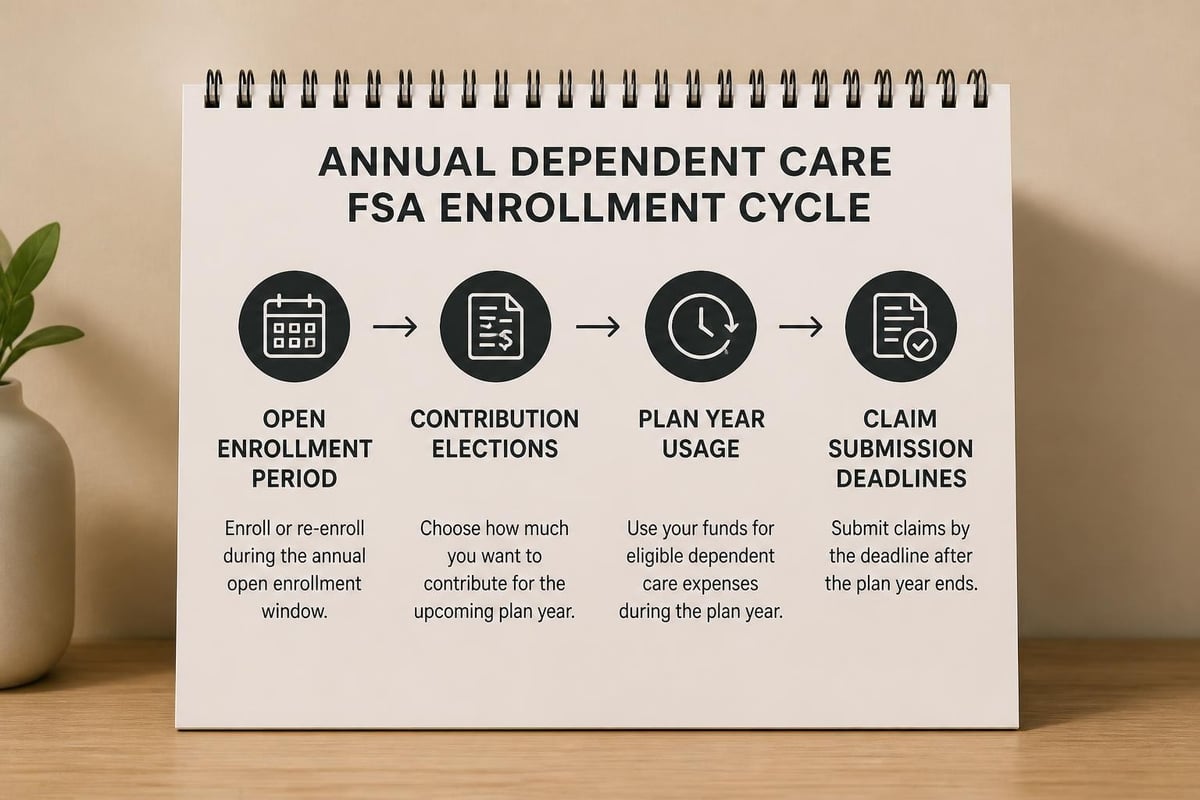
- Employees elect their annual contribution during open enrollment
- Contributions are deducted evenly from each paycheck before taxes
- Employees pay care providers and submit claims for reimbursement
- Funds must be used within the plan year or grace period
The tax advantages benefit both employers and employees. This comprehensive overview of Dependent Care FSAs explains how these accounts reduce federal income tax, Social Security tax, and Medicare tax obligations. When employees lower their taxable income through pre-tax contributions, employers also save on their portion of payroll taxes.
Key Eligibility Requirements
Not everyone qualifies for dependent care FSA benefits. The IRS imposes specific requirements that employees must meet before they can participate in these accounts.
Qualifying dependents include:
- Children under age 13 whom you claim as tax dependents
- Spouses who are physically or mentally incapable of self-care
- Adult dependents who are physically or mentally incapable of self-care and live with you for more than half the year
The employee (and spouse, if married) must also be working or actively seeking employment. Full-time students may qualify under certain conditions. These requirements ensure the funds support actual work-related care needs rather than convenience expenses.

2026 Contribution Limits and Tax Implications
The IRS adjusts FSA contribution limits periodically to account for inflation and economic conditions. For 2026, recent changes to FSA contribution limits have created new opportunities for families to maximize their tax savings through dependent care accounts.
The current contribution limits for dependent care FSA accounts in 2026 are:
| Filing Status | Annual Limit |
|---|---|
| Single or Married Filing Jointly | $5,000 |
| Married Filing Separately | $2,500 |
| Both Spouses Have FSAs | $5,000 combined |
These limits apply per household, not per person. If both spouses work for employers offering a dependent care FSA, their combined contributions cannot exceed $5,000 annually. This distinction proves critical for families where both partners have access to these benefits through their respective employers.
Calculating Your Tax Savings
The actual tax savings from a dependent care FSA depend on your marginal tax rate. Consider an employee in the 24% federal tax bracket who also pays 7.65% in FICA taxes and 5% state income tax. Their effective tax rate totals 36.65%.
By contributing the maximum $5,000 to a dependent care FSA, this employee saves approximately $1,833 in taxes annually. This represents money that would otherwise go to tax authorities but instead remains available for family use. For businesses implementing comprehensive employee benefits consulting strategies, highlighting these concrete savings drives enrollment and appreciation.
Qualifying Expenses and Usage Guidelines
Understanding which expenses qualify for dependent care FSA reimbursement prevents frustration and ensures compliance. The IRS maintains specific guidelines about what constitutes legitimate work-related dependent care.
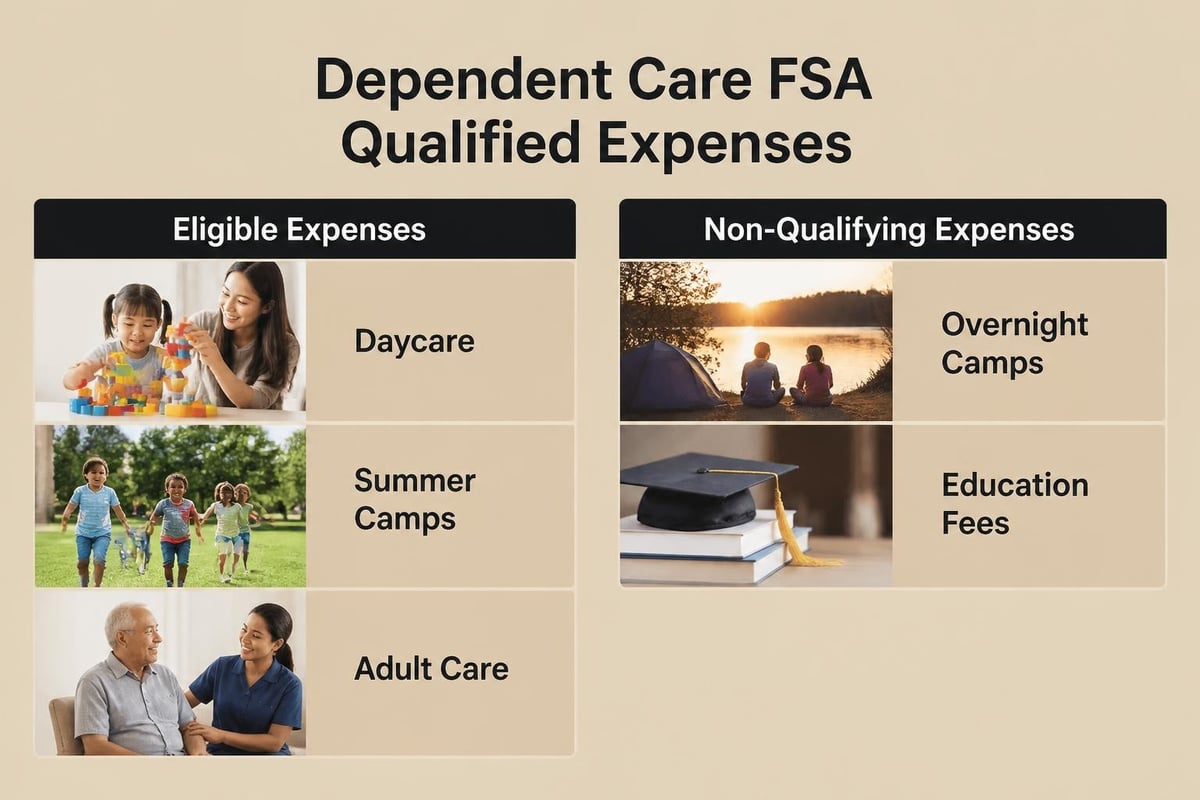
Eligible expenses typically include:
- Daycare center fees for children under 13
- Before and after school care programs
- Summer day camp (not overnight camps)
- Preschool and nursery school
- In-home care providers (nanny or babysitter)
- Adult daycare for qualifying dependents
The care must enable the employee (and spouse) to work, look for work, or attend school full-time. Educational expenses generally do not qualify, though fees for programs that primarily provide care can be reimbursed even if they include educational components.
Common Exclusions to Remember
Several expenses that seem related to dependent care actually fall outside FSA eligibility. Overnight camps, kindergarten tuition, long-term care services, and care provided by relatives under age 19 typically cannot be reimbursed through these accounts.
Food, clothing, entertainment, and educational supplies also remain ineligible. The focus stays strictly on care services that enable workforce participation. Understanding ancillary benefits like dependent care FSAs helps businesses design comprehensive packages that address diverse employee needs.
Strategic Planning and Enrollment Considerations
Enrolling in a dependent care FSA requires careful planning because these accounts operate under "use it or lose it" rules. Unlike health FSAs which may offer carryover options, dependent care accounts typically require employees to forfeit unused funds at year-end, though some plans include a grace period.
Estimating Annual Care Costs
Accurate estimation prevents both overfunding and underfunding. Employees should calculate their expected care costs by multiplying weekly or monthly expenses by the number of weeks or months they'll need care, then accounting for vacation schedules, school breaks, and potential provider changes.
Estimation worksheet example:
- Weekly daycare cost: $300
- Weeks needed per year: 48 (accounting for 4 weeks vacation)
- Annual cost: $14,400
- FSA contribution: $5,000 (maximum allowable)
- Out-of-pocket after FSA: $9,400
For families with care costs exceeding the FSA maximum, contributing the full $5,000 makes sense. Those with lower costs should contribute conservatively to avoid forfeiting funds. Practical strategies for using Dependent Care FSAs provide detailed guidance on optimizing contributions based on individual circumstances.
Coordination with Dependent Care Tax Credit
The dependent care FSA and the dependent care tax credit both provide tax benefits for similar expenses, but employees cannot claim the same dollar twice. The FSA typically provides greater savings for higher earners, while the tax credit benefits those in lower tax brackets more significantly.
Employees must reduce the expenses claimed for the tax credit by amounts reimbursed through their FSA. For many families, maximizing the FSA contribution delivers better overall tax savings, but individual calculations based on income, filing status, and care costs determine the optimal strategy.
Implementation Best Practices for Employers
Businesses offering dependent care FSA benefits must handle administration thoughtfully to ensure compliance and maximize employee participation. The administrative requirements differ from health FSAs and demand specific attention.
Critical implementation elements include:
- Clear communication about contribution limits and deadlines
- Robust education on eligible expenses and documentation requirements
- Streamlined claim submission and reimbursement processes
- Integration with payroll systems for accurate deduction processing
- Compliance monitoring for IRS regulations
Many organizations partner with third-party administrators who specialize in FSA management. These providers handle claims processing, compliance tracking, and employee communications, reducing the administrative burden on internal HR teams. For companies focused on SMB payroll efficiency, outsourcing FSA administration frees resources for strategic initiatives.
Communication and Education Strategies
Employee understanding directly correlates with enrollment rates. Many eligible employees avoid dependent care FSAs simply because they don't understand how the accounts work or miscalculate their potential savings.
| Communication Method | Effectiveness | Best Use Case |
|---|---|---|
| One-on-one benefits counseling | Very High | Complex situations, high earners |
| Group enrollment meetings | High | Initial rollout, annual enrollment |
| Email campaigns with calculators | Moderate | Awareness building, reminders |
| Video tutorials and webinars | Moderate to High | Visual learners, remote workers |
| Written guides and FAQs | Moderate | Reference material, self-service |
Providing comprehensive guides on maximizing savings through visual and written formats addresses different learning preferences. Employees need concrete examples that reflect their actual situations rather than generic information.
Claim Submission and Documentation Requirements
Proper documentation ensures smooth reimbursement and IRS compliance. The claim process requires specific information that employees must gather from their care providers throughout the year.
Required documentation includes:
- Care provider's name, address, and tax identification number (Social Security number or EIN)
- Dates of service
- Amount paid
- Description of services provided
- Statement that services were for qualifying dependent care
Employees should collect this information when enrolling their children or dependents in care programs. Most providers readily supply the necessary details, as they understand FSA requirements. However, securing tax identification numbers from individual caregivers sometimes proves challenging and requires advance planning.
Reimbursement Timing and Cash Flow Considerations
Unlike health FSAs where the full annual election is available immediately, dependent care FSAs only reimburse based on funds already contributed. If an employee elects $5,000 annually, they contribute approximately $192 per bi-weekly paycheck. They can only request reimbursement up to their current account balance.
This pay-as-you-go structure means employees often pay care providers out-of-pocket first, then submit claims for reimbursement once sufficient funds accumulate. Planning for this cash flow dynamic prevents financial stress and ensures employees can meet their care payment obligations while waiting for FSA reimbursements.
Special Situations and Advanced Considerations
Certain employment and family situations create unique dependent care FSA scenarios that require specialized handling and understanding.
Self-Employed Individuals and Business Owners
Self-employed individuals and business owners cannot participate in dependent care FSAs. The IRS restricts these benefits to employees working for separate legal entities. However, self-employed individuals may claim the dependent care tax credit on their personal tax returns.
This limitation affects S-corporation owners who own more than 2% of company stock, partners in partnerships, and sole proprietors. These individuals should explore the tax credit option instead and ensure their business structure aligns with their benefits strategy.
Divorced or Separated Parents
Custody arrangements impact dependent care FSA eligibility. Generally, only the custodial parent who claims the child as a dependent for tax purposes can use a dependent care FSA for that child's care expenses, regardless of which parent actually pays for care.
When parents alternate claiming the child annually, the parent claiming the child that year can use their FSA. Divorce decrees and custody agreements should address these considerations to prevent conflicts and ensure both parents understand their respective benefits rights.
Mid-Year Changes and Life Events
Dependent care FSA elections typically cannot change mid-year except for qualifying life events. These include marriage, divorce, birth or adoption, significant changes in employment status, or significant changes in the cost of care.
When life events occur, employees must notify their employer within 30 days to adjust their elections. The change must be consistent with the event; for example, if a spouse loses their job and becomes the primary caregiver, the employee might reduce or eliminate their dependent care FSA contribution.
Maximizing Employee Engagement and Satisfaction
The true value of offering a dependent care FSA extends beyond tax savings. These benefits demonstrate employer commitment to supporting working families and addressing real-life challenges employees face daily.
Engagement strategies that drive participation:
- Highlight real employee success stories and savings testimonials
- Provide personalized savings calculators during enrollment
- Offer decision support tools comparing FSA versus tax credit options
- Schedule Q&A sessions with benefits experts before enrollment deadlines
- Send quarterly reminders about using funds and submitting claims
Organizations that frame dependent care FSA benefits as part of holistic financial wellness initiatives see higher enrollment and satisfaction. Employees appreciate employers who recognize the substantial costs of dependent care and provide meaningful support. This aligns perfectly with time savings initiatives that help employees balance work and family responsibilities more effectively.
Measuring Program Success
Tracking key metrics helps businesses understand their dependent care FSA program's impact and identify improvement opportunities.
| Metric | Target Range | What It Indicates |
|---|---|---|
| Enrollment rate among eligible employees | 15-25% | Awareness and perceived value |
| Average contribution amount | $3,500-$5,000 | Employee confidence and need |
| Claims submission rate | 90%+ | Understanding of process |
| Funds forfeited at year-end | <5% | Accuracy of elections |
| Employee satisfaction score | 8+/10 | Overall program effectiveness |
Low enrollment suggests communication gaps or misunderstanding about benefits value. High forfeiture rates indicate employees struggle with accurate estimation or don't fully utilize their accounts. These insights guide refinements to education, enrollment processes, and ongoing support.
Integration with Comprehensive Benefits Strategy
Dependent care FSA offerings work best when integrated into broader benefits and wellness programs rather than positioned as standalone perks. Step-by-step guidance on using dependent care FSAs helps employees see these accounts as part of their complete financial wellness toolkit.
Organizations can connect dependent care FSAs with employee assistance programs, flexible work arrangements, and other family-friendly policies. This integrated approach signals that the company values work-life balance and understands the multifaceted nature of employee wellbeing.
Supporting Diverse Family Structures
Modern families take many forms, and dependent care FSA benefits must accommodate this diversity. Single parents, grandparents raising grandchildren, sandwich generation employees caring for both children and aging parents, and same-sex couples all benefit from these accounts when properly structured and communicated.
Inclusive language in benefits materials and examples that reflect varied family situations ensure all eligible employees understand their options. Companies serving enterprise clients managing diverse workforces particularly benefit from this comprehensive approach to dependent care support.
Future Trends and Legislative Outlook
The landscape of dependent care FSAs continues evolving as lawmakers and regulators respond to changing workforce needs and economic conditions. Recent years have seen temporary expansions of these benefits, and ongoing discussions about permanent improvements remain active in policy circles.
Several trends are shaping the future of dependent care FSAs:
- Increased contribution limits to keep pace with rising care costs
- Greater flexibility in fund rollover and grace period provisions
- Enhanced coordination between FSAs and other care-related tax benefits
- Simplified documentation and claim processes through technology integration
- Expanded definitions of qualifying care to reflect modern work arrangements
Businesses should monitor these developments and adjust their benefits offerings accordingly. Staying ahead of regulatory changes demonstrates responsiveness to employee needs and maintains competitive advantage in talent acquisition and retention.
Dependent care FSAs deliver measurable financial benefits while supporting employees through one of their most significant personal expenses. These accounts reduce tax burden, improve cash flow for working families, and enhance overall benefits satisfaction when implemented thoughtfully. Nero and Associates, Inc. helps organizations design and implement comprehensive benefits strategies that include dependent care FSAs as part of holistic employee wellness programs. Our performance-based approach ensures your benefits investments deliver meaningful returns through improved retention, engagement, and workforce productivity.