

Earned Wage Access: Transform Financial Wellness in 2026

Share on Facebook
Share on X
Share on LinkedIn

Financial stress remains one of the most significant challenges facing today's workforce, directly impacting productivity, retention, and overall employee wellbeing. As organizations continue to prioritize employee health and financial wellness in 2026, earned wage access has emerged as a transformative benefit that addresses these challenges head-on. This innovative approach allows employees to access their earned wages before the traditional payday, fundamentally changing how workers manage their finances and how employers support their teams.

Understanding Earned Wage Access and Its Growing Importance

Earned wage access represents a paradigm shift in how employees receive compensation for work already performed. Rather than waiting for the standard bi-weekly or monthly pay cycle, workers can access a portion of their earned wages on-demand, providing crucial financial flexibility when unexpected expenses arise.

The mechanism behind this benefit is straightforward yet powerful. Earned pay requests work by calculating wages already earned based on hours worked, then making those funds available through a digital platform or mobile application. This process does not constitute a loan or advance; employees are simply accessing money they have already earned through their labor.

Key characteristics of earned wage access include:

  • Real-time access to earned but unpaid wages
  • No interest charges or mandatory fees
  • Integration with existing payroll systems
  • Digital-first delivery through mobile applications
  • Employee autonomy over financial decisions

Market data reveals the explosive growth trajectory of this benefit. The earned wage access market is projected to reach substantial valuations through 2034, driven by increasing employer adoption and employee demand for financial wellness solutions.

How earned wage access integrates with payroll systems

The Financial Wellness Connection

Financial wellness extends far beyond traditional retirement planning or health savings accounts. Modern employees face immediate financial pressures that demand accessible solutions. Research indicates that financial stress costs employers billions annually through reduced productivity, increased absenteeism, and higher turnover rates.

Earned wage access directly addresses these challenges by providing employees with greater control over their cash flow. When unexpected medical bills, car repairs, or family emergencies arise, workers can access their earned wages rather than turning to high-interest payday loans, credit card debt, or overdraft fees.

Traditional Pay Cycle With Earned Wage Access
Fixed payday regardless of need On-demand access when needed
May lead to expensive borrowing Eliminates need for predatory lending
Limited financial flexibility Enhanced cash flow management
Higher financial stress Reduced anxiety about expenses
Passive benefit delivery Empowered employee decisions

Organizations focused on achieving growth and efficiency in their operations recognize that employee financial wellness directly correlates with operational performance. When employees are financially stable, they are more engaged, productive, and loyal to their employers.

Implementation Strategies for Organizations

Deploying earned wage access requires careful planning and execution to maximize adoption and value. Organizations must consider multiple factors when selecting and implementing a solution that aligns with their workforce needs and operational requirements.

Selecting the Right Platform

The earned wage access landscape includes numerous providers with varying features, fee structures, and integration capabilities. Organizations should evaluate potential partners based on several critical criteria:

  1. Integration compatibility with existing payroll and HRIS systems
  2. Fee structure and whether costs are employer-paid, employee-paid, or hybrid
  3. User experience of the mobile application and access process
  4. Compliance framework ensuring adherence to wage and hour laws
  5. Data security protocols protecting sensitive employee information
  6. Support services for both HR teams and employees

Evolution from niche benefit to mainstream financial wellness tool demonstrates how enterprise organizations are approaching adoption with strategic intent rather than tactical implementation.

Technical Integration Process

Successful implementation depends on seamless technical integration. The process typically involves connecting the earned wage access platform with:

  • Payroll systems for accurate wage calculation
  • Time and attendance platforms to verify hours worked
  • Banking infrastructure for fund disbursement
  • HR information systems for employee data synchronization

Organizations that have invested in automation and integration capabilities often find earned wage access integration more straightforward. Modern platforms utilize API connections that enable real-time data exchange without disrupting existing workflows.

Implementation timeline considerations:

  • Initial platform configuration: 2-4 weeks
  • Payroll system integration testing: 1-2 weeks
  • Employee communication and education: 2-3 weeks
  • Soft launch with pilot group: 2-4 weeks
  • Full organizational rollout: 1-2 weeks

Employee financial wellness improvement stages

Communication and Education

Even the most sophisticated earned wage access platform will fail without proper employee education. Workers need to understand what the benefit is, how it works, and when to use it appropriately.

Effective communication strategies include multiple touchpoints across various channels. Launch communications should clearly explain that earned wage access is not a loan but rather access to wages already earned. This distinction is crucial for employee understanding and acceptance.

Measuring Impact and Return on Investment

Organizations implementing earned wage access should establish clear metrics to evaluate program success and quantify return on investment. These measurements extend beyond simple utilization rates to encompass broader organizational impacts.

Direct Financial Metrics

The most immediate measurements focus on employee adoption and usage patterns. Tracking these indicators provides insights into program effectiveness and value delivery:

Metric Category Key Indicators Target Benchmark
Adoption Rate Percentage of eligible employees enrolled 40-60% within 6 months
Active Usage Employees accessing wages monthly 30-45% of enrolled
Transaction Frequency Average transactions per active user 2-4 per month
Access Amount Average percentage of earned wages accessed 15-25% of available

Organizations should also monitor the reduction in employee requests for pay advances or emergency loans, as these indicators demonstrate the benefit's effectiveness in meeting financial needs.

Workforce Performance Indicators

The true value of earned wage access extends to broader workforce metrics that directly impact organizational performance. Research surveying hospitality industry workers reveals significant improvements in financial confidence and reduced stress levels.

Measurable workforce improvements include:

  • Decreased absenteeism related to financial stress
  • Improved employee retention rates
  • Higher engagement scores in employee surveys
  • Reduced requests for shift changes due to financial pressures
  • Lower utilization of employer emergency assistance programs

Companies that track efficiency metrics across human capital management initiatives can correlate earned wage access adoption with performance improvements, demonstrating clear ROI through reduced turnover costs and enhanced productivity.

Industry-Specific Applications and Considerations

Different industries face unique challenges and opportunities when implementing earned wage access programs. Understanding these nuances ensures maximum benefit alignment with workforce characteristics and operational realities.

Service and Hospitality Sectors

The hospitality industry has been among the earliest and most enthusiastic adopters of earned wage access. Workers in restaurants, hotels, and service industries often face irregular schedules, variable income, and thin financial margins that make traditional pay cycles particularly challenging.

For these organizations, earned wage access serves as a competitive differentiator in tight labor markets. The ability to offer this benefit helps attract and retain quality employees who value financial flexibility. Statistics on earned wage access adoption show particularly high utilization rates among hourly workers in customer-facing roles.

Healthcare Organizations

Healthcare providers face unique workforce challenges, including shift-based scheduling, varying credentials and pay rates, and high-stress environments. Earned wage access supports these workers while complementing other ancillary benefits healthcare organizations offer.

Implementation in healthcare settings requires careful attention to complex payroll structures, including differentials for night shifts, weekend work, and specialty certifications. Integration with sophisticated timekeeping systems ensures accurate wage calculations across diverse employee populations.

Manufacturing and Distribution

Manufacturing and distribution operations employ large hourly workforces that benefit significantly from earned wage access. These organizations often operate multiple shifts and facilities, creating implementation challenges that require robust technical integration.

Success in these environments depends on ensuring equitable access across all locations and shifts. Mobile-first platforms prove particularly valuable for employees who may not have regular desk access during their workdays.
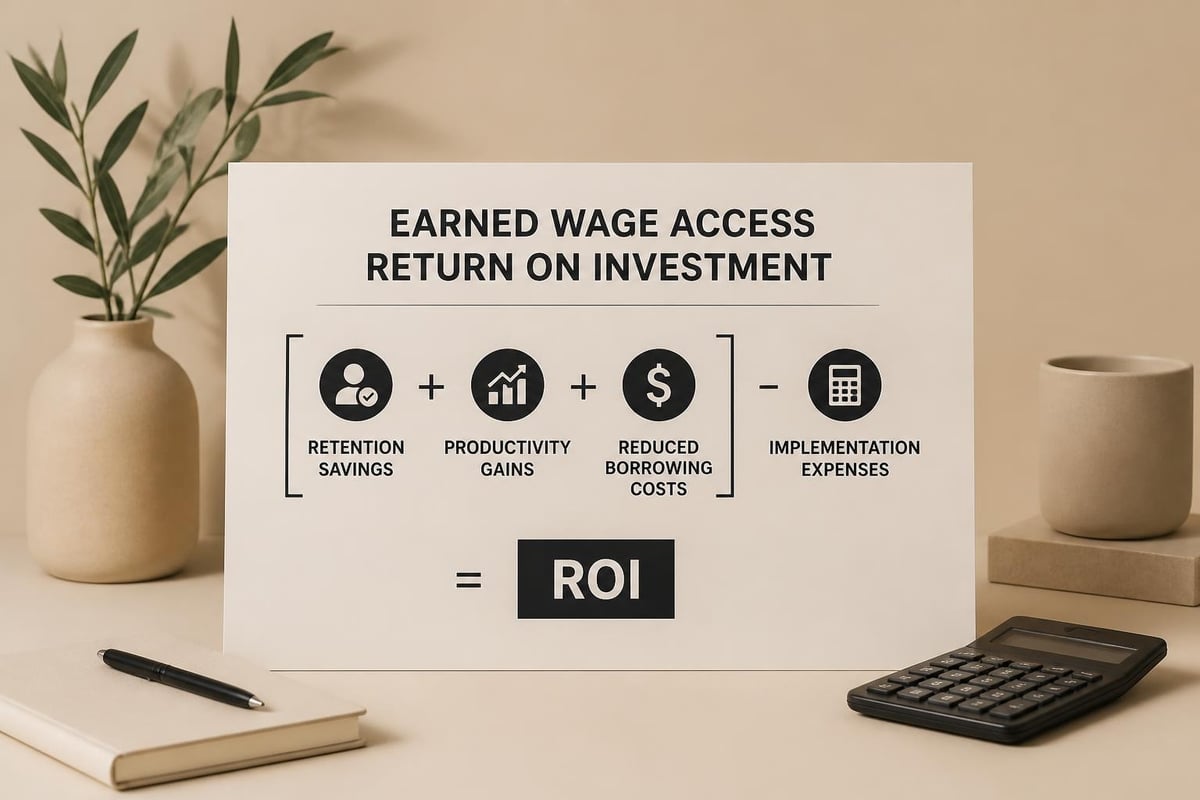
ROI calculation framework for earned wage access

Regulatory Landscape and Compliance Considerations

As earned wage access continues to evolve, regulatory frameworks are adapting to address consumer protection while enabling innovation. Organizations must navigate these regulations carefully to ensure compliant implementation.

Federal and State Regulations

The regulatory environment for earned wage access remains dynamic in 2026. While not classified as traditional lending products, these services still face scrutiny from consumer protection agencies and state labor departments. Ongoing regulatory developments require continuous monitoring to maintain compliance.

Critical compliance areas include:

  • Truth in lending disclosures when fees are charged
  • Wage and hour law compliance regarding voluntary participation
  • Data privacy and security requirements for sensitive employee information
  • Anti-discrimination provisions ensuring equitable access
  • State-specific regulations governing wage access programs

Organizations should work closely with legal counsel and compliance teams when implementing earned wage access to ensure all regulatory requirements are met. Documentation of voluntary participation and clear communication about any associated fees are essential compliance elements.

Best Practices for Compliance

Maintaining compliance requires proactive policies and procedures. Leading organizations establish governance frameworks that address earned wage access within their broader compensation and benefits compliance programs.

  1. Regular policy reviews to incorporate regulatory changes
  2. Clear documentation of program terms and employee agreements
  3. Transparent communication about fees, limits, and access procedures
  4. Audit trails demonstrating voluntary participation and informed consent
  5. Privacy safeguards protecting employee financial data

These practices align with broader organizational commitments to employee benefit plan design and administration excellence.

Strategic Integration with Broader Financial Wellness Programs

Earned wage access delivers maximum value when integrated with comprehensive financial wellness initiatives rather than offered as a standalone benefit. This holistic approach addresses multiple dimensions of employee financial health simultaneously.

Complementary Financial Benefits

Organizations should consider how earned wage access works alongside other financial wellness components:

Benefit Type Purpose Earned Wage Access Synergy
Financial Education Knowledge building Helps employees use access responsibly
Retirement Planning Long-term security Reduces need to borrow from 401(k)
Emergency Savings Buffer building Complements as short-term solution
Debt Management Liability reduction Prevents new high-interest debt
Banking Services Account access Facilitates fund delivery

This integrated approach ensures employees have both immediate access to earned wages and long-term tools for financial stability. Organizations focused on maximizing growth opportunities recognize that comprehensive benefits packages attract and retain top talent.

Communication and Engagement Strategies

Successful financial wellness programs, including earned wage access components, require ongoing communication and engagement. One-time announcements at launch are insufficient for driving adoption and appropriate utilization.

Effective engagement strategies include quarterly financial wellness campaigns, personalized communications based on usage patterns, success stories from peer employees, and integration with other wellness initiatives. These efforts ensure earned wage access remains visible and valuable throughout the employee experience.

Technology Infrastructure and Data Security

The digital nature of earned wage access platforms demands robust technology infrastructure and comprehensive data security measures. Organizations must ensure their implementations protect sensitive employee information while delivering seamless user experiences.

Platform Architecture Requirements

Modern earned wage access solutions utilize cloud-based architectures that provide scalability, reliability, and security. Key technical requirements include:

  • API-based integrations enabling real-time data synchronization
  • Mobile-optimized interfaces for employee access anywhere, anytime
  • Multi-factor authentication protecting account security
  • Encryption protocols for data transmission and storage
  • Disaster recovery capabilities ensuring service continuity

Organizations with existing investments in artificial intelligence and automation infrastructure often find earned wage access platforms integrate smoothly with their technology ecosystems.

Data Privacy and Security

Employee financial data requires the highest levels of protection. Earned wage access implementations must address multiple security dimensions:

Security layer considerations:

  • Access controls limiting data visibility to authorized personnel
  • Encryption of personally identifiable information
  • Regular security audits and penetration testing
  • Incident response procedures for potential breaches
  • Employee training on account security best practices

These security measures align with broader organizational commitments to data protection and privacy compliance.

Future Trends and Evolution

The earned wage access landscape continues to evolve rapidly, with new features, delivery models, and applications emerging regularly. Organizations implementing these programs should understand upcoming trends that may influence their strategies.

Embedded Financial Services

Future earned wage access platforms will likely incorporate additional financial services beyond simple wage access. These may include savings tools, budgeting assistance, bill payment scheduling, and personalized financial coaching. This evolution transforms earned wage access from a transactional benefit into a comprehensive financial wellness platform.

Predictive Analytics and Personalization

Advanced platforms are beginning to utilize machine learning and predictive analytics to provide personalized recommendations. These systems might identify patterns suggesting financial stress and proactively offer relevant resources or access options. This proactive approach aligns with organizational goals around employee empowerment and wellness.

Global Expansion and Localization

As earned wage access matures in the United States, expansion into global markets accelerates. Organizations with international workforces should consider how these programs might be adapted for different regulatory environments, banking systems, and cultural contexts.


Earned wage access represents a powerful tool for organizations committed to employee financial wellness and operational excellence. By providing workers with greater control over their cash flow, employers can reduce financial stress, improve retention, and enhance overall workforce performance. The implementation requires careful planning, robust technology integration, and ongoing communication to maximize value. Nero and Associates, Inc. helps organizations design and implement comprehensive human capital management solutions, including earned wage access programs, that drive measurable improvements in employee wellness and organizational efficiency. Our performance-based approach ensures your investments in financial wellness deliver tangible returns through reduced costs, improved productivity, and enhanced employee satisfaction.

Earned Wage Access: Transform Financial Wellness in 2026

Financial stress remains one of the most significant challenges facing today's workforce, directly impacting productivity, retention, and overall employee wellbeing. As organizations continue to prioritize employee health and financial wellness in 2026, earned wage access has emerged as a transformative benefit that addresses these challenges head-on. This innovative approach allows employees to access their earned wages before the traditional payday, fundamentally changing how workers manage their finances and how employers support their teams.

Understanding Earned Wage Access and Its Growing Importance

Earned wage access represents a paradigm shift in how employees receive compensation for work already performed. Rather than waiting for the standard bi-weekly or monthly pay cycle, workers can access a portion of their earned wages on-demand, providing crucial financial flexibility when unexpected expenses arise.

The mechanism behind this benefit is straightforward yet powerful. Earned pay requests work by calculating wages already earned based on hours worked, then making those funds available through a digital platform or mobile application. This process does not constitute a loan or advance; employees are simply accessing money they have already earned through their labor.

Key characteristics of earned wage access include:

  • Real-time access to earned but unpaid wages
  • No interest charges or mandatory fees
  • Integration with existing payroll systems
  • Digital-first delivery through mobile applications
  • Employee autonomy over financial decisions

Market data reveals the explosive growth trajectory of this benefit. The earned wage access market is projected to reach substantial valuations through 2034, driven by increasing employer adoption and employee demand for financial wellness solutions.

How earned wage access integrates with payroll systems

The Financial Wellness Connection

Financial wellness extends far beyond traditional retirement planning or health savings accounts. Modern employees face immediate financial pressures that demand accessible solutions. Research indicates that financial stress costs employers billions annually through reduced productivity, increased absenteeism, and higher turnover rates.

Earned wage access directly addresses these challenges by providing employees with greater control over their cash flow. When unexpected medical bills, car repairs, or family emergencies arise, workers can access their earned wages rather than turning to high-interest payday loans, credit card debt, or overdraft fees.

Traditional Pay Cycle With Earned Wage Access
Fixed payday regardless of need On-demand access when needed
May lead to expensive borrowing Eliminates need for predatory lending
Limited financial flexibility Enhanced cash flow management
Higher financial stress Reduced anxiety about expenses
Passive benefit delivery Empowered employee decisions

Organizations focused on achieving growth and efficiency in their operations recognize that employee financial wellness directly correlates with operational performance. When employees are financially stable, they are more engaged, productive, and loyal to their employers.

Implementation Strategies for Organizations

Deploying earned wage access requires careful planning and execution to maximize adoption and value. Organizations must consider multiple factors when selecting and implementing a solution that aligns with their workforce needs and operational requirements.

Selecting the Right Platform

The earned wage access landscape includes numerous providers with varying features, fee structures, and integration capabilities. Organizations should evaluate potential partners based on several critical criteria:

  1. Integration compatibility with existing payroll and HRIS systems
  2. Fee structure and whether costs are employer-paid, employee-paid, or hybrid
  3. User experience of the mobile application and access process
  4. Compliance framework ensuring adherence to wage and hour laws
  5. Data security protocols protecting sensitive employee information
  6. Support services for both HR teams and employees

Evolution from niche benefit to mainstream financial wellness tool demonstrates how enterprise organizations are approaching adoption with strategic intent rather than tactical implementation.

Technical Integration Process

Successful implementation depends on seamless technical integration. The process typically involves connecting the earned wage access platform with:

  • Payroll systems for accurate wage calculation
  • Time and attendance platforms to verify hours worked
  • Banking infrastructure for fund disbursement
  • HR information systems for employee data synchronization

Organizations that have invested in automation and integration capabilities often find earned wage access integration more straightforward. Modern platforms utilize API connections that enable real-time data exchange without disrupting existing workflows.

Implementation timeline considerations:

  • Initial platform configuration: 2-4 weeks
  • Payroll system integration testing: 1-2 weeks
  • Employee communication and education: 2-3 weeks
  • Soft launch with pilot group: 2-4 weeks
  • Full organizational rollout: 1-2 weeks

Employee financial wellness improvement stages

Communication and Education

Even the most sophisticated earned wage access platform will fail without proper employee education. Workers need to understand what the benefit is, how it works, and when to use it appropriately.

Effective communication strategies include multiple touchpoints across various channels. Launch communications should clearly explain that earned wage access is not a loan but rather access to wages already earned. This distinction is crucial for employee understanding and acceptance.

Measuring Impact and Return on Investment

Organizations implementing earned wage access should establish clear metrics to evaluate program success and quantify return on investment. These measurements extend beyond simple utilization rates to encompass broader organizational impacts.

Direct Financial Metrics

The most immediate measurements focus on employee adoption and usage patterns. Tracking these indicators provides insights into program effectiveness and value delivery:

Metric Category Key Indicators Target Benchmark
Adoption Rate Percentage of eligible employees enrolled 40-60% within 6 months
Active Usage Employees accessing wages monthly 30-45% of enrolled
Transaction Frequency Average transactions per active user 2-4 per month
Access Amount Average percentage of earned wages accessed 15-25% of available

Organizations should also monitor the reduction in employee requests for pay advances or emergency loans, as these indicators demonstrate the benefit's effectiveness in meeting financial needs.

Workforce Performance Indicators

The true value of earned wage access extends to broader workforce metrics that directly impact organizational performance. Research surveying hospitality industry workers reveals significant improvements in financial confidence and reduced stress levels.

Measurable workforce improvements include:

  • Decreased absenteeism related to financial stress
  • Improved employee retention rates
  • Higher engagement scores in employee surveys
  • Reduced requests for shift changes due to financial pressures
  • Lower utilization of employer emergency assistance programs

Companies that track efficiency metrics across human capital management initiatives can correlate earned wage access adoption with performance improvements, demonstrating clear ROI through reduced turnover costs and enhanced productivity.

Industry-Specific Applications and Considerations

Different industries face unique challenges and opportunities when implementing earned wage access programs. Understanding these nuances ensures maximum benefit alignment with workforce characteristics and operational realities.

Service and Hospitality Sectors

The hospitality industry has been among the earliest and most enthusiastic adopters of earned wage access. Workers in restaurants, hotels, and service industries often face irregular schedules, variable income, and thin financial margins that make traditional pay cycles particularly challenging.

For these organizations, earned wage access serves as a competitive differentiator in tight labor markets. The ability to offer this benefit helps attract and retain quality employees who value financial flexibility. Statistics on earned wage access adoption show particularly high utilization rates among hourly workers in customer-facing roles.

Healthcare Organizations

Healthcare providers face unique workforce challenges, including shift-based scheduling, varying credentials and pay rates, and high-stress environments. Earned wage access supports these workers while complementing other ancillary benefits healthcare organizations offer.

Implementation in healthcare settings requires careful attention to complex payroll structures, including differentials for night shifts, weekend work, and specialty certifications. Integration with sophisticated timekeeping systems ensures accurate wage calculations across diverse employee populations.

Manufacturing and Distribution

Manufacturing and distribution operations employ large hourly workforces that benefit significantly from earned wage access. These organizations often operate multiple shifts and facilities, creating implementation challenges that require robust technical integration.

Success in these environments depends on ensuring equitable access across all locations and shifts. Mobile-first platforms prove particularly valuable for employees who may not have regular desk access during their workdays.

ROI calculation framework for earned wage access

Regulatory Landscape and Compliance Considerations

As earned wage access continues to evolve, regulatory frameworks are adapting to address consumer protection while enabling innovation. Organizations must navigate these regulations carefully to ensure compliant implementation.

Federal and State Regulations

The regulatory environment for earned wage access remains dynamic in 2026. While not classified as traditional lending products, these services still face scrutiny from consumer protection agencies and state labor departments. Ongoing regulatory developments require continuous monitoring to maintain compliance.

Critical compliance areas include:

  • Truth in lending disclosures when fees are charged
  • Wage and hour law compliance regarding voluntary participation
  • Data privacy and security requirements for sensitive employee information
  • Anti-discrimination provisions ensuring equitable access
  • State-specific regulations governing wage access programs

Organizations should work closely with legal counsel and compliance teams when implementing earned wage access to ensure all regulatory requirements are met. Documentation of voluntary participation and clear communication about any associated fees are essential compliance elements.

Best Practices for Compliance

Maintaining compliance requires proactive policies and procedures. Leading organizations establish governance frameworks that address earned wage access within their broader compensation and benefits compliance programs.

  1. Regular policy reviews to incorporate regulatory changes
  2. Clear documentation of program terms and employee agreements
  3. Transparent communication about fees, limits, and access procedures
  4. Audit trails demonstrating voluntary participation and informed consent
  5. Privacy safeguards protecting employee financial data

These practices align with broader organizational commitments to employee benefit plan design and administration excellence.

Strategic Integration with Broader Financial Wellness Programs

Earned wage access delivers maximum value when integrated with comprehensive financial wellness initiatives rather than offered as a standalone benefit. This holistic approach addresses multiple dimensions of employee financial health simultaneously.

Complementary Financial Benefits

Organizations should consider how earned wage access works alongside other financial wellness components:

Benefit Type Purpose Earned Wage Access Synergy
Financial Education Knowledge building Helps employees use access responsibly
Retirement Planning Long-term security Reduces need to borrow from 401(k)
Emergency Savings Buffer building Complements as short-term solution
Debt Management Liability reduction Prevents new high-interest debt
Banking Services Account access Facilitates fund delivery

This integrated approach ensures employees have both immediate access to earned wages and long-term tools for financial stability. Organizations focused on maximizing growth opportunities recognize that comprehensive benefits packages attract and retain top talent.

Communication and Engagement Strategies

Successful financial wellness programs, including earned wage access components, require ongoing communication and engagement. One-time announcements at launch are insufficient for driving adoption and appropriate utilization.

Effective engagement strategies include quarterly financial wellness campaigns, personalized communications based on usage patterns, success stories from peer employees, and integration with other wellness initiatives. These efforts ensure earned wage access remains visible and valuable throughout the employee experience.

Technology Infrastructure and Data Security

The digital nature of earned wage access platforms demands robust technology infrastructure and comprehensive data security measures. Organizations must ensure their implementations protect sensitive employee information while delivering seamless user experiences.

Platform Architecture Requirements

Modern earned wage access solutions utilize cloud-based architectures that provide scalability, reliability, and security. Key technical requirements include:

  • API-based integrations enabling real-time data synchronization
  • Mobile-optimized interfaces for employee access anywhere, anytime
  • Multi-factor authentication protecting account security
  • Encryption protocols for data transmission and storage
  • Disaster recovery capabilities ensuring service continuity

Organizations with existing investments in artificial intelligence and automation infrastructure often find earned wage access platforms integrate smoothly with their technology ecosystems.

Data Privacy and Security

Employee financial data requires the highest levels of protection. Earned wage access implementations must address multiple security dimensions:

Security layer considerations:

  • Access controls limiting data visibility to authorized personnel
  • Encryption of personally identifiable information
  • Regular security audits and penetration testing
  • Incident response procedures for potential breaches
  • Employee training on account security best practices

These security measures align with broader organizational commitments to data protection and privacy compliance.

Future Trends and Evolution

The earned wage access landscape continues to evolve rapidly, with new features, delivery models, and applications emerging regularly. Organizations implementing these programs should understand upcoming trends that may influence their strategies.

Embedded Financial Services

Future earned wage access platforms will likely incorporate additional financial services beyond simple wage access. These may include savings tools, budgeting assistance, bill payment scheduling, and personalized financial coaching. This evolution transforms earned wage access from a transactional benefit into a comprehensive financial wellness platform.

Predictive Analytics and Personalization

Advanced platforms are beginning to utilize machine learning and predictive analytics to provide personalized recommendations. These systems might identify patterns suggesting financial stress and proactively offer relevant resources or access options. This proactive approach aligns with organizational goals around employee empowerment and wellness.

Global Expansion and Localization

As earned wage access matures in the United States, expansion into global markets accelerates. Organizations with international workforces should consider how these programs might be adapted for different regulatory environments, banking systems, and cultural contexts.


Earned wage access represents a powerful tool for organizations committed to employee financial wellness and operational excellence. By providing workers with greater control over their cash flow, employers can reduce financial stress, improve retention, and enhance overall workforce performance. The implementation requires careful planning, robust technology integration, and ongoing communication to maximize value. Nero and Associates, Inc. helps organizations design and implement comprehensive human capital management solutions, including earned wage access programs, that drive measurable improvements in employee wellness and organizational efficiency. Our performance-based approach ensures your investments in financial wellness deliver tangible returns through reduced costs, improved productivity, and enhanced employee satisfaction.

Website developed in accordance with Web Content Accessibility Guidelines 2.2.
If you encounter any issues while using this site, please contact us: 215.526.5126