

Organizations today face unprecedented challenges in managing their most valuable asset: their people. As businesses navigate economic uncertainty, talent shortages, and rapid technological change in 2026, the need for sophisticated human capital solutions has never been more critical. These comprehensive approaches go far beyond traditional human resources functions, integrating technology, data analytics, and strategic planning to maximize workforce potential while improving the employee experience. Companies that invest in robust human capital solutions position themselves to achieve sustainable competitive advantages through optimized talent management, reduced operational costs, and enhanced organizational performance.
Understanding the Modern Human Capital Solutions Landscape
Human capital solutions encompass the full spectrum of strategies, technologies, and services designed to manage the employee lifecycle effectively. From recruitment and onboarding through development, retention, and succession planning, these integrated systems transform how organizations build and maintain their workforce.
The evolution of human capital solutions reflects broader changes in workplace dynamics. Remote work, artificial intelligence, and shifting employee expectations have fundamentally altered what organizations need from their HR systems. Modern platforms combine payroll processing, benefits administration, time tracking, performance management, and compliance monitoring into unified ecosystems.
The Strategic Value Proposition
Organizations implementing comprehensive human capital solutions typically realize benefits across multiple dimensions:
- Cost reduction through process automation and elimination of manual workflows
- Enhanced compliance with constantly changing labor regulations and reporting requirements
- Improved decision-making through real-time workforce analytics and predictive insights
- Better employee experiences via self-service portals and streamlined processes
- Increased productivity by freeing HR teams from administrative tasks
Research from the U.S. General Services Administration demonstrates that federal agencies utilizing structured human capital and training solutions achieve measurable improvements in workforce readiness and operational efficiency.

Technology-Driven Workforce Transformation
The integration of artificial intelligence and automation into human capital solutions represents a fundamental shift in how organizations manage their people. These technologies eliminate repetitive tasks, reduce errors, and provide insights previously impossible to obtain.
Modern human capital platforms leverage machine learning algorithms to identify patterns in employee data, predict turnover risks, and recommend targeted interventions. Natural language processing capabilities, as explored in recent research on skill and job title intelligence, enable systems to better match candidates to positions and identify skill gaps across the organization.
Automation Benefits Across the Employee Lifecycle
| Lifecycle Stage | Automation Capability | Business Impact |
|---|---|---|
| Recruitment | Resume screening and candidate matching | 60-70% reduction in time-to-hire |
| Onboarding | Document management and task automation | 50% faster new hire productivity |
| Payroll | Calculation, tax filing, and payment processing | 80% reduction in processing errors |
| Performance | Goal tracking and review scheduling | 40% increase in review completion rates |
| Development | Learning path recommendations | 35% improvement in skill acquisition |
Organizations seeking to optimize payroll through automation discover that integrated human capital solutions deliver far greater value than point solutions addressing individual functions.
Employee Wellness as a Strategic Imperative
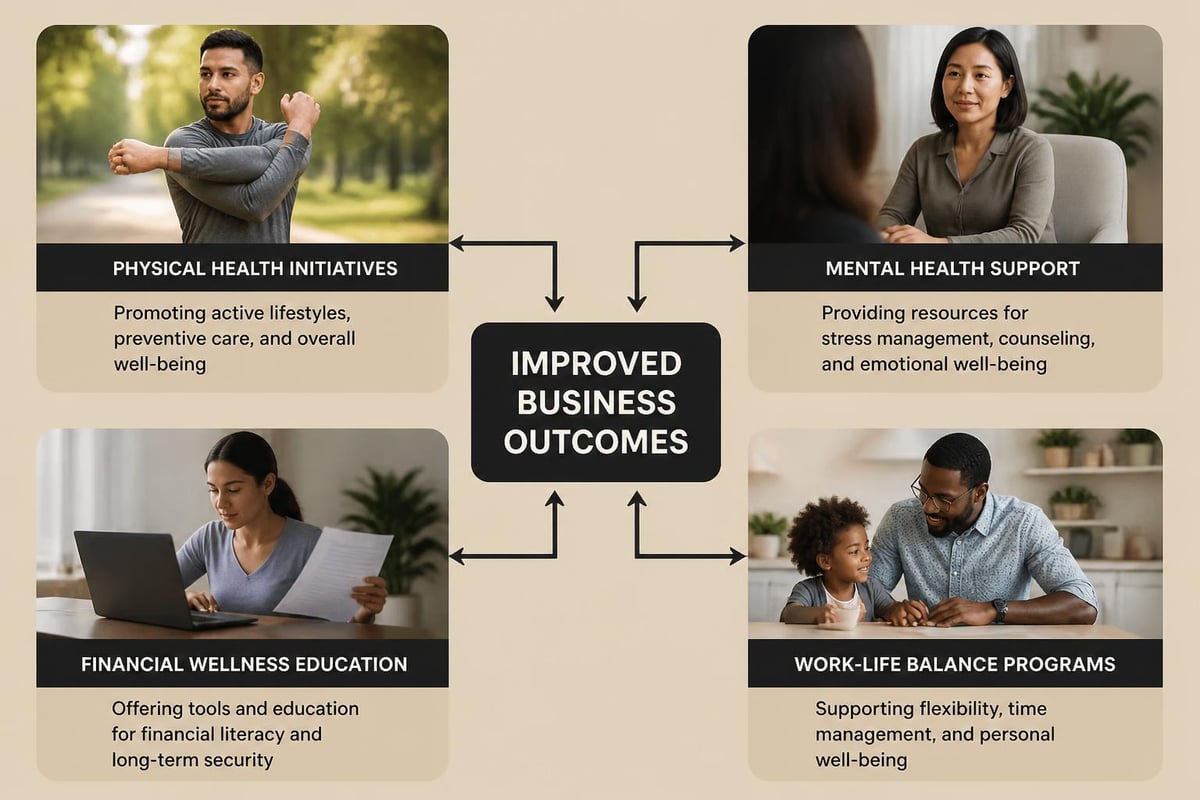
Leading human capital solutions in 2026 recognize that employee well-being directly impacts organizational performance. Comprehensive platforms now integrate physical health programs, mental health resources, and financial wellness tools into unified employee benefit ecosystems.
The connection between employee health and business outcomes becomes clearer each year. Organizations that prioritize wellness through their human capital solutions report lower healthcare costs, reduced absenteeism, and higher employee engagement scores. Ancillary benefits that support comprehensive wellness strategies prove particularly effective when integrated seamlessly into the broader HR technology stack.
Building Comprehensive Wellness Programs
Effective wellness initiatives within human capital solutions include:
- Physical health support through preventive care incentives, fitness reimbursements, and health screening programs
- Mental health resources including counseling services, stress management tools, and resilience training
- Financial wellness education covering retirement planning, debt management, and emergency savings strategies
- Work-life balance initiatives such as flexible scheduling, remote work options, and paid time off policies
When these components work together within an integrated platform, employees engage more consistently and achieve better health outcomes. The data generated through these programs also provides valuable insights for benefits optimization and cost management.
Data Analytics and Workforce Intelligence
The analytical capabilities embedded in modern human capital solutions transform raw employee data into strategic insights. Organizations gain visibility into workforce trends, compensation benchmarking, skills inventories, and demographic patterns that inform better business decisions.
Advanced analytics platforms process data from multiple sources to create comprehensive workforce intelligence. This includes information from payroll systems, time tracking, performance reviews, learning management systems, and even external labor market data. Studies analyzing LinkedIn profiles and self-reported skills demonstrate how organizations can measure human capital through standardized competency frameworks.
Predictive analytics capabilities enable proactive workforce planning rather than reactive problem-solving. Organizations can forecast hiring needs, identify flight risks among high performers, and model the financial impact of compensation changes before implementation.
Key Performance Metrics
Effective human capital solutions track and report on critical metrics:
- Time-to-fill for open positions and quality-of-hire indicators
- Employee turnover rates by department, role, and tenure
- Total compensation costs including benefits, taxes, and administrative expenses
- Training ROI measuring skill acquisition against development investment
- Employee engagement scores and correlation with business performance
Organizations serving enterprise clients particularly benefit from robust analytics capabilities that scale across thousands of employees and multiple locations.
Compliance and Risk Management
Navigating the complex regulatory landscape surrounding employment represents one of the most challenging aspects of workforce management. Human capital solutions provide essential support for compliance with federal, state, and local regulations that constantly evolve.
Modern platforms automatically update tax tables, adjust withholding calculations, and generate required reporting documentation. This automation significantly reduces compliance risks while eliminating the manual effort traditionally required to stay current with regulatory changes.
Beyond payroll tax compliance, comprehensive human capital solutions address:
- Equal employment opportunity reporting and affirmative action plan development
- FLSA classification and overtime calculation accuracy
- Benefits compliance with ACA, COBRA, HIPAA, and ERISA requirements
- Immigration status verification and work authorization tracking
- Safety and workers' compensation documentation
Organizations in regulated industries like healthcare face additional compliance complexity that specialized human capital solutions can address through industry-specific functionality.
Succession Planning and Talent Development
Strategic human capital solutions extend beyond administrative functions to support long-term organizational sustainability through succession planning and talent development initiatives. These capabilities ensure organizations can fill critical roles internally while building leadership pipelines for the future.
Succession planning tools integrated into broader human capital platforms enable organizations to identify high-potential employees, assess readiness for advancement, and create development plans that prepare successors for key positions.
Structured Talent Development Framework
- Skills assessment to identify current capabilities and development needs across the organization
- Career pathing that maps progression opportunities and required competencies for advancement
- Learning assignments including formal training, mentoring relationships, and stretch projects
- Performance tracking to measure development progress and readiness for promotion
- Knowledge transfer systems that capture institutional knowledge from experienced employees
Organizations implementing comprehensive talent development through their human capital solutions report higher internal promotion rates, reduced external hiring costs, and stronger organizational culture.

Integration with Financial and Operational Systems
The most powerful human capital solutions don't operate in isolation. Instead, they integrate seamlessly with financial management systems, enterprise resource planning platforms, and operational tools to provide comprehensive business intelligence.
When human capital data connects to financial systems, organizations gain complete visibility into total workforce costs and can model scenarios for budgeting and forecasting. Integration with operational systems enables workforce scheduling optimization, project resource allocation, and productivity analysis at granular levels.
For organizations managing complex operational requirements like revenue cycle management, integration between human capital solutions and billing systems ensures appropriate staffing levels while tracking productivity metrics that impact financial performance.
| Integration Type | Business Value | Implementation Consideration |
|---|---|---|
| General ledger | Automated expense posting | Chart of accounts mapping |
| Time tracking | Labor cost accuracy | Real-time data synchronization |
| Scheduling systems | Optimal workforce deployment | Skill-based assignment logic |
| Project management | Resource utilization insights | Multi-dimensional reporting |
Vendor Selection and Implementation Strategies
Choosing the right human capital solutions provider requires careful evaluation of organizational needs, technical requirements, and strategic objectives. Organizations should assess vendors across multiple dimensions including functionality breadth, user experience, integration capabilities, and service quality.
Companies like Conduent and EconSys demonstrate different approaches to human capital solutions, with varying emphases on process design, automation, and service delivery models.
Critical Selection Criteria
Organizations should evaluate potential human capital solutions based on:
- Functional completeness across payroll, benefits, time tracking, talent management, and analytics
- User experience design for both HR administrators and employee self-service
- Integration architecture supporting connections to existing systems and future technology additions
- Compliance support including automatic updates and regulatory expertise
- Implementation methodology balancing speed with change management needs
- Ongoing support quality measured through service level agreements and client references
Successful implementations follow structured methodologies that include comprehensive requirements gathering, data migration planning, configuration testing, training programs, and post-launch support. Organizations should plan for 3-6 month implementation timelines for comprehensive human capital solutions.
Industry-Specific Applications
Different industries face unique workforce management challenges that specialized human capital solutions can address. Understanding these sector-specific needs enables organizations to select platforms and services optimized for their operational environment.
Hospitality organizations managing high-turnover hourly workforces require robust scheduling capabilities, tip management, and simplified onboarding processes. Healthcare providers need credentialing tracking, shift differentials, and complex benefit calculations. Non-profit organizations prioritize cost efficiency while managing volunteer coordination alongside paid staff.
Sector-Specific Requirements
Manufacturing and Distribution:
- Shift premium calculations and overtime management
- Safety training tracking and certification management
- Union contract compliance and collective bargaining agreement administration
Professional Services:
- Project-based time tracking and client billing integration
- Utilization rate monitoring and capacity planning
- Competency frameworks supporting client engagement staffing
Retail and Consumer Services:
- Multi-location scheduling with demand forecasting
- Seasonal workforce management and rapid scaling
- Commission calculation and incentive compensation tracking
Research on human aspects in software engineering emphasizes that regardless of industry, organizations must recognize that technology solutions succeed or fail based on how effectively they support human needs and workflows.
Change Management and User Adoption
Even the most sophisticated human capital solutions deliver limited value without effective user adoption. Organizations must invest in change management strategies that help employees and managers embrace new systems and processes.
Successful adoption requires clear communication about why changes are occurring, how new systems benefit users, and what support is available during the transition. Training programs should accommodate different learning styles through instructor-led sessions, video tutorials, written guides, and hands-on practice environments.
Adoption Best Practices
Organizations implementing new human capital solutions should:
- Identify executive sponsors who visibly support the initiative and communicate its strategic importance
- Create change champions across departments who can support peers and provide feedback
- Develop role-based training that focuses on specific tasks each user group performs
- Provide ongoing support through help desks, office hours, and refresher training
- Measure adoption metrics including system usage rates and user satisfaction scores
Organizations should expect 6-12 months for full adoption maturity, during which time continuous reinforcement and support prove essential for long-term success.
The ROI of Comprehensive Human Capital Solutions
Organizations evaluating human capital solutions investments naturally question the financial return. While specific results vary based on organizational size, complexity, and current state, typical ROI drivers include labor cost reductions, compliance risk mitigation, productivity improvements, and strategic capability enhancements.
Quantifiable savings often come from reduced administrative time requirements. Organizations spending dozens or hundreds of hours monthly on manual payroll processing, benefits administration, and reporting can redeploy those resources to higher-value activities. Automation eliminates overtime for HR staff during peak periods like year-end processing or open enrollment.
Typical ROI Components:
| Benefit Category | Measurement Approach | Expected Range |
|---|---|---|
| Administrative time savings | Hours eliminated × loaded labor rate | 30-50% reduction |
| Error reduction | Mistake frequency × correction cost | 70-90% improvement |
| Compliance risk mitigation | Historical penalties × probability | Variable by industry |
| Employee retention improvement | Turnover reduction × replacement cost | 10-20% decrease |
Beyond direct cost savings, strategic benefits include faster decision-making, improved employee experiences, and enhanced organizational agility. Private equity firms particularly value human capital solutions that accelerate value creation across portfolio companies through standardized processes and consolidated reporting.
Future Trends Shaping Human Capital Solutions
The human capital solutions landscape continues to evolve rapidly as new technologies emerge and workforce expectations shift. Understanding coming trends helps organizations make technology investments that remain relevant and valuable over multi-year time horizons.
Artificial intelligence capabilities will expand beyond current applications into more sophisticated areas like natural language job description generation, personalized learning path creation, and predictive wellness interventions. Advanced AI and automation platforms increasingly integrate with human capital systems to eliminate manual processes while providing intelligent recommendations.
Skills-based talent management will replace traditional job-based approaches as organizations recognize that defined roles limit agility in rapidly changing environments. Human capital solutions will emphasize competency frameworks, internal talent marketplaces, and project-based work assignments that deploy people based on capabilities rather than fixed positions.
Employee experience platforms will consolidate traditionally separate systems into unified interfaces that employees access for all work-related needs. These comprehensive portals combine human capital functions with communication tools, document management, and operational applications into personalized digital workspaces.
The standardization efforts represented by initiatives like the Human Capital Ontology will improve data portability and interoperability across systems, enabling organizations to more easily switch vendors or integrate best-of-breed solutions.
Strategic human capital solutions deliver measurable improvements in operational efficiency, cost management, and employee engagement when properly implemented and adopted. Organizations that view these systems as strategic enablers rather than administrative necessities position themselves for sustainable competitive advantage through optimized workforce performance. Nero and Associates, Inc. helps organizations implement comprehensive human capital solutions alongside AI automation and revenue cycle management services that collectively transform business performance. Our performance-based approach ensures your investment delivers tangible results through reduced costs, eliminated manual processes, and empowered employees who drive bottom-line growth.