
In today’s rapidly shifting commercial real estate landscape, leasehold improvements hold more importance than ever for businesses and property owners. Navigating the complexities of leasehold improvements can shape your company’s financial performance, operational efficiency, and tenant-landlord relationships.
This comprehensive guide is designed to equip you with the latest insights on leasehold improvements for 2026. You’ll discover essential definitions, updated regulations, tax implications, accounting best practices, and strategies for maximizing value.
Understanding these evolving changes can help you unlock greater returns on investment and prevent costly mistakes. Use this guide to make informed decisions and approach leasehold improvements with confidence as you plan for success in 2026.
Understanding Leasehold Improvements: Definitions and Scope
Leasehold improvements have become a pivotal aspect of modern commercial property strategy. These upgrades, often referred to as tenant improvements or build-outs, directly influence the usability and value of leased spaces. As businesses adapt to shifting needs, understanding the nuances of leasehold improvements is essential for compliance, financial planning, and maximizing returns.
What Are Leasehold Improvements?
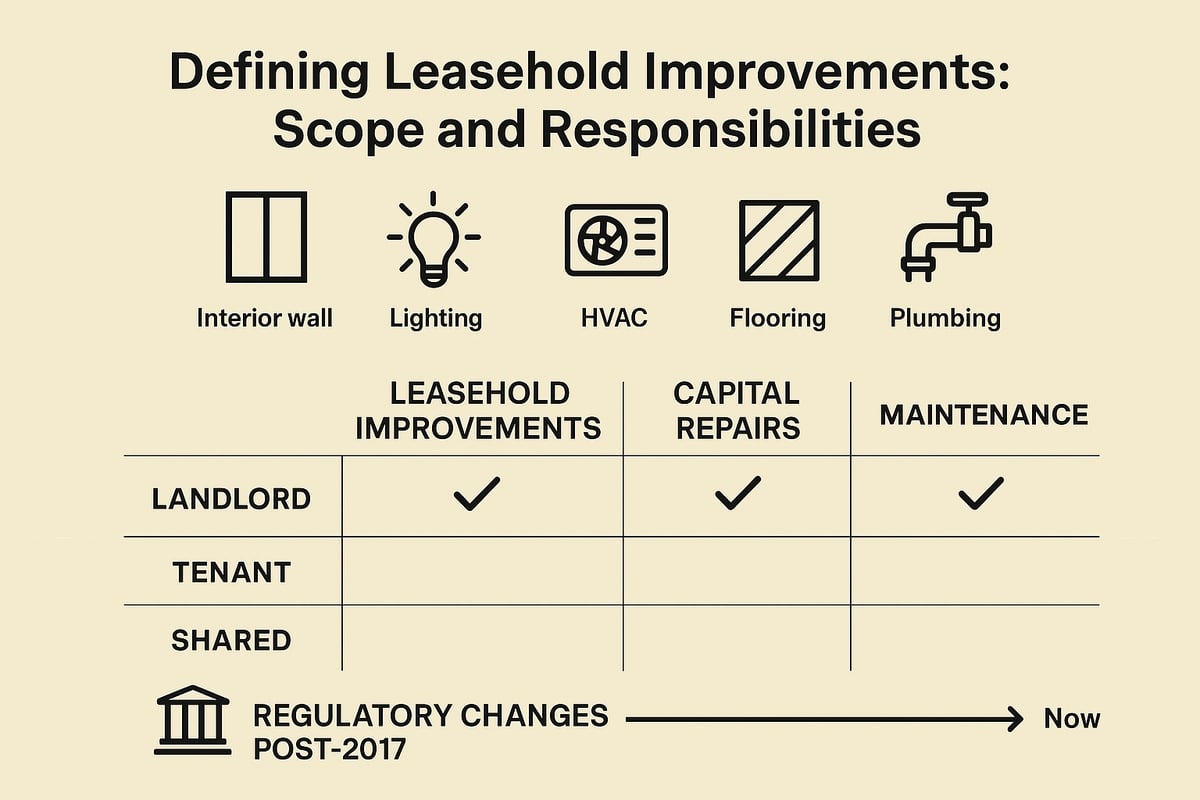
Leasehold improvements are alterations or additions made to leased commercial property to meet the operational needs of tenants. Commonly described as tenant improvements or build-outs, these changes go beyond routine maintenance. They might include constructing interior walls, upgrading lighting, installing new HVAC systems, updating flooring, or enhancing plumbing.
The key distinction is that leasehold improvements are intended to benefit the specific tenant and are typically fixed to the property. In contrast, capital repairs restore property value, while maintenance keeps assets in working condition. Landlords may make improvements to attract tenants, or tenants might fund upgrades to customize their space. In sectors like retail, office, and healthcare, such improvements are vital for functionality and branding.
Types of Leasehold Improvements
There are several categories of leasehold improvements, each with unique tax and accounting implications. Qualified improvement property (QIP) includes most interior, non-structural enhancements made to commercial buildings after the property is placed in service. Section 1245 property covers tangible, movable items, while Section 1250 property relates to structural components of real estate.
Not all modifications qualify. Building enlargements, elevators, and changes to the structural framework are typically excluded. For example, adding a new floor is not a leasehold improvement, but installing new lighting in a retail space is. Regulatory changes following the 2017 Tax Cuts and Jobs Act and the CARES Act have clarified these categories, especially regarding common areas and shared spaces.
Leasehold Improvements vs. Other Property Enhancements
Leasehold improvements differ significantly from land improvements, building renovations, and furniture or fixtures. Land improvements modify the land itself, such as paving or landscaping. Renovations often affect the building’s structure, while furniture and fixtures are movable assets.
Accurate classification is crucial for financial reporting and tax compliance. Misclassifying leasehold improvements as another asset type can lead to incorrect depreciation schedules or missed deductions. For a deeper understanding of proper categorization, refer to this guide on asset classification for property improvements. Real-world scenarios often involve overlapping work, so meticulous documentation and expert advice are recommended.
Who Pays for Leasehold Improvements?
Responsibility for leasehold improvements varies by lease agreement. Sometimes, landlords fund the entire project to attract premium tenants. In other cases, tenants bear the cost to tailor spaces to their brand or workflow. Cost-sharing arrangements are common, as are lease incentives where landlords offer improvement allowances.
These financial decisions affect depreciation and deduction eligibility. For instance, landlord-funded improvements may remain on the landlord’s books, while tenant-funded upgrades are depreciated by the tenant. Negotiation strategies often focus on securing favorable terms, such as higher allowances or flexible removal clauses. Clear documentation within lease agreements ensures both parties understand their rights and obligations.
Regulatory and Tax Changes Impacting Leasehold Improvements in 2026
Navigating leasehold improvements in 2026 requires a clear understanding of evolving regulations and tax laws. Both property owners and tenants must stay updated, as these changes directly affect compliance, financial planning, and long-term profitability.
The Evolution of Leasehold Improvement Property Classifications
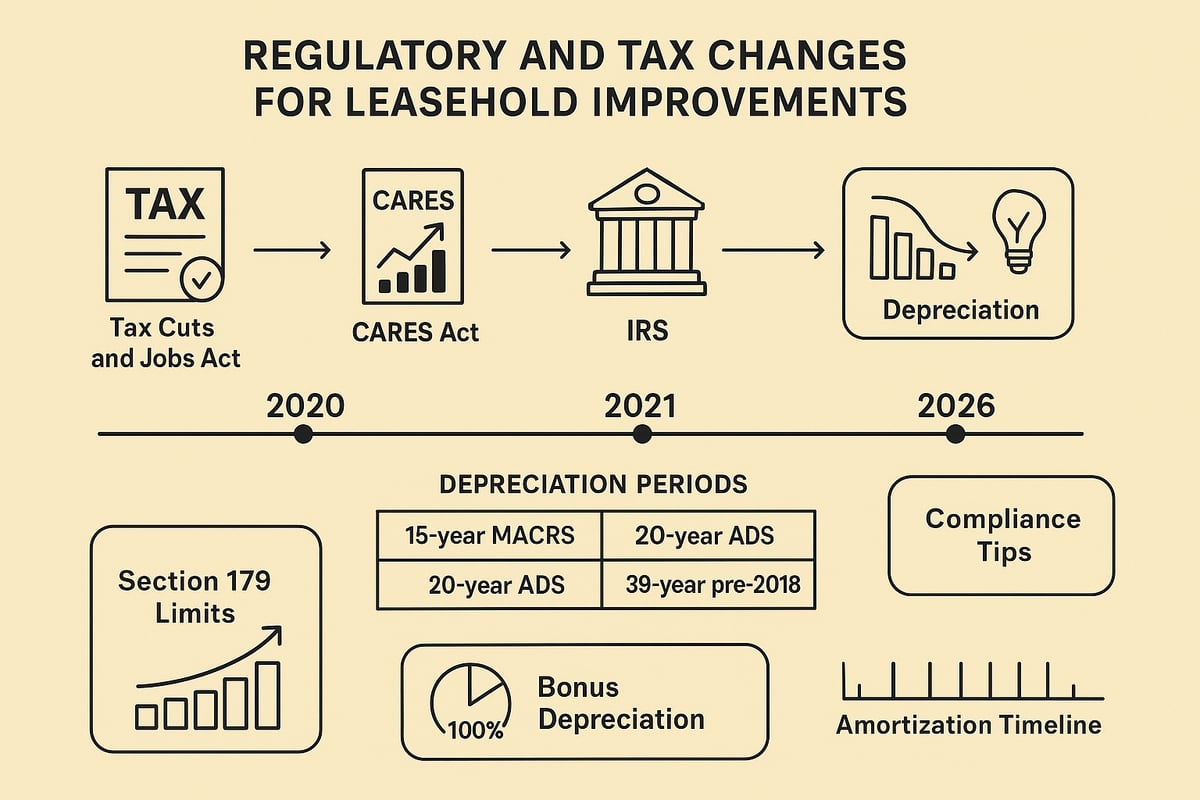
Over the past decade, leasehold improvements have experienced significant shifts in property classification. The Tax Cuts and Jobs Act (TCJA) of 2017 eliminated the “qualified leasehold improvement property” category and introduced qualified improvement property (QIP). This change aimed to simplify depreciation but initially caused confusion due to legislative errors. The CARES Act of 2020 corrected these issues, clarifying that QIP placed in service after 2017 is eligible for 15-year depreciation under MACRS and 20-year under ADS. Recent IRS guidance highlights the importance of correct classification for leasehold improvements, impacting both landlords and tenants. Staying current with these developments is essential for accurate reporting and tax planning.
Depreciation Rules and Recovery Periods
Depreciation for leasehold improvements is primarily governed by the Modified Accelerated Cost Recovery System (MACRS). QIP placed in service after 2017 generally qualifies for 15-year straight-line depreciation, using the half-year or mid-quarter convention. Before 2018, improvements were often depreciated over 39 years, increasing tax burdens. For entities required to use the Alternative Depreciation System (ADS), such as those subject to certain real estate elections, the recovery period extends to 20 years. Understanding these rules helps businesses optimize deductions and avoid compliance risks. For a deeper dive into depreciation and tax treatment, see Tax on Tenant Improvements.
Section 179 Expensing and Bonus Depreciation
Section 179 allows immediate expensing of qualified leasehold improvements, including QIP, HVAC systems, fire protection, and security systems. In 2026, the investment limit is projected at $4,090,000, with a phase-out threshold at $2,560,000. Bonus depreciation, currently at 60%, offers additional upfront deductions for eligible property. Businesses can leverage these incentives to reduce taxable income in the year improvements are placed in service. Strategic use of Section 179 and bonus depreciation requires careful planning, as exceeding thresholds or misclassifying assets can lead to missed opportunities or IRS scrutiny.
Capitalization vs. Deductibility: Tangible Property Regulations
Determining whether leasehold improvements should be capitalized or expensed is governed by tangible property regulations (TPRs), also known as the “repair regulations.” These rules outline when costs must be capitalized as improvements versus when they can be deducted as repairs. Uniform capitalization (UNICAP) rules may also apply, particularly for large property owners. Misclassification can result in audit risks and adjustments. Case studies show that accurate documentation and applying the TPRs consistently are critical for compliance. Businesses should regularly review their policies to ensure leasehold improvements are reported correctly.
Amortization of Leasehold Acquisition Costs
Leasehold acquisition costs are treated as intangible assets and must be amortized over the lease term, including renewal options if they meet the 75% test. For example, if a lease is 10 years with a 5-year renewal and the renewal is reasonably certain, costs are spread over 15 years. Calculations should follow IRC §197 or other applicable rules, depending on the nature of the costs. Proper amortization ensures that expenses related to leasehold improvements are matched with the periods benefiting from the asset, supporting accurate financial reporting and tax compliance.
Accounting Best Practices for Leasehold Improvements
Proper accounting for leasehold improvements is vital for accurate financial reporting, regulatory compliance, and maximizing tax benefits. By following structured best practices, businesses can avoid costly mistakes and ensure that leasehold improvements are recognized, depreciated, and disclosed correctly. Let us break down the key accounting steps every organization should follow.
Initial Recognition and Measurement
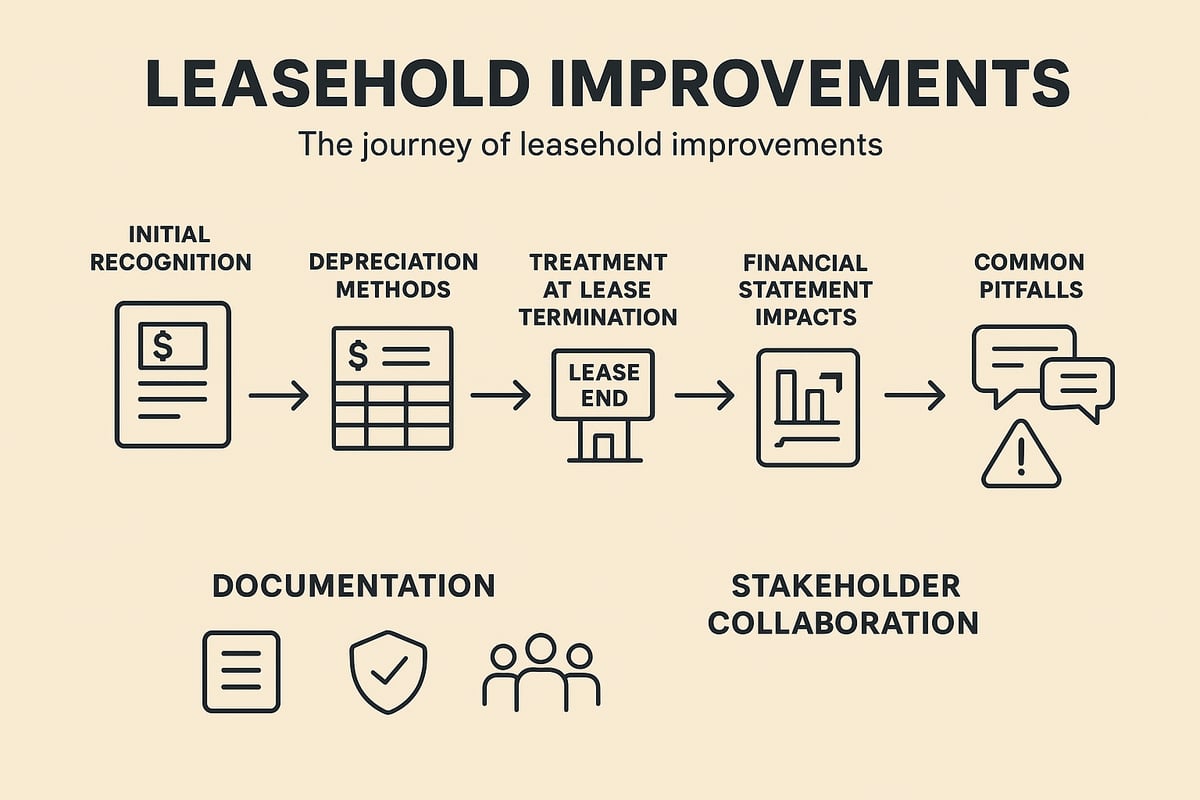
Leasehold improvements should be recorded as fixed assets on the balance sheet when placed in service. The total cost includes both direct expenses, such as construction and materials, and indirect costs, like permits or architect fees.
Accurately allocating costs is essential. Only improvements that add value or extend the useful life of leased property qualify for capitalization. Improvements must be recognized once the work is completed and ready for use.
Timely and thorough documentation supports the value assigned to leasehold improvements. Keep invoices, contracts, and approvals readily accessible for audits or financial reviews.
Depreciation and Amortization in Practice
Depreciation of leasehold improvements depends on the applicable tax and accounting rules. For most improvements, businesses use the Modified Accelerated Cost Recovery System (MACRS) with a 15-year straight-line recovery period for qualified improvement property.
Alternative Depreciation System (ADS) may apply in certain cases, especially for related-party leases or foreign property, using a 20-year or longer period. Depreciation conventions, such as half-year or mid-quarter, determine the timing of the first-year deduction.
Component depreciation may be required if leasehold improvements include assets with different useful lives, such as separate HVAC and lighting upgrades. Avoid errors by double-checking asset classifications and recovery periods.
| Method | Recovery Period | Convention |
|---|---|---|
| MACRS | 15 years | Half-year |
| ADS | 20+ years | Mid-quarter |
Leasehold Improvements Upon Lease Termination or Disposition
When a lease ends, the fate of leasehold improvements depends on lease terms and negotiations. If improvements must be removed, any remaining undepreciated basis is written off as a loss.
If improvements are abandoned or left for the landlord, calculate gain or loss based on the book value at transfer. Tenants and landlords should clarify ownership and removal responsibilities in the lease agreement to avoid disputes.
Landlords who retain improvements may need to adjust their asset basis and depreciation schedules. Accurate records ensure proper treatment and compliance with tax regulations.
Impacts on Financial Statements and Lease Accounting Standards
Recent changes in accounting standards, such as ASC 842 and IFRS 16, have shifted how leasehold improvements affect financial statements. For lessees, improvements are often included in the right-of-use asset, impacting both the balance sheet and depreciation expenses.
These standards require enhanced disclosures about lease terms, improvement costs, and asset classifications. Properly accounting for leasehold improvements ensures transparency and supports effective financial decision-making.
Compliance with new standards is critical for audit readiness and investor confidence. Regularly review accounting policies to align with evolving guidance.
Common Pitfalls and How to Avoid Them
Frequent mistakes in accounting for leasehold improvements include misclassification of assets, using incorrect depreciation periods, and missing eligible deductions. Incomplete documentation can lead to audit challenges or lost tax benefits.
To prevent errors, establish clear policies, train staff, and use checklists for each improvement project. Maintain thorough records from inception to disposition. For deeper insights and practical strategies, explore articles and insights on financial strategies that cover leasehold improvements and related topics.
By following these best practices, businesses maximize the value of leasehold improvements and minimize compliance risks.
Strategic Planning for Leasehold Improvements in 2026
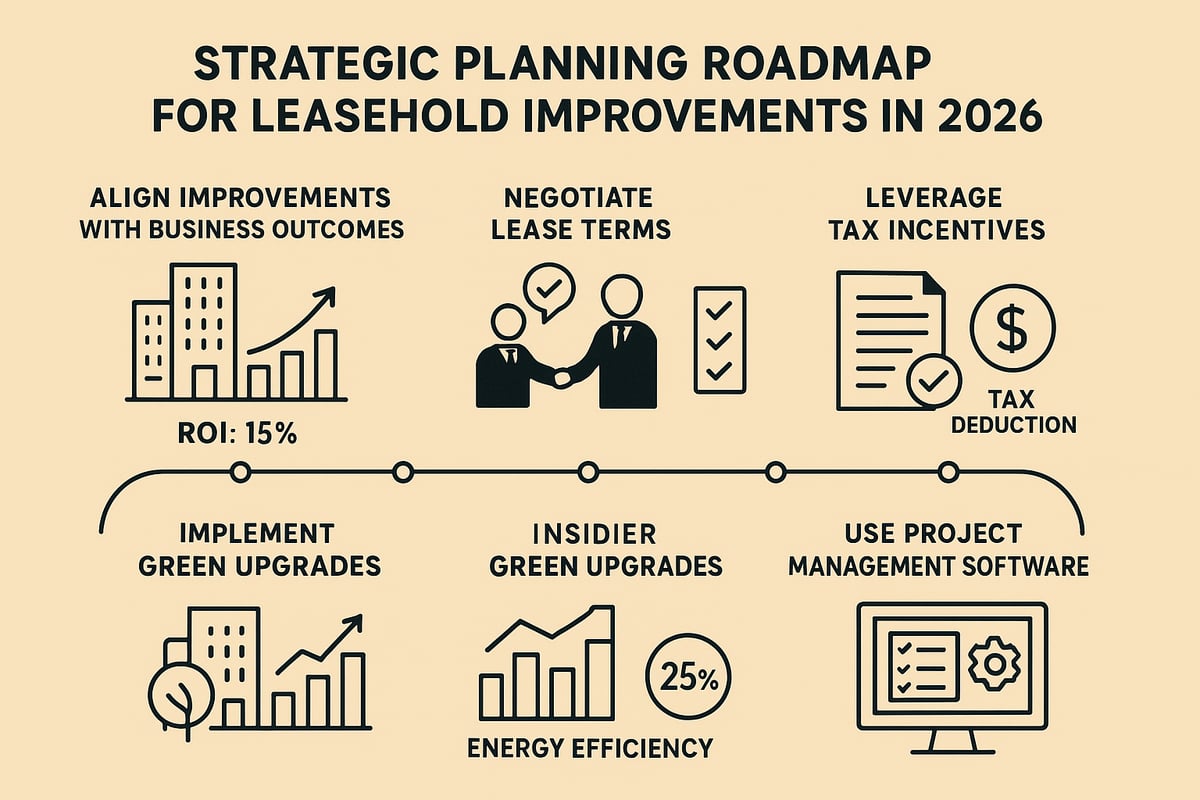
Strategic planning for leasehold improvements in 2026 is essential for businesses aiming to maximize value, optimize costs, and remain competitive. As the commercial real estate environment evolves, a focused approach to leasehold improvements helps organizations align facility investments with long-term business goals, tax advantages, and sustainability targets.
Aligning Improvements with Business Objectives
Successful leasehold improvements start with a clear connection to business objectives. Companies should assess how each improvement supports operational efficiency, employee productivity, or customer experience. For example, upgrading lighting can reduce energy costs and enhance workplace comfort, while modernized interiors can attract high-value tenants.
A robust ROI analysis is critical. Businesses must forecast the financial impact of leasehold improvements, setting budgets that balance upfront costs with long-term gains. Across sectors like healthcare, retail, and office, aligning improvements with strategic priorities ensures optimal resource allocation and measurable results.
Before committing to leasehold improvements, review your organization’s growth plans. Are you planning expansions, tech upgrades, or new service offerings? Integrate these considerations into your improvement strategy to future-proof your investment.
Negotiating Lease Terms and Improvement Allowances
Negotiating favorable lease terms is vital for managing leasehold improvements costs. Tenants should pursue tenant improvement allowances (TIAs), rent abatements, or turnkey build-outs. Landlords may offer incentives to attract quality tenants, so understanding market standards for 2026 is key.
Key lease clauses to examine include:
- Ownership of improvements
- Removal and restoration obligations
- Rights to depreciation or deductions
In practice, a tenant might negotiate for a higher TIA in exchange for a longer lease term, or request rent reductions while improvements are underway. Both parties benefit from clarity in negotiation, reducing disputes and aligning expectations for leasehold improvements over the lease term.
Market trends indicate growing competition for top-tier tenants, making negotiation skills and strategic planning for leasehold improvements more important than ever.
Tax Planning and Incentive Optimization
Tax planning is a cornerstone of maximizing returns from leasehold improvements. Utilizing Section 179 and bonus depreciation can significantly accelerate deductions. Businesses should carefully time improvements to align with fiscal year strategies and take advantage of evolving thresholds and limits.
State and local incentives may further reduce net costs. A detailed checklist should include:
- Verifying property eligibility for Section 179 or bonus depreciation
- Reviewing local tax credits for energy-efficient upgrades
- Coordinating improvement schedules with tax planning cycles
For a deeper understanding of how to maximize tax benefits, consider a cost segregation study benefits analysis to identify and accelerate deductions for leasehold improvements.
Careful documentation and proactive planning can help organizations avoid missed opportunities and costly errors.
Sustainability and Modernization Considerations
Sustainability is increasingly central to leasehold improvements. Energy-efficient HVAC, LED lighting, and advanced insulation not only lower utility expenses but may also qualify for additional tax incentives and utility rebates. These green upgrades support compliance with emerging regulatory requirements and enhance property value.
Modernization efforts should focus on:
- Selecting materials with low environmental impact
- Implementing smart building technologies
- Meeting or exceeding industry sustainability standards
Forward-thinking organizations integrate sustainability into their leasehold improvements strategy, positioning themselves as leaders in both environmental stewardship and operational excellence.
Leveraging Technology and Project Management Tools
Technology is transforming how leasehold improvements are planned, executed, and tracked. AI-driven project management platforms enable real-time cost monitoring, timeline tracking, and compliance management.
Key benefits of using technology include:
- Improved budget control and forecasting
- Streamlined communication among stakeholders
- Enhanced documentation and audit readiness
Industry leaders are adopting digital tools to coordinate complex leasehold improvements, ensuring projects stay on time and within budget. Leveraging these resources can drive efficiency and reduce risk for any organization investing in leasehold improvements.
Key Stakeholder Perspectives: Landlords, Tenants, and Accountants
Understanding the perspectives of landlords, tenants, and accountants is critical for successful leasehold improvements. Each stakeholder brings unique priorities, challenges, and responsibilities to every project. Clear communication and alignment can help maximize value, reduce risk, and ensure compliance throughout the improvement lifecycle.
Landlord Considerations and Responsibilities
For landlords, leasehold improvements offer a way to attract and retain quality tenants, enhance property value, and remain competitive in the market. Funding strategies may include providing tenant improvement allowances, cost sharing, or directly managing the project. Landlords must balance control over the scope and quality of improvements with tenant customization needs.
Tax and depreciation implications for landlords are significant. Properly categorizing leasehold improvements can directly impact allowable deductions and long-term asset management. Consulting with specialists in tax services for commercial real estate can help landlords optimize tax outcomes and ensure compliance. Case studies show that proactive planning leads to better negotiation leverage and higher returns.
Tenant Rights and Responsibilities
Tenants often seek leasehold improvements to customize spaces for operational efficiency, branding, and employee satisfaction. However, tenants are typically responsible for ongoing maintenance, restoration, and removal of improvements at the end of the lease if required. These obligations should be clearly defined in the lease agreement to avoid disputes.
Leasehold improvements can affect rent calculations, renewal negotiations, and subleasing opportunities. Tenants should carefully review lease clauses related to improvements and seek professional advice to maximize benefit and minimize risk. Learning from real-world scenarios helps tenants prepare for common challenges and leverage improvement allowances effectively.
Accountant and Advisor Roles
Accountants play a vital role in ensuring leasehold improvements are properly classified, recorded, and reported. They help stakeholders navigate complex tax rules, depreciation schedules, and capitalization requirements. Advisors also assist with compliance, tax planning, and audit readiness, providing strategic insights that can prevent costly errors.
Recent IRS guidance and evolving regulations, such as those discussed in the IRS finalizes regulations modifying interest capitalization requirements, make it essential for accountants to stay updated. Their expertise adds measurable value by identifying opportunities and safeguarding against regulatory pitfalls.
Collaboration and Communication Best Practices
Effective collaboration between landlords, tenants, and accountants is key to successful leasehold improvements. Best practices include documenting all agreements, clearly outlining improvement plans, and establishing regular communication checkpoints. Open dialogue helps quickly resolve disputes and ensures all parties remain aligned.
Stakeholder engagement should extend throughout the project lifecycle, from planning to completion and beyond. Using checklists, shared project management tools, and transparent reporting supports accountability and compliance. Prioritizing clear, proactive communication leads to smoother projects and stronger long-term relationships.
Future Trends and Insights for Leasehold Improvements
The landscape for leasehold improvements is set to evolve rapidly in 2026. Staying ahead means understanding regulatory shifts, leveraging technology, tracking market dynamics, and adopting strategies to future-proof investments. Here’s what you need to know to remain competitive and compliant in the coming years.
Regulatory Outlook and Anticipated Changes
Looking forward to 2026, regulatory bodies are expected to introduce additional guidance impacting leasehold improvements. The IRS may refine property classifications or update depreciation rules to align with evolving tax policy. Meanwhile, the Financial Accounting Standards Board (FASB) continues to review lease accounting standards, which could reshape how improvements are recorded and disclosed.
Recent FASB amendments, such as those covered in FASB amends related-party lease accounting, highlight the importance of monitoring new guidance. Real estate professionals should anticipate potential adjustments in recognition criteria, right-of-use asset treatment, and disclosure requirements for leasehold improvements. Proactive engagement with regulatory updates will be key to maintaining compliance and optimizing tax positions.
Technological Innovations Shaping Leasehold Improvements
Technology is transforming every phase of leasehold improvements, from planning to execution and management. Artificial intelligence is enabling predictive maintenance and smarter space utilization, while the Internet of Things (IoT) powers real-time monitoring of building systems. Digital twin technology lets stakeholders model improvements virtually before construction begins, reducing costly errors.
Automation tools streamline project management, ensuring that schedules and budgets stay on track. As these innovations become mainstream, businesses investing in leasehold improvements will benefit from greater transparency, efficiency, and control. Organizations that integrate technology into their improvement processes will set the pace in the commercial real estate sector.
Market and Economic Factors Influencing Decisions
Economic conditions will significantly affect leasehold improvements in 2026. Fluctuations in construction costs, supply chain challenges, and labor shortages are pushing project budgets higher. Inflation and interest rate trends also influence the timing and scale of improvement projects.
Tenant demand is shifting, with flexible layouts and wellness-oriented spaces becoming priorities. Landlords and tenants must weigh these factors carefully when planning leasehold improvements. Regularly analyzing market data and cost forecasts can help businesses make informed, strategic decisions that align with both operational needs and financial constraints.
Best Practices for Future-Proofing Leasehold Improvements
Adopting forward-thinking strategies is essential for maximizing the value of leasehold improvements. Embrace modular design and scalable systems to accommodate future changes in tenant requirements. Prioritize sustainable materials and energy-efficient upgrades, as these not only reduce operating costs but also enhance property appeal.
Collaboration across stakeholders is critical. Maintain clear documentation, transparent communication, and flexible contracts to address evolving business needs. By focusing on adaptability, sustainability, and stakeholder alignment, organizations can ensure their leasehold improvements remain assets well into the future.
As you look ahead to 2026 and consider how leasehold improvements can transform your business—boosting efficiency, optimizing your finances, and supporting your team’s well being—it helps to have a clear, actionable plan backed by expert insight. We’ve explored the definitions, regulations, and strategies that matter most, but every business faces unique challenges and opportunities. If you want to ensure your next move is informed and future proof, let’s connect. You can Book a Consultation to discuss your specific needs and discover how Nero and Associates, Inc. can help you turn insight into measurable results.