

Mobile Health App: Transform Employee Wellness in 2026

Share on Facebook
Share on X
Share on LinkedIn

The digital transformation of healthcare has accelerated dramatically, with organizations recognizing that employee health directly impacts operational efficiency and profitability. A mobile health app represents more than just a technological tool; it's a strategic investment in workforce productivity, cost reduction, and employee retention. As companies navigate the complexities of modern workforce management in 2026, these applications have become essential infrastructure for organizations committed to comprehensive employee wellness programs that deliver measurable business outcomes.

Understanding the Mobile Health App Ecosystem

The mobile health app landscape has evolved into a sophisticated ecosystem that addresses multiple dimensions of employee wellness simultaneously. These applications now integrate physical health tracking, mental health resources, financial wellness tools, and preventive care management into unified platforms that employees can access anywhere, anytime.

Modern mobile health applications serve several critical functions:

  • Real-time health monitoring and biometric tracking
  • Telemedicine and virtual consultation capabilities
  • Prescription management and medication reminders
  • Mental health support and stress management resources
  • Financial wellness education and benefits navigation
  • Preventive care scheduling and health risk assessments

The National Center for Complementary and Integrative Health offers tips for evaluating mobile health apps that organizations should consider when implementing these solutions. Data security, content accuracy, and clinical validation represent non-negotiable requirements for enterprise deployment.

The Business Case for Mobile Health Applications

Organizations implementing comprehensive mobile health app strategies report significant operational improvements. Employee absenteeism decreases when workers have immediate access to healthcare resources, reducing the need for emergency room visits and urgent care appointments that disrupt productivity.

Financial metrics demonstrate compelling returns on investment. Companies save an average of $3.27 for every dollar spent on wellness programs, with mobile health app integration driving the most substantial savings through early intervention and preventive care. These applications reduce healthcare claims costs by identifying health risks before they escalate into expensive chronic conditions.

ROI metrics for mobile health apps

The productivity gains extend beyond direct healthcare cost reduction. Employees with convenient access to health resources demonstrate higher engagement scores, reduced presenteeism, and improved job satisfaction. When workers feel their employer invests in their holistic wellbeing, retention rates improve significantly.

Selecting the Right Mobile Health App for Your Organization

Choosing an appropriate mobile health app requires careful evaluation of multiple factors that align with organizational objectives and employee needs. The decision-making process should incorporate input from human resources, IT security, finance, and employee representatives to ensure comprehensive stakeholder buy-in.

Evaluation Criteria Key Considerations Business Impact
Clinical Validation Evidence-based content, medical professional involvement Ensures employee safety and liability protection
Data Security HIPAA compliance, encryption standards, privacy policies Protects sensitive health information and regulatory compliance
Integration Capability API compatibility with existing HR systems, EHR connectivity Streamlines administration and reduces manual processes
User Experience Intuitive interface, accessibility features, multilingual support Drives adoption rates and sustained engagement
Analytics Dashboard Population health insights, utilization metrics, ROI tracking Enables data-driven decision making and program optimization

The Mobile Health App Database provides expert reviews using validated assessment instruments, offering organizations objective evaluation criteria for comparing different solutions. This resource proves particularly valuable for organizations lacking internal digital health expertise.

Integration with Human Capital Management Systems

A mobile health app achieves maximum effectiveness when seamlessly integrated with broader Human Capital Management infrastructure. This integration eliminates redundant data entry, ensures accurate benefits information, and creates unified employee experiences across all touchpoints.

Integration capabilities should include:

  1. Single sign-on authentication leveraging existing corporate credentials
  2. Automated enrollment syncing with benefits administration platforms
  3. Real-time eligibility verification for health services and programs
  4. Bidirectional data exchange with payroll systems for premium deductions
  5. API connections to wellness incentive and rewards platforms

Organizations that achieve this level of integration report 40% higher employee adoption rates compared to standalone applications. The reduced friction in accessing health resources directly correlates with utilization rates and, ultimately, health outcomes.

Implementing Mobile Health Apps Across Your Workforce

Successful implementation requires strategic planning that extends well beyond technical deployment. Change management, communication strategies, and ongoing support infrastructure determine whether employees embrace or ignore these digital health tools.

The implementation timeline should accommodate phased rollout approaches that allow for testing, feedback incorporation, and iterative improvements. Beginning with early adopter groups or specific departments provides valuable insights before organization-wide deployment.

Communication and Adoption Strategies

Employee skepticism often centers on privacy concerns and data usage policies. Transparent communication addressing these concerns directly improves trust and adoption rates. Organizations should clearly articulate what data gets collected, how it's protected, who has access, and how it will (and won't) be used.

Effective communication strategies include:

  • Executive sponsorship messages emphasizing organizational commitment to employee health
  • Department-specific demonstrations showcasing relevant features and benefits
  • Success stories from early adopters within the organization
  • Regular touchpoints through multiple channels (email, intranet, team meetings)
  • Dedicated support resources for technical questions and troubleshooting

Research published in Medical News Today about finding trustworthy health apps highlights that employees need education about evaluating digital health tools. Organizations should provide this guidance as part of their implementation strategy.
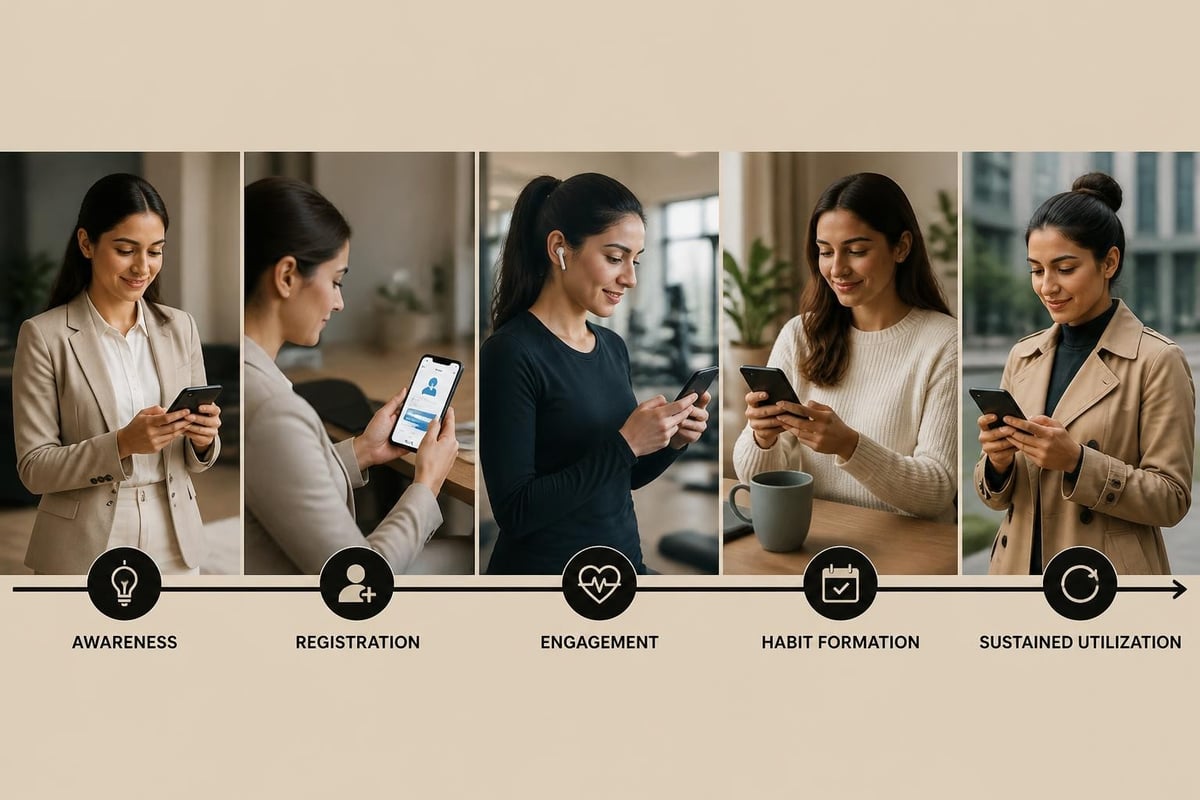
Mobile health app adoption timeline

Training and Support Infrastructure

Comprehensive training programs address varying levels of digital literacy across the workforce. While younger employees may navigate mobile health app interfaces intuitively, others require structured guidance and ongoing support resources.

Multi-modal training approaches prove most effective:

  1. Self-paced video tutorials covering basic navigation and core features
  2. Live webinar sessions allowing real-time questions and demonstrations
  3. In-person workshops for employees preferring hands-on instruction
  4. Quick reference guides providing step-by-step instructions for common tasks
  5. Help desk resources offering technical support during business hours

The Healthline guide on trustworthy health apps emphasizes that user understanding of app functionality directly impacts health outcomes. Investment in comprehensive training therefore serves both adoption and clinical effectiveness objectives.

Measuring Impact and Optimizing Performance

Quantifying the business impact of a mobile health app requires establishing baseline metrics before implementation and tracking key performance indicators continuously. Data-driven optimization ensures the application delivers maximum value relative to investment costs.

Organizations should monitor both utilization metrics and outcome measures. While utilization data (login frequency, feature usage, session duration) indicates engagement levels, outcome measures demonstrate actual health and business improvements.

Metric Category Specific Indicators Target Benchmarks
Engagement Monthly active users, feature utilization rate, session frequency 60%+ monthly active users, 3+ sessions per active user monthly
Health Outcomes Preventive screening completion, chronic condition management, biometric improvements 25% increase in preventive care, 15% improvement in key biometrics
Business Results Healthcare cost trends, absenteeism rates, productivity scores 10-15% reduction in healthcare costs, 20% decrease in absenteeism
Employee Satisfaction Net Promoter Score, program satisfaction ratings, retention correlation NPS above 50, 80%+ satisfaction rating

Analytics dashboards should provide real-time visibility into these metrics, enabling rapid response to utilization drops or emerging patterns. Predictive analytics can identify employees at risk for health complications, allowing proactive outreach and intervention.

Continuous Improvement Cycles

The most successful mobile health app implementations treat launch as the beginning rather than the endpoint. Continuous improvement cycles incorporate user feedback, technological advancements, and evolving business needs into regular enhancement releases.

Quarterly review processes should examine:

  • Feature utilization patterns identifying underused capabilities
  • Employee feedback highlighting pain points or desired functionality
  • Competitive analysis revealing emerging capabilities in the marketplace
  • Clinical outcome data validating program effectiveness
  • Cost-benefit analysis ensuring ongoing ROI justification

Organizations leveraging AI and automation capabilities can enhance mobile health app effectiveness through predictive modeling, personalized recommendations, and automated intervention triggers that scale human resources more efficiently.

Addressing Privacy, Security, and Compliance Considerations

Healthcare data represents some of the most sensitive information organizations handle, making privacy and security paramount considerations for any mobile health app deployment. Regulatory compliance extends beyond HIPAA to include state privacy laws, international data protection regulations, and industry-specific requirements.

Essential security measures include:

  • End-to-end encryption for data transmission and storage
  • Multi-factor authentication protecting account access
  • Regular security audits and penetration testing
  • Automatic session timeouts on inactive devices
  • Granular access controls limiting data visibility
  • Comprehensive audit trails tracking all data access

The American Medical Association discusses transparency requirements that organizations should demand from mobile health app vendors. Vendor transparency regarding data practices, security incidents, and third-party data sharing builds the trust foundation necessary for successful programs.

Regulatory Compliance Framework

Different mobile health app functionalities trigger different regulatory requirements. Applications providing medical diagnosis or treatment recommendations face more stringent FDA oversight than those offering general wellness information. Organizations must understand these distinctions when selecting and implementing solutions.

HIPAA compliance requires specific technical, administrative, and physical safeguards. Business Associate Agreements with mobile health app vendors formalize responsibilities and liability allocation. Regular compliance audits verify ongoing adherence as regulations evolve and applications update.

Data security layers

Research examining security awareness among mobile health app users reveals that user behavior significantly impacts overall security posture. Employee education about secure practices, phishing awareness, and data protection responsibilities strengthens the technical security infrastructure.

Integrating Mental Health and Financial Wellness

The most effective mobile health app implementations recognize that employee wellbeing extends beyond physical health. Mental health support and financial wellness resources address interconnected factors that collectively impact productivity, engagement, and organizational performance.

Mental health features should include:

  1. Confidential screening tools for anxiety, depression, and stress
  2. Crisis intervention resources with 24/7 access
  3. Meditation and mindfulness exercises with guided sessions
  4. Cognitive behavioral therapy modules and skill-building content
  5. Connection pathways to counseling services and Employee Assistance Programs

Financial stress directly impacts physical and mental health outcomes. Employee benefits consulting experts recognize that financial wellness education improves benefits utilization and reduces stress-related health issues.

Holistic Wellness Integration

A truly comprehensive mobile health app serves as a central hub connecting all wellness program components. This integration creates synergistic effects where progress in one domain reinforces improvements in others.

For example, financial wellness education helps employees understand ancillary benefits that reduce out-of-pocket healthcare expenses. Physical activity tracking with rewards programs provides incentives that drive engagement. Mental health resources help employees manage stress that might otherwise manifest as physical symptoms requiring medical intervention.

The research on factors affecting mobile health app adoption emphasizes that digital literacy and privacy concerns significantly influence user willingness. Organizations should address these factors through education and transparent communication about data practices.

Future Trends in Mobile Health Applications

The mobile health app landscape continues evolving rapidly as technological capabilities expand and healthcare delivery models transform. Organizations planning long-term wellness strategies should consider emerging trends that will shape the next generation of digital health tools.

Emerging capabilities include:

  • Artificial intelligence-powered health coaching providing personalized recommendations
  • Wearable device integration for continuous biometric monitoring
  • Virtual reality applications for pain management and mental health treatment
  • Blockchain technology enabling secure health data portability
  • Social features connecting employees with similar health goals
  • Genomic integration personalizing preventive care recommendations

Machine learning algorithms increasingly power predictive analytics that identify health risks before symptoms emerge. These proactive interventions prevent costly acute episodes while improving employee quality of life. The combination of continuous monitoring, predictive modeling, and automated outreach scales preventive care more efficiently than traditional approaches.

Telemedicine integration within mobile health app platforms eliminates friction between health information access and actual care delivery. Employees can transition seamlessly from symptom checking to virtual consultations without navigating multiple systems or providers. This continuity improves care quality while reducing unnecessary emergency department utilization.

Preparing for Healthcare's Digital Future

Organizations investing in mobile health app infrastructure today position themselves advantageously for healthcare's increasingly digital future. Interoperability standards continue maturing, enabling richer data exchange between consumer applications, provider electronic health records, and payer systems.

Value-based care models reward health outcomes rather than service volume, aligning incentives around preventive care and chronic disease management where mobile health app capabilities prove most valuable. Organizations demonstrating measurable health improvements through digital tools may access preferential insurance rates and innovative plan designs.

The workforce of 2026 increasingly expects digital-first experiences across all aspects of their lives, including healthcare. Organizations lacking robust mobile health app offerings face competitive disadvantages in talent attraction and retention. Comprehensive digital wellness infrastructure signals organizational commitment to employee wellbeing that resonates particularly strongly with younger workers.

Vendor Selection and Partnership Considerations

Choosing the right mobile health app vendor represents a strategic decision with long-term implications for employee wellness program effectiveness. Beyond evaluating technical capabilities and feature sets, organizations should assess vendor stability, support infrastructure, and strategic alignment.

Critical vendor evaluation factors:

Evaluation Area Key Questions Red Flags
Financial Stability How long has the vendor operated? What's their funding situation? Recent founding with limited track record, unclear revenue model
Client References What do similar organizations report about implementation and support? Reluctance to provide references, consistent negative feedback
Product Roadmap What enhancements are planned? How often do updates release? Stagnant development, infrequent updates, unclear vision
Support Resources What implementation assistance and ongoing support is included? Additional fees for basic support, slow response times
Data Portability Can health data be exported if you change vendors? Proprietary formats, data retention restrictions

Long-term vendor partnerships work most effectively when both parties align around shared success metrics. Performance-based contracts that tie pricing to utilization rates or outcome measures create mutual incentives for program success.

Integration complexity often exceeds initial estimates, making vendor implementation support critical. Vendors providing dedicated implementation specialists, technical integration resources, and change management consulting deliver higher success rates than those offering only basic onboarding.


Mobile health applications have evolved from optional wellness perks to strategic infrastructure that drives measurable business outcomes through improved employee health, reduced costs, and enhanced productivity. Organizations that thoughtfully select, implement, and optimize these digital tools position themselves competitively while demonstrating genuine commitment to workforce wellbeing. Nero and Associates, Inc. helps organizations implement comprehensive wellness strategies that integrate mobile health applications with broader human capital management systems, delivering measurable improvements in employee health and organizational performance through our performance-based consulting approach.

Mobile Health App: Transform Employee Wellness in 2026

The digital transformation of healthcare has accelerated dramatically, with organizations recognizing that employee health directly impacts operational efficiency and profitability. A mobile health app represents more than just a technological tool; it's a strategic investment in workforce productivity, cost reduction, and employee retention. As companies navigate the complexities of modern workforce management in 2026, these applications have become essential infrastructure for organizations committed to comprehensive employee wellness programs that deliver measurable business outcomes.

Understanding the Mobile Health App Ecosystem

The mobile health app landscape has evolved into a sophisticated ecosystem that addresses multiple dimensions of employee wellness simultaneously. These applications now integrate physical health tracking, mental health resources, financial wellness tools, and preventive care management into unified platforms that employees can access anywhere, anytime.

Modern mobile health applications serve several critical functions:

  • Real-time health monitoring and biometric tracking
  • Telemedicine and virtual consultation capabilities
  • Prescription management and medication reminders
  • Mental health support and stress management resources
  • Financial wellness education and benefits navigation
  • Preventive care scheduling and health risk assessments

The National Center for Complementary and Integrative Health offers tips for evaluating mobile health apps that organizations should consider when implementing these solutions. Data security, content accuracy, and clinical validation represent non-negotiable requirements for enterprise deployment.

The Business Case for Mobile Health Applications

Organizations implementing comprehensive mobile health app strategies report significant operational improvements. Employee absenteeism decreases when workers have immediate access to healthcare resources, reducing the need for emergency room visits and urgent care appointments that disrupt productivity.

Financial metrics demonstrate compelling returns on investment. Companies save an average of $3.27 for every dollar spent on wellness programs, with mobile health app integration driving the most substantial savings through early intervention and preventive care. These applications reduce healthcare claims costs by identifying health risks before they escalate into expensive chronic conditions.

ROI metrics for mobile health apps

The productivity gains extend beyond direct healthcare cost reduction. Employees with convenient access to health resources demonstrate higher engagement scores, reduced presenteeism, and improved job satisfaction. When workers feel their employer invests in their holistic wellbeing, retention rates improve significantly.

Selecting the Right Mobile Health App for Your Organization

Choosing an appropriate mobile health app requires careful evaluation of multiple factors that align with organizational objectives and employee needs. The decision-making process should incorporate input from human resources, IT security, finance, and employee representatives to ensure comprehensive stakeholder buy-in.

Evaluation Criteria Key Considerations Business Impact
Clinical Validation Evidence-based content, medical professional involvement Ensures employee safety and liability protection
Data Security HIPAA compliance, encryption standards, privacy policies Protects sensitive health information and regulatory compliance
Integration Capability API compatibility with existing HR systems, EHR connectivity Streamlines administration and reduces manual processes
User Experience Intuitive interface, accessibility features, multilingual support Drives adoption rates and sustained engagement
Analytics Dashboard Population health insights, utilization metrics, ROI tracking Enables data-driven decision making and program optimization

The Mobile Health App Database provides expert reviews using validated assessment instruments, offering organizations objective evaluation criteria for comparing different solutions. This resource proves particularly valuable for organizations lacking internal digital health expertise.

Integration with Human Capital Management Systems

A mobile health app achieves maximum effectiveness when seamlessly integrated with broader Human Capital Management infrastructure. This integration eliminates redundant data entry, ensures accurate benefits information, and creates unified employee experiences across all touchpoints.

Integration capabilities should include:

  1. Single sign-on authentication leveraging existing corporate credentials
  2. Automated enrollment syncing with benefits administration platforms
  3. Real-time eligibility verification for health services and programs
  4. Bidirectional data exchange with payroll systems for premium deductions
  5. API connections to wellness incentive and rewards platforms

Organizations that achieve this level of integration report 40% higher employee adoption rates compared to standalone applications. The reduced friction in accessing health resources directly correlates with utilization rates and, ultimately, health outcomes.

Implementing Mobile Health Apps Across Your Workforce

Successful implementation requires strategic planning that extends well beyond technical deployment. Change management, communication strategies, and ongoing support infrastructure determine whether employees embrace or ignore these digital health tools.

The implementation timeline should accommodate phased rollout approaches that allow for testing, feedback incorporation, and iterative improvements. Beginning with early adopter groups or specific departments provides valuable insights before organization-wide deployment.

Communication and Adoption Strategies

Employee skepticism often centers on privacy concerns and data usage policies. Transparent communication addressing these concerns directly improves trust and adoption rates. Organizations should clearly articulate what data gets collected, how it's protected, who has access, and how it will (and won't) be used.

Effective communication strategies include:

  • Executive sponsorship messages emphasizing organizational commitment to employee health
  • Department-specific demonstrations showcasing relevant features and benefits
  • Success stories from early adopters within the organization
  • Regular touchpoints through multiple channels (email, intranet, team meetings)
  • Dedicated support resources for technical questions and troubleshooting

Research published in Medical News Today about finding trustworthy health apps highlights that employees need education about evaluating digital health tools. Organizations should provide this guidance as part of their implementation strategy.

Mobile health app adoption timeline

Training and Support Infrastructure

Comprehensive training programs address varying levels of digital literacy across the workforce. While younger employees may navigate mobile health app interfaces intuitively, others require structured guidance and ongoing support resources.

Multi-modal training approaches prove most effective:

  1. Self-paced video tutorials covering basic navigation and core features
  2. Live webinar sessions allowing real-time questions and demonstrations
  3. In-person workshops for employees preferring hands-on instruction
  4. Quick reference guides providing step-by-step instructions for common tasks
  5. Help desk resources offering technical support during business hours

The Healthline guide on trustworthy health apps emphasizes that user understanding of app functionality directly impacts health outcomes. Investment in comprehensive training therefore serves both adoption and clinical effectiveness objectives.

Measuring Impact and Optimizing Performance

Quantifying the business impact of a mobile health app requires establishing baseline metrics before implementation and tracking key performance indicators continuously. Data-driven optimization ensures the application delivers maximum value relative to investment costs.

Organizations should monitor both utilization metrics and outcome measures. While utilization data (login frequency, feature usage, session duration) indicates engagement levels, outcome measures demonstrate actual health and business improvements.

Metric Category Specific Indicators Target Benchmarks
Engagement Monthly active users, feature utilization rate, session frequency 60%+ monthly active users, 3+ sessions per active user monthly
Health Outcomes Preventive screening completion, chronic condition management, biometric improvements 25% increase in preventive care, 15% improvement in key biometrics
Business Results Healthcare cost trends, absenteeism rates, productivity scores 10-15% reduction in healthcare costs, 20% decrease in absenteeism
Employee Satisfaction Net Promoter Score, program satisfaction ratings, retention correlation NPS above 50, 80%+ satisfaction rating

Analytics dashboards should provide real-time visibility into these metrics, enabling rapid response to utilization drops or emerging patterns. Predictive analytics can identify employees at risk for health complications, allowing proactive outreach and intervention.

Continuous Improvement Cycles

The most successful mobile health app implementations treat launch as the beginning rather than the endpoint. Continuous improvement cycles incorporate user feedback, technological advancements, and evolving business needs into regular enhancement releases.

Quarterly review processes should examine:

  • Feature utilization patterns identifying underused capabilities
  • Employee feedback highlighting pain points or desired functionality
  • Competitive analysis revealing emerging capabilities in the marketplace
  • Clinical outcome data validating program effectiveness
  • Cost-benefit analysis ensuring ongoing ROI justification

Organizations leveraging AI and automation capabilities can enhance mobile health app effectiveness through predictive modeling, personalized recommendations, and automated intervention triggers that scale human resources more efficiently.

Addressing Privacy, Security, and Compliance Considerations

Healthcare data represents some of the most sensitive information organizations handle, making privacy and security paramount considerations for any mobile health app deployment. Regulatory compliance extends beyond HIPAA to include state privacy laws, international data protection regulations, and industry-specific requirements.

Essential security measures include:

  • End-to-end encryption for data transmission and storage
  • Multi-factor authentication protecting account access
  • Regular security audits and penetration testing
  • Automatic session timeouts on inactive devices
  • Granular access controls limiting data visibility
  • Comprehensive audit trails tracking all data access

The American Medical Association discusses transparency requirements that organizations should demand from mobile health app vendors. Vendor transparency regarding data practices, security incidents, and third-party data sharing builds the trust foundation necessary for successful programs.

Regulatory Compliance Framework

Different mobile health app functionalities trigger different regulatory requirements. Applications providing medical diagnosis or treatment recommendations face more stringent FDA oversight than those offering general wellness information. Organizations must understand these distinctions when selecting and implementing solutions.

HIPAA compliance requires specific technical, administrative, and physical safeguards. Business Associate Agreements with mobile health app vendors formalize responsibilities and liability allocation. Regular compliance audits verify ongoing adherence as regulations evolve and applications update.

Data security layers

Research examining security awareness among mobile health app users reveals that user behavior significantly impacts overall security posture. Employee education about secure practices, phishing awareness, and data protection responsibilities strengthens the technical security infrastructure.

Integrating Mental Health and Financial Wellness

The most effective mobile health app implementations recognize that employee wellbeing extends beyond physical health. Mental health support and financial wellness resources address interconnected factors that collectively impact productivity, engagement, and organizational performance.

Mental health features should include:

  1. Confidential screening tools for anxiety, depression, and stress
  2. Crisis intervention resources with 24/7 access
  3. Meditation and mindfulness exercises with guided sessions
  4. Cognitive behavioral therapy modules and skill-building content
  5. Connection pathways to counseling services and Employee Assistance Programs

Financial stress directly impacts physical and mental health outcomes. Employee benefits consulting experts recognize that financial wellness education improves benefits utilization and reduces stress-related health issues.

Holistic Wellness Integration

A truly comprehensive mobile health app serves as a central hub connecting all wellness program components. This integration creates synergistic effects where progress in one domain reinforces improvements in others.

For example, financial wellness education helps employees understand ancillary benefits that reduce out-of-pocket healthcare expenses. Physical activity tracking with rewards programs provides incentives that drive engagement. Mental health resources help employees manage stress that might otherwise manifest as physical symptoms requiring medical intervention.

The research on factors affecting mobile health app adoption emphasizes that digital literacy and privacy concerns significantly influence user willingness. Organizations should address these factors through education and transparent communication about data practices.

Future Trends in Mobile Health Applications

The mobile health app landscape continues evolving rapidly as technological capabilities expand and healthcare delivery models transform. Organizations planning long-term wellness strategies should consider emerging trends that will shape the next generation of digital health tools.

Emerging capabilities include:

  • Artificial intelligence-powered health coaching providing personalized recommendations
  • Wearable device integration for continuous biometric monitoring
  • Virtual reality applications for pain management and mental health treatment
  • Blockchain technology enabling secure health data portability
  • Social features connecting employees with similar health goals
  • Genomic integration personalizing preventive care recommendations

Machine learning algorithms increasingly power predictive analytics that identify health risks before symptoms emerge. These proactive interventions prevent costly acute episodes while improving employee quality of life. The combination of continuous monitoring, predictive modeling, and automated outreach scales preventive care more efficiently than traditional approaches.

Telemedicine integration within mobile health app platforms eliminates friction between health information access and actual care delivery. Employees can transition seamlessly from symptom checking to virtual consultations without navigating multiple systems or providers. This continuity improves care quality while reducing unnecessary emergency department utilization.

Preparing for Healthcare's Digital Future

Organizations investing in mobile health app infrastructure today position themselves advantageously for healthcare's increasingly digital future. Interoperability standards continue maturing, enabling richer data exchange between consumer applications, provider electronic health records, and payer systems.

Value-based care models reward health outcomes rather than service volume, aligning incentives around preventive care and chronic disease management where mobile health app capabilities prove most valuable. Organizations demonstrating measurable health improvements through digital tools may access preferential insurance rates and innovative plan designs.

The workforce of 2026 increasingly expects digital-first experiences across all aspects of their lives, including healthcare. Organizations lacking robust mobile health app offerings face competitive disadvantages in talent attraction and retention. Comprehensive digital wellness infrastructure signals organizational commitment to employee wellbeing that resonates particularly strongly with younger workers.

Vendor Selection and Partnership Considerations

Choosing the right mobile health app vendor represents a strategic decision with long-term implications for employee wellness program effectiveness. Beyond evaluating technical capabilities and feature sets, organizations should assess vendor stability, support infrastructure, and strategic alignment.

Critical vendor evaluation factors:

Evaluation Area Key Questions Red Flags
Financial Stability How long has the vendor operated? What's their funding situation? Recent founding with limited track record, unclear revenue model
Client References What do similar organizations report about implementation and support? Reluctance to provide references, consistent negative feedback
Product Roadmap What enhancements are planned? How often do updates release? Stagnant development, infrequent updates, unclear vision
Support Resources What implementation assistance and ongoing support is included? Additional fees for basic support, slow response times
Data Portability Can health data be exported if you change vendors? Proprietary formats, data retention restrictions

Long-term vendor partnerships work most effectively when both parties align around shared success metrics. Performance-based contracts that tie pricing to utilization rates or outcome measures create mutual incentives for program success.

Integration complexity often exceeds initial estimates, making vendor implementation support critical. Vendors providing dedicated implementation specialists, technical integration resources, and change management consulting deliver higher success rates than those offering only basic onboarding.


Mobile health applications have evolved from optional wellness perks to strategic infrastructure that drives measurable business outcomes through improved employee health, reduced costs, and enhanced productivity. Organizations that thoughtfully select, implement, and optimize these digital tools position themselves competitively while demonstrating genuine commitment to workforce wellbeing. Nero and Associates, Inc. helps organizations implement comprehensive wellness strategies that integrate mobile health applications with broader human capital management systems, delivering measurable improvements in employee health and organizational performance through our performance-based consulting approach.

Website developed in accordance with Web Content Accessibility Guidelines 2.2.
If you encounter any issues while using this site, please contact us: 215.526.5126