

Solutions Strategy: Building Results-Driven Frameworks

Share on Facebook
Share on X
Share on LinkedIn

In today's competitive business environment, organizations can no longer rely solely on traditional product-focused approaches to drive growth and profitability. Instead, forward-thinking companies are adopting a solutions strategy that centers on addressing specific customer challenges while creating sustainable value. This approach transforms how businesses design, deliver, and measure success across their operations, fundamentally shifting focus from what they sell to what problems they solve for their clients.

Understanding the Foundation of Solutions Strategy

A solutions strategy represents a comprehensive approach to identifying, developing, and implementing business initiatives that directly address customer pain points while driving organizational performance. Unlike product-centric models that prioritize features and specifications, this methodology focuses on outcomes, impact, and measurable results.

The core principle behind an effective solutions strategy is alignment. Organizations must align their capabilities, resources, and expertise with the genuine needs of their target market. This alignment creates natural opportunities for differentiation and sustainable competitive advantage.

The Shift from Products to Solutions

Many organizations struggle with the transition from selling products to delivering solutions. This shift requires fundamental changes in:

  • Organizational structure and incentives
  • Sales and delivery methodologies
  • Performance measurement systems
  • Client engagement models
  • Resource allocation frameworks

Research from Blue Canyon Partners on solutions to growth challenges emphasizes that genuine solutions strategy addresses real customer problems rather than simply bundling existing offerings together. This distinction separates transformative approaches from superficial repackaging.
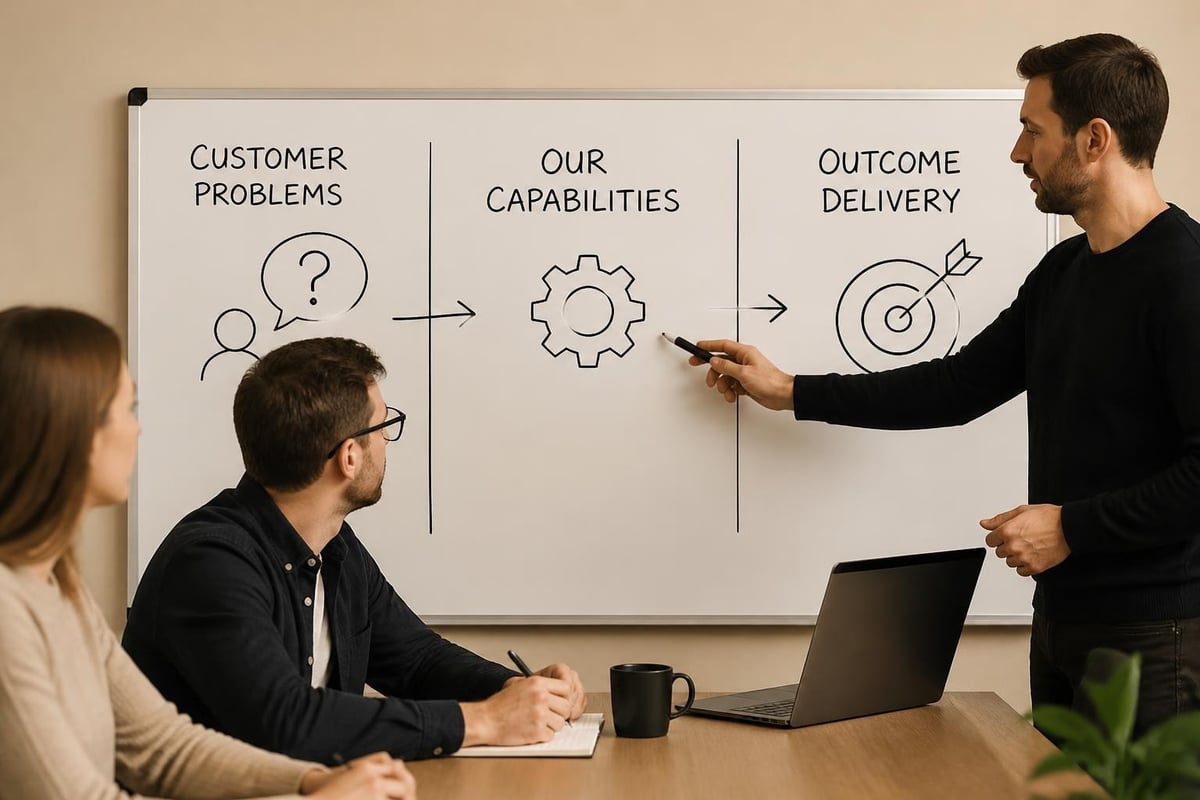
Solutions strategy framework

Building a Comprehensive Solutions Strategy Framework

Developing a robust solutions strategy requires systematic planning, stakeholder engagement, and continuous refinement. Organizations must establish clear frameworks that guide decision-making and resource allocation throughout the implementation process.

Assessment and Discovery Phase

The foundation of any successful solutions strategy begins with thorough assessment. Organizations should conduct comprehensive evaluations of:

  1. Current market position and competitive landscape
  2. Internal capabilities and resource availability
  3. Customer needs, challenges, and desired outcomes
  4. Technology infrastructure and integration requirements
  5. Financial constraints and investment capacity

This discovery phase should involve multiple stakeholder groups, including leadership teams, operational managers, frontline employees, and most importantly, current and prospective customers. PGP Solutions’ strategic planning process demonstrates the value of executive interviews, surveys, and workshops in gathering comprehensive insights.

Strategic Prioritization Matrix

Once assessment activities are complete, organizations must prioritize opportunities based on impact potential and feasibility. A prioritization matrix helps clarify where to focus initial efforts.

Priority Level Impact Potential Implementation Complexity Resource Requirements Timeline
Tier 1 High Low to Medium Moderate 3-6 months
Tier 2 High Medium to High Significant 6-12 months
Tier 3 Medium Low Limited 1-3 months
Tier 4 Medium High Significant 12+ months

This framework enables organizations to pursue quick wins while building capabilities for more complex, transformative initiatives. The goal is creating momentum through early successes while maintaining focus on long-term strategic objectives.

Implementing Solutions-Focused Initiatives

Implementation represents where strategy meets execution. Even the most well-designed solutions strategy will fail without effective implementation frameworks and disciplined execution.

Cross-Functional Collaboration Models

Solutions strategy demands collaboration across traditional organizational boundaries. Silos inhibit the integrated thinking necessary for addressing complex customer challenges. Organizations should establish:

  • Cross-functional solution teams with clear ownership
  • Shared performance metrics and accountability structures
  • Regular communication cadences and feedback loops
  • Decision-making authorities appropriate to each level

For organizations focused on operational excellence, this collaborative approach enables identification of process inefficiencies and opportunities for automation that might otherwise remain hidden within departmental boundaries.

Technology Enablement and Integration

Modern solutions strategy increasingly relies on technology as both an enabler and differentiator. Artificial intelligence and automation are transforming how organizations approach problem-solving and strategy execution.

Technology considerations within a solutions strategy include:

  1. Data integration across systems and platforms
  2. Automation of manual, repetitive processes
  3. Analytics capabilities for performance tracking
  4. Scalability to support growth and expansion
  5. Security and compliance requirements

Organizations implementing HRIS systems demonstrate how technology choices directly impact the ability to deliver integrated solutions that address multiple stakeholder needs simultaneously.

Technology integration in solutions delivery

Measuring Solutions Strategy Success

Measurement separates aspirational thinking from accountable execution. A solutions strategy without robust performance metrics lacks the feedback mechanisms necessary for continuous improvement and optimization.

Key Performance Indicators Framework

Effective measurement requires selecting indicators that reflect both customer outcomes and organizational performance. These metrics should cascade from strategic objectives to operational activities.

Customer-Centric Metrics:

  • Problem resolution rate and time-to-solution
  • Customer satisfaction and net promoter scores
  • Adoption rates and utilization patterns
  • Renewal rates and expansion opportunities
  • Return on investment for customers

Organizational Performance Metrics:

  • Revenue growth and profitability
  • Operational efficiency improvements
  • Employee engagement and productivity
  • Market share and competitive position
  • Innovation velocity and time-to-market

Strategy One Solutions showcases how analytics-driven approaches enable organizations to optimize performance across multiple dimensions simultaneously.

Continuous Improvement Cycles

Solutions strategy should never be static. Market conditions change, customer needs evolve, and competitive dynamics shift. Organizations must embed continuous improvement into their strategic framework.

Improvement Cycle Focus Area Frequency Key Activities
Strategic Review Market positioning Annually Competitive analysis, capability assessment
Tactical Assessment Solution performance Quarterly Metric reviews, initiative adjustments
Operational Optimization Process efficiency Monthly Performance tracking, resource allocation
Client Feedback Customer experience Ongoing Surveys, interviews, usage analytics

This layered approach to improvement ensures organizations remain responsive at multiple time horizons while maintaining strategic focus on long-term objectives.

Aligning Solutions Strategy with Human Capital

The human dimension of solutions strategy often receives insufficient attention despite being critical for sustainable success. People design, deliver, and continuously improve solutions that drive customer value.

Employee Enablement and Development

Organizations must invest in developing the capabilities their teams need to execute solutions strategy effectively. This includes:

  • Technical skills for new tools and methodologies
  • Consultative selling and customer engagement
  • Project management and change leadership
  • Data literacy and analytical thinking
  • Cross-functional collaboration and communication

When organizations integrate ancillary benefits into their human capital strategy, they create alignment between employee wellness and organizational performance. Healthy, engaged employees deliver superior customer experiences and drive better business outcomes.

Organizational Culture Transformation

Solutions strategy often requires cultural shifts that can be more challenging than structural or process changes. Organizations should focus on:

  1. Leadership modeling of solutions-oriented thinking
  2. Recognition systems that reward customer outcomes
  3. Permission to experiment and learn from failures
  4. Transparency in decision-making and performance
  5. Collaboration as a core organizational value

Bragg Solutions Group’s approach to pragmatic strategy emphasizes the importance of clarity and alignment in driving cultural transformation that supports strategic objectives.

Industry-Specific Applications

While solutions strategy principles apply broadly, effective implementation requires customization for specific industry contexts, regulatory environments, and customer expectations.

Healthcare and Revenue Cycle Management

Healthcare organizations face unique challenges that demand specialized solutions strategy approaches. Between regulatory complexity, reimbursement pressures, and patient experience expectations, healthcare providers must navigate multiple competing priorities.

A solutions strategy in healthcare might address:

Organizations that apply solutions thinking to revenue cycle management can simultaneously improve financial performance, reduce administrative costs, and enhance patient satisfaction.

Professional Services and Consulting

Professional services firms operate in an inherently solutions-oriented environment, yet many still struggle to move beyond time-and-materials billing models to true value-based relationships.

For consultancies, solutions strategy involves:

Challenge Area Traditional Approach Solutions Strategy Approach
Client engagement Project-based, transactional Outcome-focused, partnership
Pricing model Hourly or daily rates Performance-based, value-aligned
Service delivery Specialized expertise silos Integrated, cross-functional teams
Success measurement Deliverable completion Business impact and ROI

This transformation enables consultancies to capture more value while delivering measurably better outcomes for their clients. Understanding strategies and solutions in the context of consulting work creates differentiation in crowded markets.
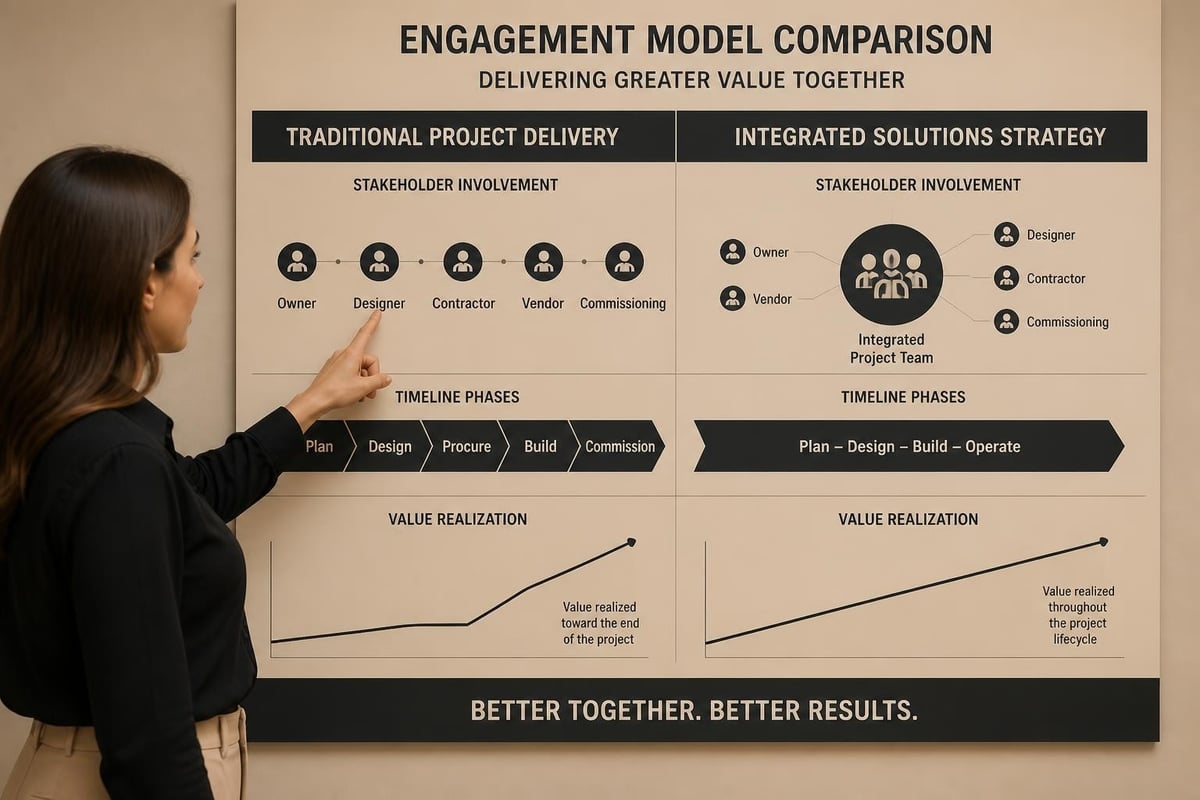
Solutions delivery model

Overcoming Implementation Challenges

Even well-designed solutions strategy faces predictable challenges during implementation. Anticipating these obstacles enables organizations to develop mitigation strategies proactively.

Common Barriers to Success

Organizations frequently encounter these implementation challenges:

  • Resistance to change from employees and stakeholders
  • Insufficient resources or competing priorities
  • Misalignment between strategy and incentive structures
  • Technology limitations or integration complexities
  • Unclear ownership and accountability

Addressing these barriers requires both structural interventions and sustained leadership attention. Organizations should establish clear governance models, communication plans, and escalation pathways that enable rapid problem resolution.

Risk Mitigation Strategies

Effective risk management within solutions strategy involves identifying potential failure points and developing contingency plans. Organizations should:

  1. Conduct regular risk assessments throughout implementation
  2. Maintain flexibility to adjust course based on market feedback
  3. Build redundancy into critical delivery capabilities
  4. Invest in change management and communication
  5. Celebrate early wins to maintain momentum

The UNIFY Solutions approach to strategy development emphasizes creating practical roadmaps that acknowledge real-world constraints while maintaining ambitious objectives.

Scaling Solutions Across the Organization

As initial solutions strategy initiatives demonstrate success, organizations face the challenge of scaling these approaches across broader contexts and customer segments.

Standardization vs. Customization Balance

Scaling requires finding the right balance between standardized frameworks that enable efficiency and customized approaches that address unique customer needs.

Standardization Benefits:

  • Reduced delivery costs and improved margins
  • Faster implementation and time-to-value
  • Easier quality control and performance management
  • Simplified training and knowledge transfer

Customization Benefits:

  • Better fit to unique customer requirements
  • Enhanced competitive differentiation
  • Premium pricing opportunities
  • Stronger customer relationships and loyalty

Organizations must develop modular approaches that combine standardized core capabilities with configurable elements that address specific customer contexts.

Knowledge Management and Transfer

As solutions strategy expands, capturing and sharing learnings becomes increasingly critical. Organizations should invest in:

  • Documentation of proven methodologies and frameworks
  • Communities of practice that facilitate peer learning
  • Technology platforms that enable knowledge sharing
  • Recognition systems that reward contribution to collective intelligence

This organizational learning capability accelerates the development of new solutions while improving the effectiveness of existing offerings. Achieving growth and efficiency in operations depends significantly on how effectively organizations leverage accumulated knowledge.

Future-Proofing Your Solutions Strategy

Market dynamics, technology capabilities, and customer expectations continue evolving at accelerating rates. Organizations must build adaptability into their solutions strategy to maintain relevance and competitiveness.

Emerging Trends and Capabilities

Forward-thinking organizations monitor emerging trends that could reshape their industry landscape:

  • Artificial intelligence and machine learning applications
  • Automation of increasingly complex processes
  • Real-time data analytics and predictive capabilities
  • Platform business models and ecosystem strategies
  • Sustainability and social responsibility expectations

The integration of automation for accounts payable processes illustrates how emerging capabilities can transform traditional business functions into strategic differentiators.

Building Adaptive Capacity

Organizations that thrive over time develop adaptive capacity that enables rapid response to changing conditions. This requires:

  1. Environmental scanning processes that detect weak signals early
  2. Innovation programs that experiment with emerging approaches
  3. Portfolio management that balances core and adjacent opportunities
  4. Partnership ecosystems that extend organizational capabilities
  5. Learning cultures that embrace change and continuous improvement

By embedding these capabilities into their solutions strategy, organizations position themselves to capitalize on opportunities while mitigating threats in dynamic markets.


Implementing an effective solutions strategy requires disciplined thinking, cross-functional collaboration, and unwavering focus on customer outcomes. Organizations that master this approach create sustainable competitive advantages while delivering measurable value to their stakeholders. Nero and Associates, Inc. helps organizations develop and execute solutions strategies that drive bottom-line results through AI-powered automation, human capital management, and revenue cycle optimization. Our performance-based approach ensures your investment delivers measurable improvements in efficiency, revenue, and employee wellness.

Solutions Strategy: Building Results-Driven Frameworks

In today's competitive business environment, organizations can no longer rely solely on traditional product-focused approaches to drive growth and profitability. Instead, forward-thinking companies are adopting a solutions strategy that centers on addressing specific customer challenges while creating sustainable value. This approach transforms how businesses design, deliver, and measure success across their operations, fundamentally shifting focus from what they sell to what problems they solve for their clients.

Understanding the Foundation of Solutions Strategy

A solutions strategy represents a comprehensive approach to identifying, developing, and implementing business initiatives that directly address customer pain points while driving organizational performance. Unlike product-centric models that prioritize features and specifications, this methodology focuses on outcomes, impact, and measurable results.

The core principle behind an effective solutions strategy is alignment. Organizations must align their capabilities, resources, and expertise with the genuine needs of their target market. This alignment creates natural opportunities for differentiation and sustainable competitive advantage.

The Shift from Products to Solutions

Many organizations struggle with the transition from selling products to delivering solutions. This shift requires fundamental changes in:

  • Organizational structure and incentives
  • Sales and delivery methodologies
  • Performance measurement systems
  • Client engagement models
  • Resource allocation frameworks

Research from Blue Canyon Partners on solutions to growth challenges emphasizes that genuine solutions strategy addresses real customer problems rather than simply bundling existing offerings together. This distinction separates transformative approaches from superficial repackaging.

Solutions strategy framework

Building a Comprehensive Solutions Strategy Framework

Developing a robust solutions strategy requires systematic planning, stakeholder engagement, and continuous refinement. Organizations must establish clear frameworks that guide decision-making and resource allocation throughout the implementation process.

Assessment and Discovery Phase

The foundation of any successful solutions strategy begins with thorough assessment. Organizations should conduct comprehensive evaluations of:

  1. Current market position and competitive landscape
  2. Internal capabilities and resource availability
  3. Customer needs, challenges, and desired outcomes
  4. Technology infrastructure and integration requirements
  5. Financial constraints and investment capacity

This discovery phase should involve multiple stakeholder groups, including leadership teams, operational managers, frontline employees, and most importantly, current and prospective customers. PGP Solutions’ strategic planning process demonstrates the value of executive interviews, surveys, and workshops in gathering comprehensive insights.

Strategic Prioritization Matrix

Once assessment activities are complete, organizations must prioritize opportunities based on impact potential and feasibility. A prioritization matrix helps clarify where to focus initial efforts.

Priority Level Impact Potential Implementation Complexity Resource Requirements Timeline
Tier 1 High Low to Medium Moderate 3-6 months
Tier 2 High Medium to High Significant 6-12 months
Tier 3 Medium Low Limited 1-3 months
Tier 4 Medium High Significant 12+ months

This framework enables organizations to pursue quick wins while building capabilities for more complex, transformative initiatives. The goal is creating momentum through early successes while maintaining focus on long-term strategic objectives.

Implementing Solutions-Focused Initiatives

Implementation represents where strategy meets execution. Even the most well-designed solutions strategy will fail without effective implementation frameworks and disciplined execution.

Cross-Functional Collaboration Models

Solutions strategy demands collaboration across traditional organizational boundaries. Silos inhibit the integrated thinking necessary for addressing complex customer challenges. Organizations should establish:

  • Cross-functional solution teams with clear ownership
  • Shared performance metrics and accountability structures
  • Regular communication cadences and feedback loops
  • Decision-making authorities appropriate to each level

For organizations focused on operational excellence, this collaborative approach enables identification of process inefficiencies and opportunities for automation that might otherwise remain hidden within departmental boundaries.

Technology Enablement and Integration

Modern solutions strategy increasingly relies on technology as both an enabler and differentiator. Artificial intelligence and automation are transforming how organizations approach problem-solving and strategy execution.

Technology considerations within a solutions strategy include:

  1. Data integration across systems and platforms
  2. Automation of manual, repetitive processes
  3. Analytics capabilities for performance tracking
  4. Scalability to support growth and expansion
  5. Security and compliance requirements

Organizations implementing HRIS systems demonstrate how technology choices directly impact the ability to deliver integrated solutions that address multiple stakeholder needs simultaneously.

Technology integration in solutions delivery

Measuring Solutions Strategy Success

Measurement separates aspirational thinking from accountable execution. A solutions strategy without robust performance metrics lacks the feedback mechanisms necessary for continuous improvement and optimization.

Key Performance Indicators Framework

Effective measurement requires selecting indicators that reflect both customer outcomes and organizational performance. These metrics should cascade from strategic objectives to operational activities.

Customer-Centric Metrics:

  • Problem resolution rate and time-to-solution
  • Customer satisfaction and net promoter scores
  • Adoption rates and utilization patterns
  • Renewal rates and expansion opportunities
  • Return on investment for customers

Organizational Performance Metrics:

  • Revenue growth and profitability
  • Operational efficiency improvements
  • Employee engagement and productivity
  • Market share and competitive position
  • Innovation velocity and time-to-market

Strategy One Solutions showcases how analytics-driven approaches enable organizations to optimize performance across multiple dimensions simultaneously.

Continuous Improvement Cycles

Solutions strategy should never be static. Market conditions change, customer needs evolve, and competitive dynamics shift. Organizations must embed continuous improvement into their strategic framework.

Improvement Cycle Focus Area Frequency Key Activities
Strategic Review Market positioning Annually Competitive analysis, capability assessment
Tactical Assessment Solution performance Quarterly Metric reviews, initiative adjustments
Operational Optimization Process efficiency Monthly Performance tracking, resource allocation
Client Feedback Customer experience Ongoing Surveys, interviews, usage analytics

This layered approach to improvement ensures organizations remain responsive at multiple time horizons while maintaining strategic focus on long-term objectives.

Aligning Solutions Strategy with Human Capital

The human dimension of solutions strategy often receives insufficient attention despite being critical for sustainable success. People design, deliver, and continuously improve solutions that drive customer value.

Employee Enablement and Development

Organizations must invest in developing the capabilities their teams need to execute solutions strategy effectively. This includes:

  • Technical skills for new tools and methodologies
  • Consultative selling and customer engagement
  • Project management and change leadership
  • Data literacy and analytical thinking
  • Cross-functional collaboration and communication

When organizations integrate ancillary benefits into their human capital strategy, they create alignment between employee wellness and organizational performance. Healthy, engaged employees deliver superior customer experiences and drive better business outcomes.

Organizational Culture Transformation

Solutions strategy often requires cultural shifts that can be more challenging than structural or process changes. Organizations should focus on:

  1. Leadership modeling of solutions-oriented thinking
  2. Recognition systems that reward customer outcomes
  3. Permission to experiment and learn from failures
  4. Transparency in decision-making and performance
  5. Collaboration as a core organizational value

Bragg Solutions Group’s approach to pragmatic strategy emphasizes the importance of clarity and alignment in driving cultural transformation that supports strategic objectives.

Industry-Specific Applications

While solutions strategy principles apply broadly, effective implementation requires customization for specific industry contexts, regulatory environments, and customer expectations.

Healthcare and Revenue Cycle Management

Healthcare organizations face unique challenges that demand specialized solutions strategy approaches. Between regulatory complexity, reimbursement pressures, and patient experience expectations, healthcare providers must navigate multiple competing priorities.

A solutions strategy in healthcare might address:

Organizations that apply solutions thinking to revenue cycle management can simultaneously improve financial performance, reduce administrative costs, and enhance patient satisfaction.

Professional Services and Consulting

Professional services firms operate in an inherently solutions-oriented environment, yet many still struggle to move beyond time-and-materials billing models to true value-based relationships.

For consultancies, solutions strategy involves:

Challenge Area Traditional Approach Solutions Strategy Approach
Client engagement Project-based, transactional Outcome-focused, partnership
Pricing model Hourly or daily rates Performance-based, value-aligned
Service delivery Specialized expertise silos Integrated, cross-functional teams
Success measurement Deliverable completion Business impact and ROI

This transformation enables consultancies to capture more value while delivering measurably better outcomes for their clients. Understanding strategies and solutions in the context of consulting work creates differentiation in crowded markets.

Solutions delivery model

Overcoming Implementation Challenges

Even well-designed solutions strategy faces predictable challenges during implementation. Anticipating these obstacles enables organizations to develop mitigation strategies proactively.

Common Barriers to Success

Organizations frequently encounter these implementation challenges:

  • Resistance to change from employees and stakeholders
  • Insufficient resources or competing priorities
  • Misalignment between strategy and incentive structures
  • Technology limitations or integration complexities
  • Unclear ownership and accountability

Addressing these barriers requires both structural interventions and sustained leadership attention. Organizations should establish clear governance models, communication plans, and escalation pathways that enable rapid problem resolution.

Risk Mitigation Strategies

Effective risk management within solutions strategy involves identifying potential failure points and developing contingency plans. Organizations should:

  1. Conduct regular risk assessments throughout implementation
  2. Maintain flexibility to adjust course based on market feedback
  3. Build redundancy into critical delivery capabilities
  4. Invest in change management and communication
  5. Celebrate early wins to maintain momentum

The UNIFY Solutions approach to strategy development emphasizes creating practical roadmaps that acknowledge real-world constraints while maintaining ambitious objectives.

Scaling Solutions Across the Organization

As initial solutions strategy initiatives demonstrate success, organizations face the challenge of scaling these approaches across broader contexts and customer segments.

Standardization vs. Customization Balance

Scaling requires finding the right balance between standardized frameworks that enable efficiency and customized approaches that address unique customer needs.

Standardization Benefits:

  • Reduced delivery costs and improved margins
  • Faster implementation and time-to-value
  • Easier quality control and performance management
  • Simplified training and knowledge transfer

Customization Benefits:

  • Better fit to unique customer requirements
  • Enhanced competitive differentiation
  • Premium pricing opportunities
  • Stronger customer relationships and loyalty

Organizations must develop modular approaches that combine standardized core capabilities with configurable elements that address specific customer contexts.

Knowledge Management and Transfer

As solutions strategy expands, capturing and sharing learnings becomes increasingly critical. Organizations should invest in:

  • Documentation of proven methodologies and frameworks
  • Communities of practice that facilitate peer learning
  • Technology platforms that enable knowledge sharing
  • Recognition systems that reward contribution to collective intelligence

This organizational learning capability accelerates the development of new solutions while improving the effectiveness of existing offerings. Achieving growth and efficiency in operations depends significantly on how effectively organizations leverage accumulated knowledge.

Future-Proofing Your Solutions Strategy

Market dynamics, technology capabilities, and customer expectations continue evolving at accelerating rates. Organizations must build adaptability into their solutions strategy to maintain relevance and competitiveness.

Emerging Trends and Capabilities

Forward-thinking organizations monitor emerging trends that could reshape their industry landscape:

  • Artificial intelligence and machine learning applications
  • Automation of increasingly complex processes
  • Real-time data analytics and predictive capabilities
  • Platform business models and ecosystem strategies
  • Sustainability and social responsibility expectations

The integration of automation for accounts payable processes illustrates how emerging capabilities can transform traditional business functions into strategic differentiators.

Building Adaptive Capacity

Organizations that thrive over time develop adaptive capacity that enables rapid response to changing conditions. This requires:

  1. Environmental scanning processes that detect weak signals early
  2. Innovation programs that experiment with emerging approaches
  3. Portfolio management that balances core and adjacent opportunities
  4. Partnership ecosystems that extend organizational capabilities
  5. Learning cultures that embrace change and continuous improvement

By embedding these capabilities into their solutions strategy, organizations position themselves to capitalize on opportunities while mitigating threats in dynamic markets.


Implementing an effective solutions strategy requires disciplined thinking, cross-functional collaboration, and unwavering focus on customer outcomes. Organizations that master this approach create sustainable competitive advantages while delivering measurable value to their stakeholders. Nero and Associates, Inc. helps organizations develop and execute solutions strategies that drive bottom-line results through AI-powered automation, human capital management, and revenue cycle optimization. Our performance-based approach ensures your investment delivers measurable improvements in efficiency, revenue, and employee wellness.

Website developed in accordance with Web Content Accessibility Guidelines 2.2.
If you encounter any issues while using this site, please contact us: 215.526.5126