

Organizations today face unprecedented challenges in attracting, developing, and retaining the workforce needed to drive sustainable growth. The war for talent has intensified as businesses compete not just on compensation but on culture, development opportunities, and the employee experience. Effective talent management has emerged as a critical strategic function that directly impacts organizational performance, employee satisfaction, and bottom-line results. For professional services consultancies and their clients, implementing comprehensive talent strategies is no longer optional-it's essential for survival and competitive advantage in 2026.
Understanding the Strategic Value of Talent Management
Talent management encompasses the integrated processes and practices organizations use to attract, develop, engage, and retain high-performing employees. This strategic approach goes far beyond traditional human resources functions to create a holistic system that aligns workforce capabilities with business objectives.
The Chartered Institute of Personnel and Development (CIPD) provides comprehensive insights into developing approaches that align with organizational strategies and culture. At its core, talent management recognizes that people represent the most valuable asset in any organization, particularly in professional services where intellectual capital drives value creation.

The Business Case for Strategic Talent Practices
Organizations with mature talent management systems experience measurable advantages:
- 30-50% reduction in turnover costs through improved retention strategies
- Enhanced productivity from better role-person alignment and targeted development
- Faster time-to-productivity for new hires through structured onboarding
- Stronger succession pipelines that minimize leadership gaps
- Improved employee engagement scores leading to better client outcomes
When consultancies help clients implement robust talent frameworks, the financial impact extends across multiple dimensions. Reduced recruiting expenses, decreased training costs for replacement employees, and improved institutional knowledge retention create substantial savings. For mid-sized organizations, these efficiencies can translate into hundreds of thousands of dollars annually while simultaneously improving service quality.
Core Components of Effective Talent Management Systems
A comprehensive talent management approach integrates multiple interconnected processes that support the entire employee lifecycle. Each component must work synergistically to create lasting organizational impact.
Strategic Workforce Planning
Effective talent management begins with understanding current and future workforce needs. Strategic workforce planning analyzes:
- Current workforce capabilities and skill inventories
- Future business objectives and associated talent requirements
- Gap analysis identifying critical skill shortages
- Talent marketplace trends affecting availability and cost
- Succession planning needs for key positions
Organizations that excel at workforce planning anticipate changes rather than react to them. This proactive approach enables human capital management teams to build talent pipelines before critical needs emerge, reducing time-to-fill and maintaining operational continuity.
Acquisition and Onboarding Excellence
Attracting top talent requires a compelling employer value proposition that resonates with target candidates. In 2026, professionals seek more than competitive compensation-they prioritize:
- Meaningful work aligned with personal values
- Development opportunities that accelerate career growth
- Flexible work arrangements supporting work-life integration
- Health and wellness support addressing holistic employee needs
- Technology enablement reducing manual, repetitive tasks
Once hired, structured onboarding programs accelerate integration and engagement. Research shows employees who experience comprehensive onboarding are 58% more likely to remain with the organization after three years. Best-in-class onboarding extends beyond administrative paperwork to include role-specific training, relationship building, and clear performance expectations.
| Onboarding Phase | Duration | Key Activities | Success Metrics |
|---|---|---|---|
| Pre-boarding | 2-4 weeks before start | Systems access, welcome communications, initial paperwork | Completion rate, new hire satisfaction |
| Orientation | Week 1 | Culture immersion, team introductions, workspace setup | Knowledge retention, engagement scores |
| Role Integration | Weeks 2-12 | Job-specific training, mentor assignment, goal setting | Time-to-productivity, confidence levels |
| Ongoing Development | Months 4-12 | Performance check-ins, skill development, relationship deepening | Performance ratings, retention rates |
Performance Management and Development
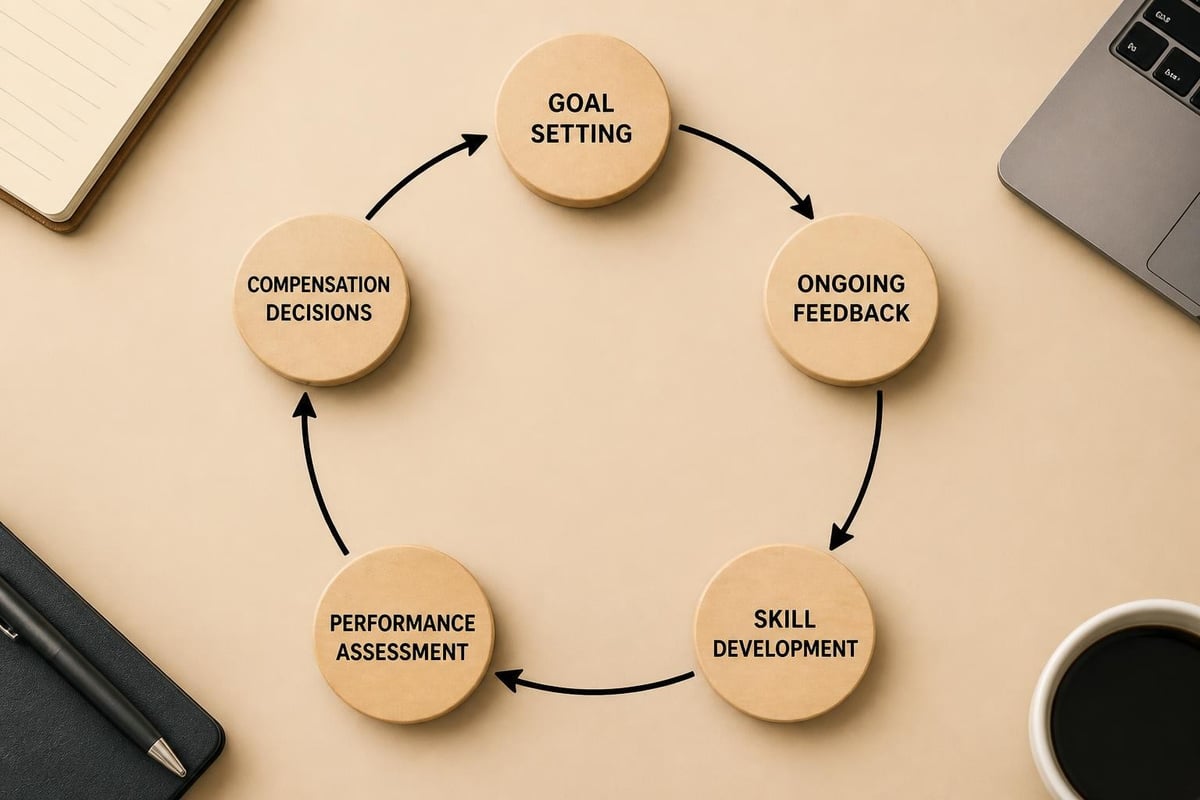
Traditional annual performance reviews have given way to continuous feedback models that drive real-time improvement. Modern performance management emphasizes:
Regular check-ins that provide ongoing coaching and course correction rather than year-end surprises. These conversations focus on progress toward goals, obstacle removal, and development opportunities.
Skills-based assessments that identify specific capability gaps and inform personalized development plans. This approach connects individual growth directly to organizational needs, creating mutual value.
Development pathways that outline clear progression routes within the organization. Employees who see advancement opportunities are significantly more likely to invest discretionary effort and remain with their employer.
Learning and development consultants play a crucial role in designing training programs that address both current performance gaps and future capability requirements. These programs combine formal training, experiential learning, mentorship, and self-directed development to create comprehensive growth experiences.
Leveraging Technology for Talent Management Excellence
Digital transformation has revolutionized how organizations manage their workforce. Integrated talent management platforms provide capabilities that were impossible just a few years ago.
Artificial Intelligence and Automation
AI-powered systems enhance talent management across multiple dimensions:
- Predictive analytics identifying flight risk among high performers
- Skill gap analysis at individual, team, and organizational levels
- Learning recommendations personalized to each employee's role and aspirations
- Bias reduction in hiring and promotion decisions through data-driven insights
- Process automation eliminating manual administrative tasks
Organizations implementing AI and automation in talent management report 40-60% time savings in administrative processes, allowing HR professionals to focus on strategic initiatives and employee relationships. This efficiency gain directly supports the cost reduction and time savings that performance-based consultancies deliver to clients.
Data-Driven Decision Making
Benefits data analytics extends beyond compensation and benefits to encompass the full talent lifecycle. Organizations leveraging analytics achieve:
- Better hiring decisions through predictive success modeling
- Optimized compensation strategies based on market data and performance metrics
- Targeted retention interventions for at-risk high performers
- ROI measurement for training and development investments
- Workforce trend identification enabling proactive planning
The systematic literature review examining talent management practices across industries highlights how data-driven approaches have transformed organizational implementation over the past decade. Companies that embrace analytics outperform competitors in virtually every talent metric.
Strategic Retention and Engagement
While attracting talent receives significant attention, retention often delivers greater ROI. The cost of replacing an experienced professional ranges from 50-200% of annual salary when considering recruiting expenses, productivity losses, training costs, and institutional knowledge depletion.
Creating Compelling Employee Experiences
Employee retention stems from holistic experiences that address multiple needs simultaneously:
Career development opportunities represent the single strongest predictor of retention among high performers. Employees who see clear paths forward and receive support in skill development demonstrate significantly higher engagement and loyalty.
Work-life integration has evolved from a nice-to-have benefit to a fundamental expectation. Organizations offering flexible arrangements, remote work options, and results-oriented work environments attract and retain talent more effectively than rigid traditional models.
Health and wellness support encompasses physical, mental, and financial dimensions. Forward-thinking organizations recognize that employees struggling with health issues or financial stress cannot perform at their best. Comprehensive wellness programs reduce absenteeism, improve productivity, and demonstrate genuine care for employee well-being.
Recognition and Rewards
Effective recognition programs combine monetary and non-monetary elements:
| Recognition Type | Examples | Impact on Retention |
|---|---|---|
| Formal Monetary | Performance bonuses, merit increases, equity awards | High for top performers |
| Informal Monetary | Spot bonuses, gift cards, paid time off | Moderate, increases engagement |
| Public Recognition | Awards, company-wide announcements, leadership acknowledgment | High emotional impact |
| Career Advancement | Promotions, expanded responsibilities, special projects | Very high for ambitious employees |
| Development Investment | Training budgets, conference attendance, certification support | High for growth-oriented employees |
The most effective programs tailor recognition to individual preferences. Some employees value public acknowledgment while others prefer private appreciation. Understanding what motivates each team member enables managers to deliver recognition that resonates personally.
Aligning Talent Management with Business Strategy
Talent management initiatives must connect directly to organizational objectives to maximize impact and secure executive support. SAP outlines best practices for effective talent management strategy that address common challenges and align workforce capabilities with business goals.
Strategic Talent Segmentation
Not all roles contribute equally to organizational success. Strategic talent management differentiates between:
- Mission-critical positions that directly drive competitive advantage
- Core operational roles essential for daily functioning
- Support positions that enable primary value creation
- Commodity roles easily filled through external markets
This segmentation enables resource allocation aligned with business impact. Organizations invest disproportionately in attracting, developing, and retaining talent for mission-critical positions while taking more standardized approaches elsewhere.
Capability Planning for Future Needs
The systematic literature review analyzing talent management research from 2017-2022 identifies capability planning as a critical theme. Organizations must anticipate how technological change, market evolution, and strategic shifts will alter talent requirements.
Professional services firms face particular challenges as client needs evolve rapidly. Consultancies that develop internal talent to meet emerging demands rather than constantly hiring externally build deeper expertise and stronger client relationships. This approach requires:
- Environmental scanning to identify emerging skill requirements
- Internal mobility programs that redeploy talent to high-need areas
- Reskilling initiatives that update employee capabilities
- Partnership development with educational institutions for specialized skills
- Knowledge management systems that capture and transfer expertise
Measuring Talent Management Effectiveness
What gets measured gets managed. Organizations need clear metrics to assess talent management performance and identify improvement opportunities.
Key Performance Indicators
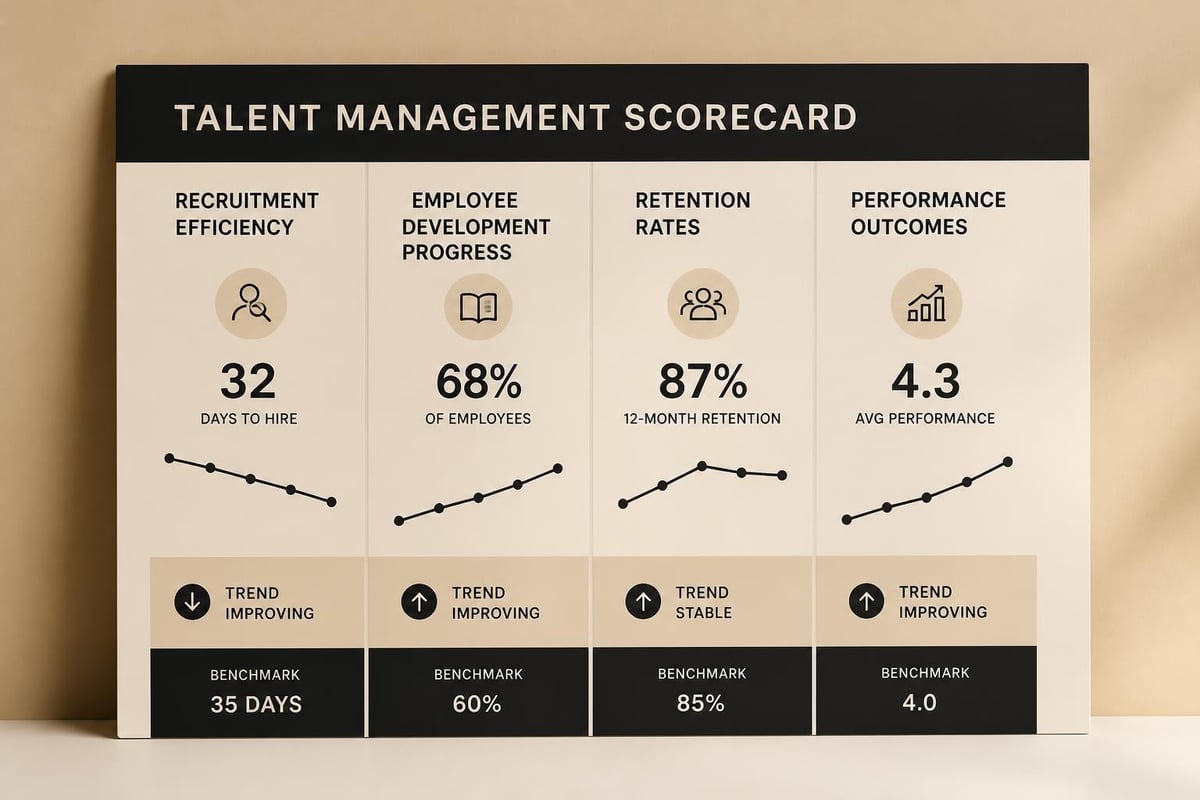
Comprehensive measurement frameworks track leading and lagging indicators:
Recruitment metrics including time-to-fill, cost-per-hire, quality-of-hire scores, offer acceptance rates, and source effectiveness provide insights into acquisition effectiveness.
Development metrics such as training completion rates, skill assessment improvements, internal promotion rates, and leadership pipeline strength indicate whether development investments are paying off.
Retention metrics including voluntary turnover rates (overall and by segment), regrettable loss percentages, tenure distributions, and exit interview themes reveal engagement and satisfaction trends.
Performance metrics encompassing goal achievement rates, performance rating distributions, high-performer identification, and succession readiness assessments demonstrate whether the organization is building required capabilities.
Return on Investment Analysis
Decision management frameworks help organizations evaluate talent initiatives based on financial impact. Calculating ROI for talent programs requires comparing:
- Implementation costs including technology, consulting fees, internal labor, and training expenses
- Ongoing operational costs for program maintenance and administration
- Tangible benefits such as reduced turnover costs, productivity gains, and revenue improvements
- Intangible benefits including enhanced employer brand, improved culture, and stronger client relationships
Organizations that rigorously measure ROI make better investment decisions and secure leadership support for talent initiatives. The evidence-based multilevel framework of talent management consolidates research to inform practice and demonstrates the business case for strategic talent investments.
Building Organizational Capability for Talent Excellence
Implementing world-class talent management requires more than new programs-it demands cultural transformation and capability building across the organization.
Leadership Development
Managers drive talent outcomes through daily interactions with team members. Organizations must equip leaders with:
- Coaching skills that unlock employee potential through effective questioning and feedback
- Difficult conversation capabilities addressing performance issues constructively
- Diversity and inclusion competencies building teams that leverage varied perspectives
- Strategic thinking abilities connecting team activities to organizational objectives
- Emotional intelligence understanding and responding to employee needs
Investing in employee benefit plan design and comprehensive leadership development creates managers who can execute talent strategies effectively while maintaining the human connection that drives engagement.
HR Capability Enhancement
Human resources professionals must evolve from administrative processors to strategic business partners. This transformation requires:
- Business acumen development understanding financial metrics and operational challenges
- Analytics skills interpreting workforce data to inform decisions
- Change management expertise leading organizational transformations
- Technology proficiency leveraging modern HR platforms effectively
- Consultative capabilities partnering with leaders on talent solutions
Organizations that invest in HR capability building see dramatic improvements in talent outcomes. HR teams equipped with strategic skills become trusted advisors rather than order-takers, elevating their contribution to organizational success.
Creating Accountability for Talent Outcomes
Talent management cannot remain solely an HR responsibility. Building accountability across the organization requires:
Talent metrics in leadership scorecards ensuring executives prioritize workforce outcomes alongside financial results. When retention, engagement, and development goals carry equal weight to revenue targets, behavior changes.
Manager performance evaluation including talent development effectiveness as a core competency. Managers should be assessed on their ability to develop team members, build diverse teams, and create inclusive environments.
Talent review processes bringing leadership together regularly to discuss succession planning, high-potential identification, and development progress. These calibration sessions ensure consistent standards and shared ownership.
Navigating Common Talent Management Challenges
Even well-designed talent strategies encounter obstacles. Anticipating common challenges enables proactive mitigation.
Resource Constraints
Many organizations struggle to justify talent management investments during budget cycles. Overcoming this challenge requires:
- Phased implementation starting with high-impact, low-cost initiatives that demonstrate quick wins
- ROI documentation quantifying benefits in financial terms leadership understands
- Technology leverage using automation to maximize impact with constrained resources
- Outsourcing considerations partnering with specialists for capabilities beyond internal expertise
Professional services consultancies help clients navigate resource constraints by identifying efficiency opportunities and prioritizing initiatives based on potential impact. Organizations implementing accounts payable automation or streamlining billing processes free resources that can be redirected toward strategic talent initiatives.
Change Resistance
Employees and managers comfortable with existing approaches may resist new talent management processes. Effective change management addresses resistance through:
- Clear communication explaining why changes are necessary and how they benefit individuals
- Stakeholder involvement in design ensuring programs address real needs
- Pilot programs demonstrating value before full-scale rollout
- Training and support equipping people with skills needed for new approaches
- Quick wins building momentum and credibility
Data Quality and Integration
Talent decisions are only as good as the data supporting them. Organizations often struggle with fragmented systems, inconsistent data definitions, and manual processes that compromise data quality. Addressing these issues requires:
- Systems consolidation integrating talent platforms with payroll, benefits, and financial systems
- Data governance establishing standards for collection, storage, and access
- Automation implementation reducing manual data entry and associated errors
- Regular audits identifying and correcting data quality issues
- User training ensuring consistent data entry practices
Organizations partnering with consultancies specializing in artificial intelligence and automation can accelerate data integration and quality improvement while building internal capabilities for ongoing management.
Strategic talent management creates sustainable competitive advantage by ensuring organizations have the right people, with the right skills, in the right roles, at the right time. The integration of workforce planning, acquisition excellence, performance management, development investment, and retention strategies drives measurable improvements in organizational performance, employee satisfaction, and financial results. Nero and Associates, Inc. helps organizations implement comprehensive talent management approaches that align with business objectives, leverage technology for efficiency, and create exceptional employee experiences. Our performance-based consulting delivers measurable improvements in retention, productivity, and bottom-line results while empowering your workforce to reach their full potential.