

Financial stress remains one of the most significant challenges facing American workers in 2026. Employees living paycheck to paycheck struggle to manage unexpected expenses, leading to decreased productivity, increased absenteeism, and higher turnover rates. Organizations seeking competitive advantages in talent acquisition and retention are increasingly turning to innovative benefits solutions that address these fundamental financial wellness challenges. Early wage access has emerged as a powerful tool that enables employees to access their earned wages before the traditional payday, providing flexibility and reducing financial anxiety while creating measurable business benefits.
Understanding Early Wage Access and Its Growing Importance
Early wage access represents a fundamental shift in how organizations think about compensation timing and employee financial wellness. Rather than waiting for a bi-weekly or monthly paycheck, employees can access a portion of their already-earned wages when they need it most. This approach differs significantly from traditional payday loans or cash advances because workers are simply accessing compensation they have already earned through completed work shifts.
The Consumer Financial Protection Bureau’s definition of covered EWA provides important regulatory context for organizations evaluating these programs. Understanding compliance requirements ensures that implementation protects both employers and employees while maintaining operational integrity.
The Mechanics of Modern Wage Access Programs
Modern early wage access solutions integrate directly with existing payroll and human capital management systems, creating seamless experiences for both administrators and employees. These platforms track hours worked in real-time, calculate available earnings, and enable employees to transfer funds to their bank accounts or prepaid cards within minutes.
Key operational components include:
- Real-time earnings calculations based on hours worked and approved timesheets
- Integration with existing payroll processing systems to prevent complications
- Mobile applications providing 24/7 access and transparency
- Configurable limits preventing employees from accessing their entire earned balance
- Automated deductions coordinating with regular payroll cycles
Organizations implementing Human Capital Management solutions find that integrated early wage access programs reduce administrative burden while increasing employee engagement with benefits platforms.

Financial Wellness Benefits for Employees
The financial impact of early wage access extends far beyond simple convenience. Research demonstrates that access to earned wages reduces reliance on high-cost borrowing options that trap workers in cycles of debt. When employees face unexpected car repairs, medical bills, or other emergencies, they can address these expenses without resorting to payday loans with triple-digit interest rates or credit card debt.
A comprehensive study by Harvard University examining worker perspectives reveals that employees value the flexibility and control these programs provide. Workers report reduced financial stress, improved ability to manage cash flow, and greater confidence in their financial stability.
Quantifiable Wellness Outcomes
Organizations measuring the impact of early wage access programs consistently observe improvements across multiple wellness indicators. Financial anxiety decreases significantly when employees know they have access to earned wages during emergencies. This reduced stress translates directly into better mental health outcomes, improved sleep quality, and enhanced overall well-being.
| Wellness Metric | Improvement Range | Time to Observable Impact |
|---|---|---|
| Financial Stress Reduction | 25-40% | 60-90 days |
| Mental Health Scores | 15-25% | 90-120 days |
| Sleep Quality Reports | 20-30% | 60-90 days |
| Overall Satisfaction | 30-45% | 30-60 days |
These improvements align with broader organizational goals around employee benefits design that prioritize holistic wellness approaches addressing physical, mental, and financial health.
Operational Advantages for Organizations
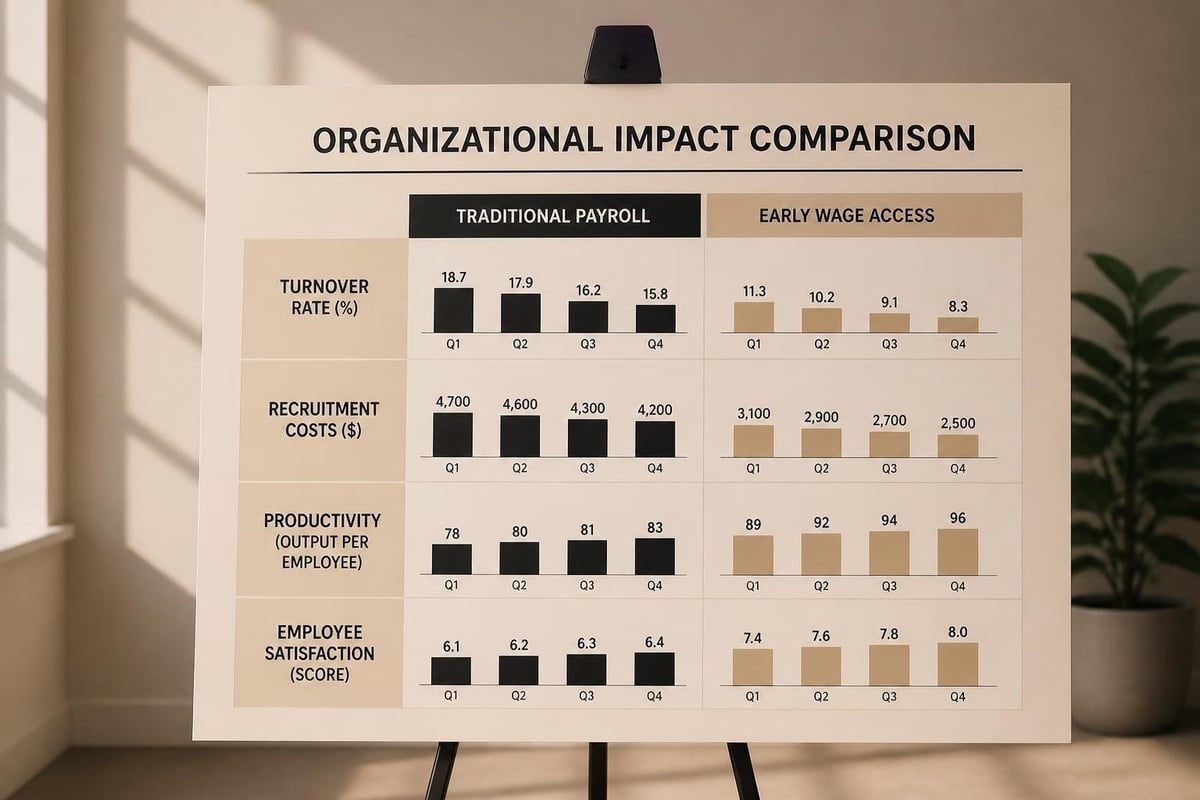
Beyond employee benefits, early wage access programs deliver measurable operational advantages that impact the bottom line. Reduced turnover represents one of the most significant financial benefits. When employees feel supported during financial challenges, they develop stronger loyalty to their employers and are less likely to seek opportunities elsewhere.
The cost of employee turnover in 2026 averages between 50% and 200% of annual salary, depending on role complexity and industry. Organizations experiencing high turnover in hourly positions find that early wage access programs reduce attrition by 15-30%, generating substantial cost savings.
Recruitment and Competitive Positioning
In competitive labor markets, differentiated benefits packages attract higher-quality candidates and accelerate hiring timelines. Organizations offering early wage access gain advantages during recruitment, particularly for hourly and shift-based positions where financial flexibility matters most. Candidates increasingly evaluate total compensation packages, including financial wellness benefits, when comparing opportunities.
Recruitment benefits include:
- Reduced time-to-fill for open positions
- Higher acceptance rates from preferred candidates
- Improved employer brand perception among job seekers
- Enhanced ability to compete with larger organizations
- Stronger engagement during onboarding processes
Organizations focused on maximizing growth through hidden opportunities recognize that strategic benefits offerings create competitive advantages that extend beyond traditional compensation.
Implementation Considerations and Best Practices
Successful implementation requires careful planning, stakeholder engagement, and attention to technical integration requirements. Organizations should begin by assessing current payroll processes, identifying integration points, and establishing clear objectives for their early wage access programs.
The complexity that professional employer organizations face when implementing these programs highlights the importance of thorough planning. Multi-state operations, varied pay schedules, and diverse workforce compositions create unique challenges requiring customized solutions.
Technical Integration Requirements
Seamless integration with existing systems ensures that early wage access programs enhance rather than complicate payroll operations. Organizations should evaluate potential solutions based on compatibility with current technology stacks, ease of implementation, and ongoing maintenance requirements.
Modern platforms designed for business automation offer APIs and pre-built integrations with major payroll providers, reducing implementation timelines and technical complexity. These integrations enable real-time data synchronization, preventing discrepancies between available earnings and actual payroll processing.
Critical technical considerations include:
- API compatibility with existing HRIS and payroll systems
- Data security protocols protecting sensitive employee information
- Real-time data synchronization capabilities
- Scalability to accommodate workforce growth
- Mobile platform functionality and user experience design
Organizations leveraging automation and integration strategies find that early wage access implementation complements broader digital transformation initiatives.
Compliance and Regulatory Framework
Navigating the regulatory landscape requires understanding federal and state-level requirements governing wage access programs. Organizations must ensure their programs comply with wage and hour laws, consumer protection regulations, and financial services requirements.
A comprehensive compliance guide for employers outlines essential regulatory considerations and best practices for maintaining compliant programs. Key compliance areas include transparent fee structures, clear disclosure requirements, and protection against predatory lending practices.
State-Specific Considerations
Regulatory requirements vary significantly across states, creating complexity for multi-state employers. Some states classify early wage access as lending, triggering specific licensing and disclosure requirements. Others recognize these programs as non-credit products, applying different regulatory frameworks.
| Regulatory Category | Key Requirements | Affected States |
|---|---|---|
| Licensing | Financial services license | 12 states |
| Disclosure | Written terms and conditions | All states |
| Fee Caps | Maximum transaction limits | 8 states |
| Record Keeping | Transaction documentation | All states |
Organizations operating across multiple jurisdictions should work with legal counsel specializing in wage and hour law to ensure full compliance with applicable requirements.
Cost Structures and Financial Models
Understanding the financial implications for both organizations and employees ensures sustainable program implementation. Early wage access programs typically operate under one of three cost models: employer-sponsored, employee-paid, or hybrid approaches.
Employer-sponsored models treat early wage access as a benefit, with the organization covering all program costs. This approach maximizes employee adoption and delivers the strongest engagement outcomes. Employee-paid models charge workers small fees for each transaction, typically ranging from $2 to $5 per transfer. Hybrid models combine employer subsidies with nominal employee fees.
Return on Investment Analysis
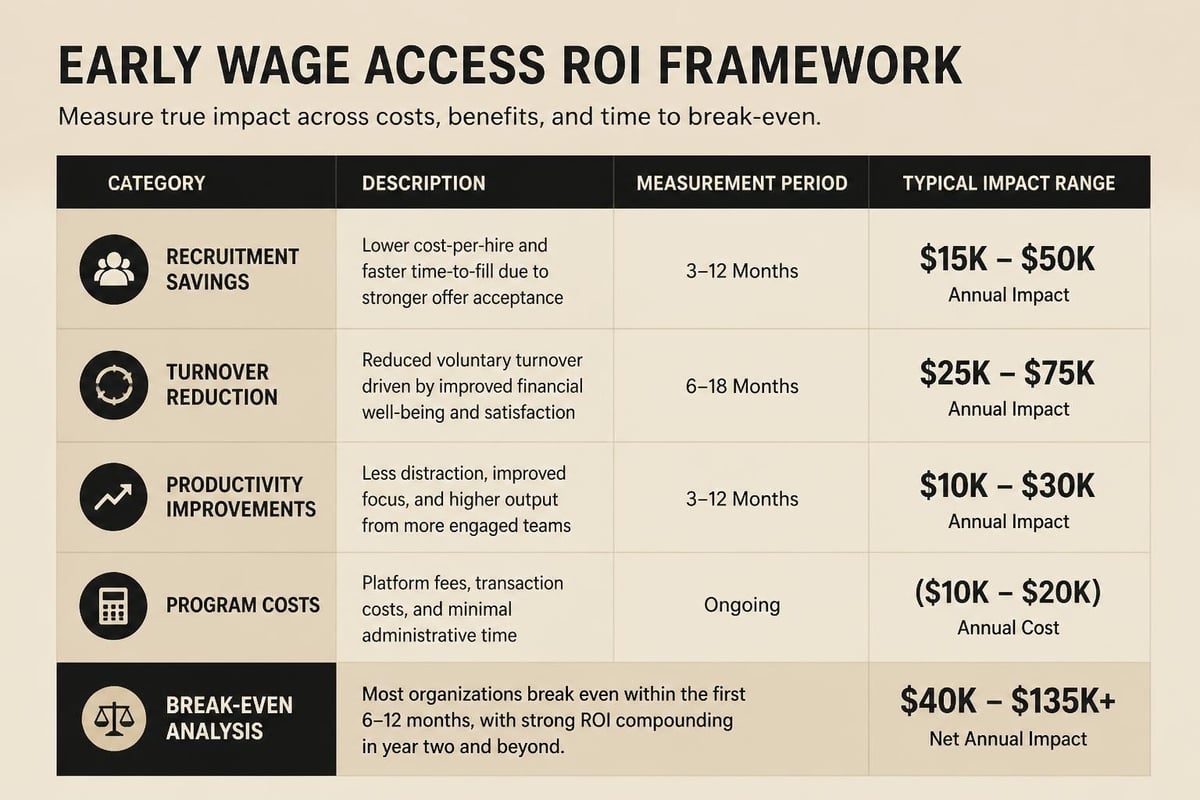
Calculating ROI requires measuring both hard and soft benefits across recruitment, retention, and productivity categories. Organizations should establish baseline metrics before implementation and track changes over 12-18 month periods to capture full program impact.
Measurable ROI components:
- Reduced turnover costs based on position-specific replacement expenses
- Decreased recruitment spending due to improved employer brand
- Lower absenteeism rates translating to productivity gains
- Reduced administrative time managing emergency wage requests
- Enhanced employee satisfaction scores influencing customer service quality
Organizations focused on raising their bottom line through strategic operational improvements find that early wage access programs generate returns significantly exceeding implementation costs.
Communication and Employee Education Strategies
Program success depends heavily on effective communication and comprehensive employee education. Workers must understand how early wage access functions, when to use it appropriately, and how to avoid creating new financial challenges through over-reliance on wage advances.
Organizations should develop multi-channel communication strategies incorporating digital platforms, in-person sessions, printed materials, and ongoing reinforcement. Initial rollout communications should emphasize program benefits while setting clear expectations about responsible usage.
Building Financial Literacy
Early wage access programs create opportunities for broader financial wellness education. Organizations can complement wage access with financial literacy resources, budgeting tools, and personalized coaching services. This comprehensive approach addresses root causes of financial stress while providing immediate relief through flexible wage timing.
Educational content should cover:
- Creating emergency savings funds to reduce future wage access dependency
- Understanding total compensation including benefits value
- Developing budgets aligned with pay schedules and expenses
- Recognizing warning signs of problematic financial patterns
- Accessing additional wellness resources for comprehensive support
Organizations committed to empowering employees to be proactive with financial health integrate early wage access within holistic wellness strategies that address multiple dimensions of employee well-being.
Technology Platform Selection Criteria
Choosing the right early wage access provider requires evaluating multiple factors beyond basic functionality. Organizations should assess vendor stability, customer support quality, integration capabilities, security protocols, and long-term product roadmaps.
Leading platforms offer configurable features allowing organizations to customize programs based on workforce characteristics and business objectives. Flexibility in fee structures, access limits, and disbursement options ensures programs align with company culture and financial wellness philosophies.
Security and Data Protection
Given the sensitive nature of payroll and financial data, security must be a top priority during vendor selection. Organizations should verify that potential providers maintain appropriate certifications, implement industry-standard encryption, and follow rigorous data handling protocols.
Essential security requirements include:
- SOC 2 Type II certification demonstrating comprehensive security controls
- Bank-level encryption for data transmission and storage
- Multi-factor authentication protecting employee accounts
- Regular security audits by independent third parties
- Clear data ownership and privacy policies
- Incident response plans addressing potential breaches
Organizations managing sensitive information across consulting engagements understand that vendor security directly impacts overall risk management strategies.
Measuring Success and Continuous Improvement
Establishing clear success metrics enables organizations to assess program effectiveness and identify optimization opportunities. Metrics should span employee adoption rates, utilization patterns, satisfaction scores, and business outcomes including turnover and recruitment performance.
Regular program reviews create opportunities to gather employee feedback, identify barriers to adoption, and refine communication strategies. Organizations should conduct quarterly assessments during the first year of implementation, transitioning to semi-annual reviews as programs mature.
| Success Metric | Target Range | Measurement Frequency |
|---|---|---|
| Employee Enrollment | 60-80% | Monthly |
| Active Usage Rate | 25-40% | Monthly |
| Average Transaction Size | 15-25% of available earnings | Quarterly |
| Employee Satisfaction | 4.2+ out of 5.0 | Quarterly |
| Turnover Impact | 15-30% reduction | Quarterly |
Organizations applying decision management frameworks to benefits administration use data-driven approaches to continuously improve program performance and employee outcomes.
Integration with Broader Wellness Initiatives
Early wage access programs deliver maximum value when integrated with comprehensive wellness strategies addressing physical, mental, and financial health. Organizations should position wage access as one component of holistic benefits packages that recognize the interconnected nature of employee well-being.
Physical wellness programs addressing preventive care, chronic condition management, and healthy lifestyle choices complement financial wellness initiatives by reducing healthcare costs. Mental health resources including counseling services, stress management programs, and work-life balance initiatives address psychological factors often connected to financial stress.
This integrated approach aligns with organizational goals around employee empowerment across health dimensions, creating cultures where workers feel supported holistically rather than through fragmented benefits programs.
Creating Synergies Across Benefits
Organizations should actively promote connections between different benefit offerings, helping employees understand how various programs work together to support overall wellness. Financial stress impacts physical and mental health, while health challenges often create financial burdens. Breaking these cycles requires coordinated interventions addressing multiple factors simultaneously.
Integrated program elements include:
- Coordinated communication highlighting connections between different benefits
- Single sign-on platforms providing unified access to all wellness resources
- Holistic needs assessments identifying individual employee priorities
- Personalized recommendations based on usage patterns and expressed needs
- Outcome tracking measuring improvements across wellness dimensions
Organizations working with professional services consultants gain expertise in designing integrated benefits strategies that maximize employee engagement and business outcomes.
Early wage access represents a powerful intersection of employee financial wellness and organizational performance improvement. By enabling workers to access earned wages when needed, organizations reduce financial stress, improve retention, and gain competitive advantages in talent markets. Successful implementation requires attention to compliance, technology integration, employee education, and ongoing measurement. Nero and Associates, Inc. specializes in helping organizations design and implement comprehensive human capital management solutions, including early wage access programs, that empower employees while driving measurable business results. Our performance-based approach ensures that wellness initiatives deliver tangible returns through reduced costs, improved efficiency, and enhanced employee engagement.